



No-Roll Leggings: How to Choose a Pair That Won't Roll Down
It often shows in the warm-up. You fix the waist after a few squats, hitch the leggings up after a short run, and feel focus shift from the training to the garment. So for anyone looking for no-roll leggings, it is rarely one detail. It is construction, fit and fabric working together.
In the premium tier it is not enough that leggings feel soft in the fitting room. They have to hold position in motion, shape the body with precision and keep their feel over time. That is why the gap between an ordinary pair and a genuinely worked-through pair is bigger than many think.

Why leggings roll down in the first place
When leggings slip, it is easy to assume the size is wrong. Sometimes it is, but far from always. Often it is the mix of low fabric recovery, a misplaced waist and a fit not built for real training. A fabric can feel supple yet lack the compression to stay steady through squats, intervals and walks. Equally, a high waist can look right in a photo but be too soft or too straight in the cut to actually hold. When the construction does not follow the body's proportions, the piece starts to move the moment you do. This is where many mass-produced models lose ground: drawn to fit as many bodies as possible, but not to sit precisely on a body in motion.
No-roll leggings start with the fit
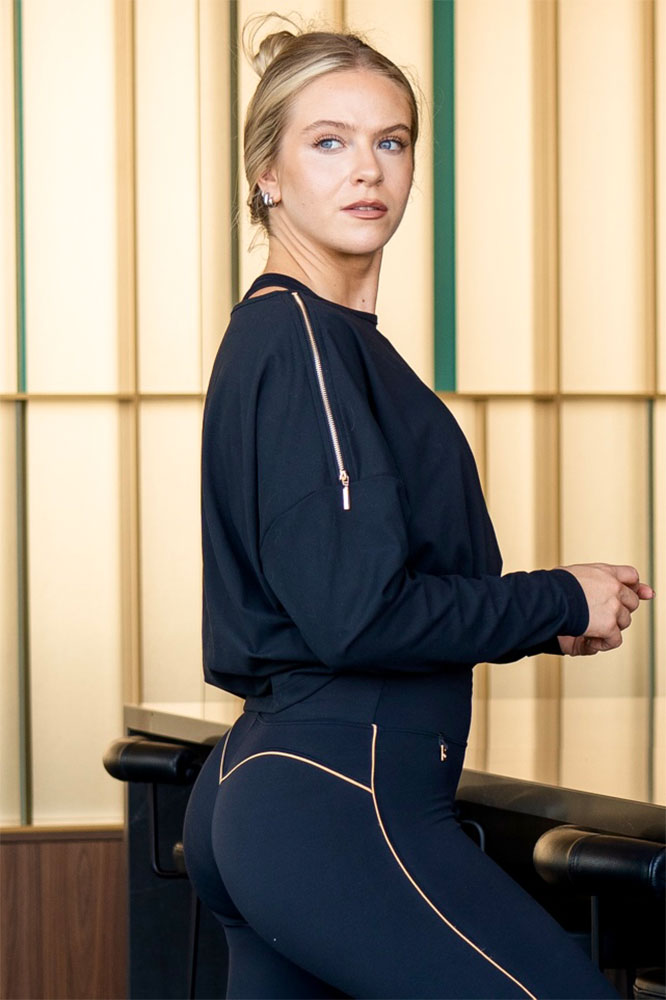
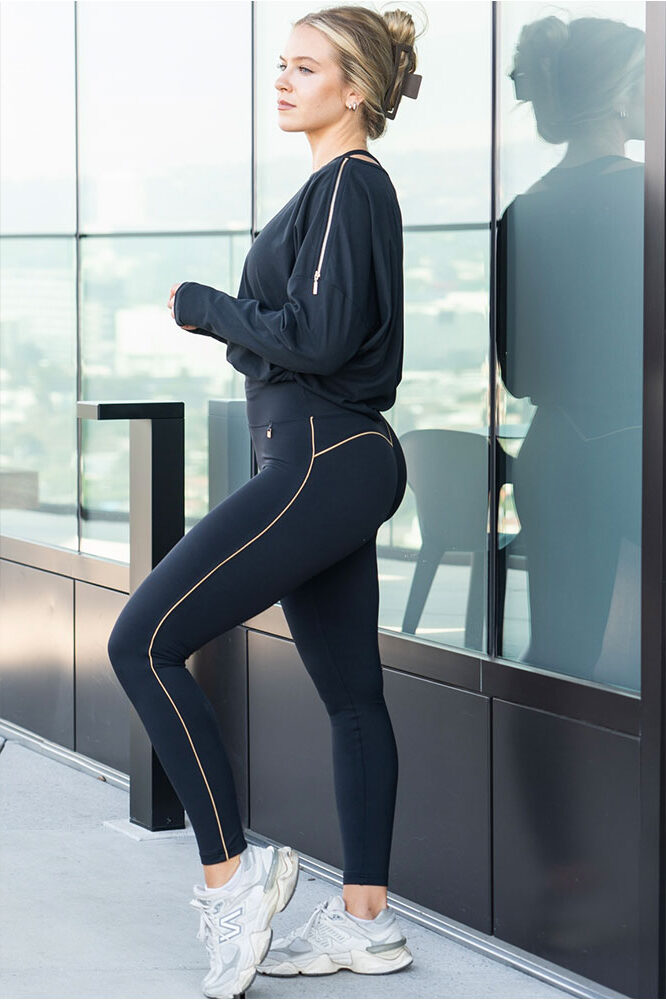
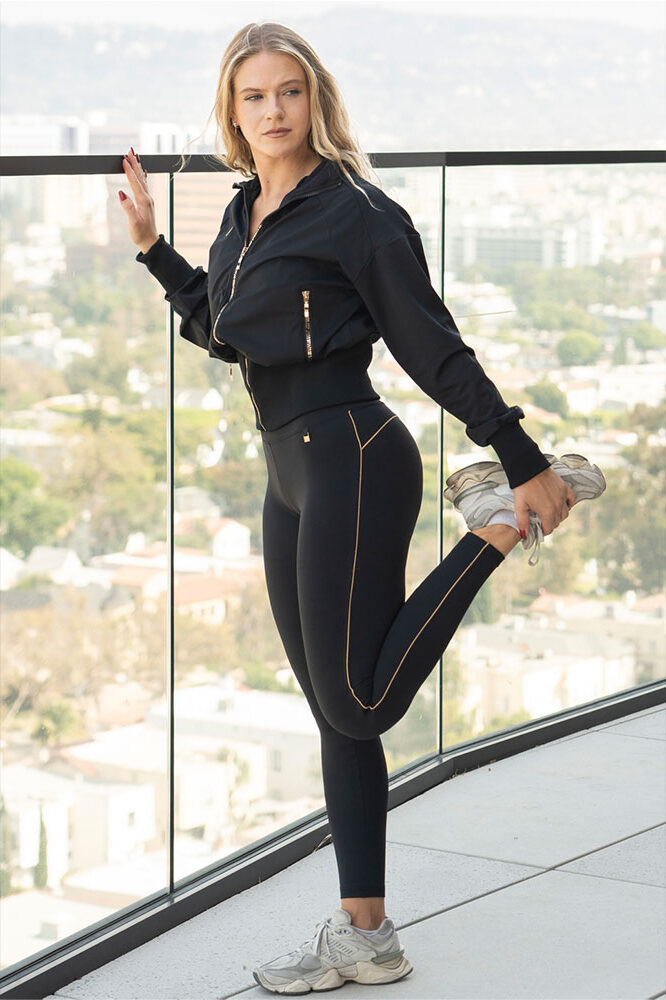
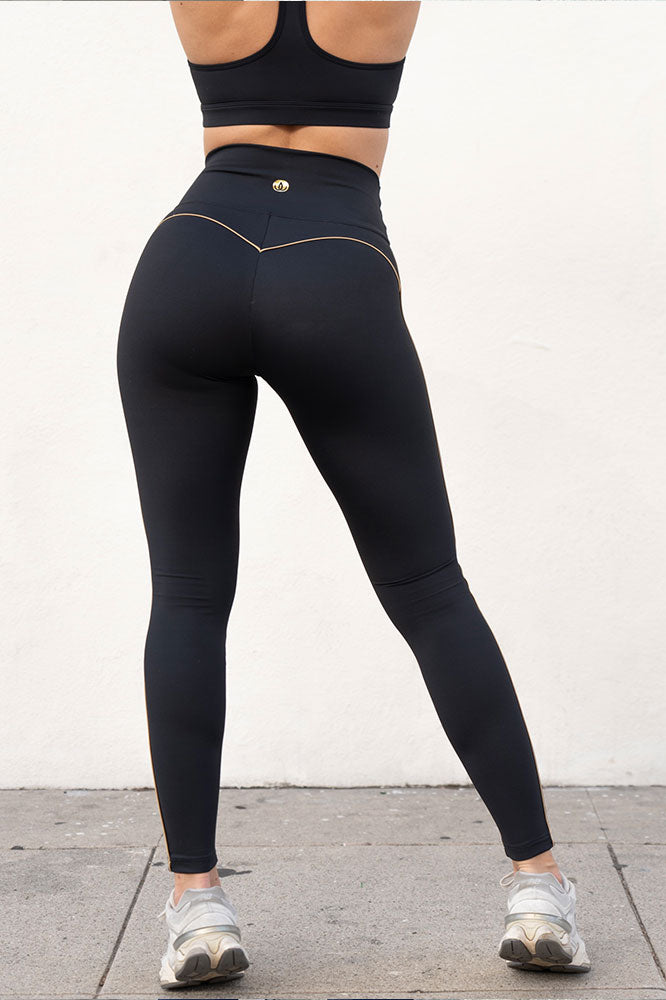
The most important factor is how the leggings are cut. A well-built pair should wrap the body without pulling in the wrong places. The waist should hold without cutting in, and the seat needs enough room so the fabric does not drag down when you bend or take a long stride. That is why a close fit is not the same as just sizing down. Too small and they start to slip because the fabric over-stretches and loses stability; too large and they lack grip and move almost immediately. A worked-through model considers several zones at once: waist, hips, thighs and seat. When the balance is right, the leggings feel close but never intrusive, the feeling customers describe as the pair sitting where it should through the whole session.
A high waist helps, but is not always enough
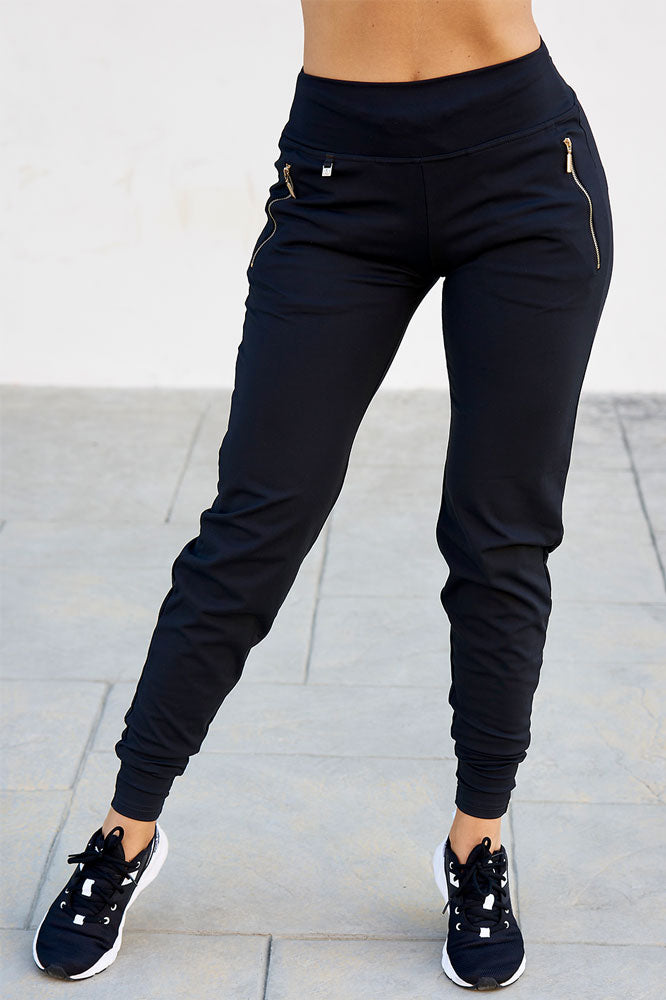
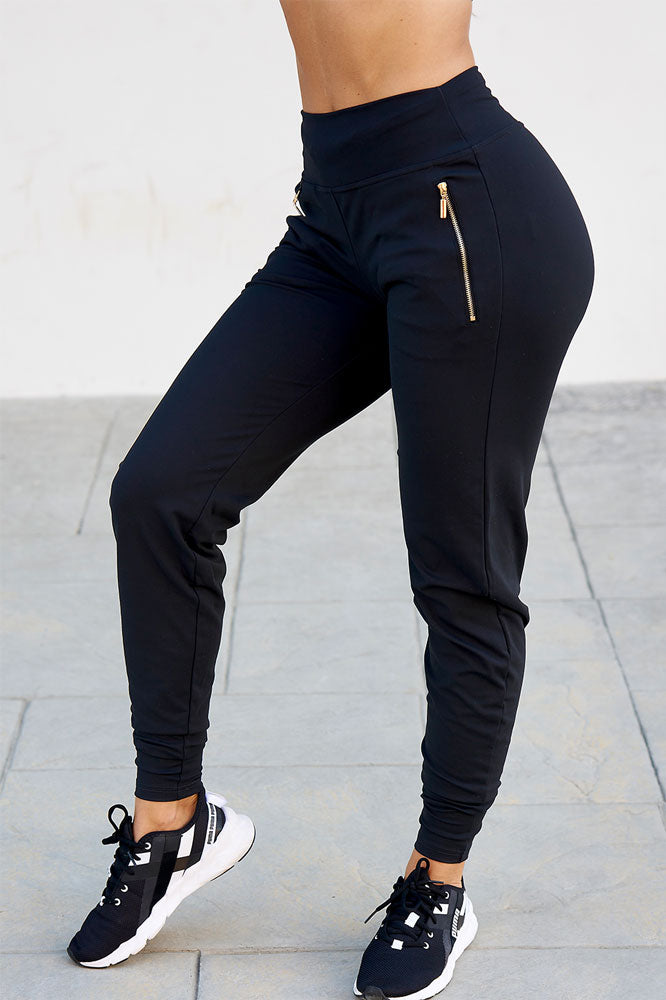
A high waist is a baseline for many, and for good reason: a taller band gives more surface to anchor against the body and often a steadier feel. But a high waist alone does not solve it if the rest of the build is weak. What matters is how the band is made. A well-shaped high waistband follows the body and holds with even pressure rather than gripping from the top edge. If it is too thin, too elastic or lacks structure, it starts to fold, and once the band folds, the roll usually follows.

Fabric decides more than many think
A common myth is that the softest fabric is best. In practice it depends on what you want the leggings to do. For no-roll leggings, the fabric needs both give and resistance. Too little structure and they feel slack after a while; too much compression and they can feel hard over time. The best balance sits in fabric with good recovery that returns to shape after load. Quality shows over time here, a pair can fit well for the first wears and lose spring after washing and use, and the same problem returns even if the fit felt right at first. Durable design is about the fabric keeping its function across many sessions, not just seams and looks.
Compression should feel controlled, not hard
Many like a sculpting feel, but compression has to be placed well. When the fabric supports the right zones, leggings stay steady without feeling stiff, and that is where the pattern matters. Sculpting leggings are a clear example of design meeting function: shaping seams and shaped panels are not decoration but part of how the piece works with the body. Lines high over the hip add length; back seams shape a more defined line; with a high waist and considered side panels, the fit holds with precision in motion. Done well, you stop thinking about the leggings at all. If the term is new, see what sculpting leggings are.
How to tell if the size is right
If you try leggings on and immediately want to pull them up more than once, take it seriously. The right size should sit close from the start without compensation. The waist should lie even against the body with no gap at the back. The fabric over the thighs should feel supple, not strained. Over the seat you should move freely without the seams feeling dragged. If they cut hard at the waist and still slide when you walk or bend, it is often the model, not just the size, that is wrong for your body. Think about use too: mostly strength work calls for more support and structure; everyday and travel may put feel against the skin higher, without giving up stability.
No-roll leggings: quick answers
How do I stop my leggings rolling down?
Choose a high, engineered waistband and a dense knit with recovery. A band that holds with even pressure, not just a tight top edge, is what stops the roll.
Why do my leggings roll at the waist?
Usually a band that is too thin or elastic, a fabric with poor recovery, or a cut too straight for your shape. When the band folds, the roll follows.
Are high-waisted leggings less likely to roll?
Often, if the high waist is well-built and supple. A high band that is too soft or unstructured can still fold and roll.
Leave a comment
This site is protected by hCaptcha and the hCaptcha Privacy Policy and Terms of Service apply.