
What are sculpting leggings? How the cut shapes the line
What are sculpting tights? They are training tights whose shape comes from the construction: the cut, the placement of the seams, the direction of the panels and the firmness of the fabric. They do not press the body into another shape. They strengthen the one that is there.
The difference is rarely visible on the hanger. You feel it when you come up out of a deep squat, when the waistband stays put, and when the silhouette reads as worked through rather than left to chance.

What are sculpting tights, briefly?
A pair of sculpting tights has three things a standard pair usually lacks. A high, shaped waistband. Panels cut to follow the direction of the body. Seams placed to frame rather than divide. Together they give support across the torso, length in the leg and a rounder line at the back. The whole selection sits under sculpting training tights.
What do the seams do?
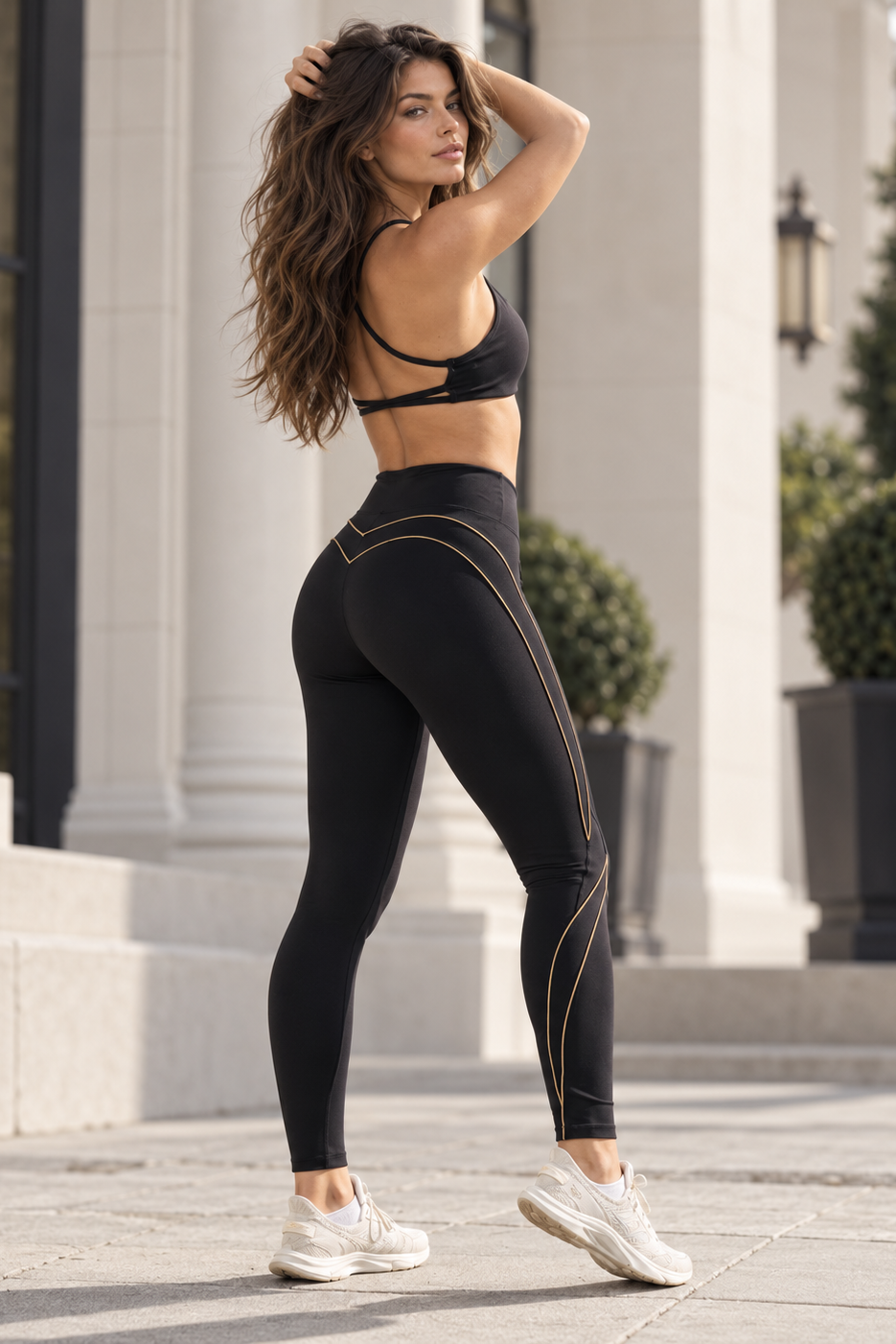
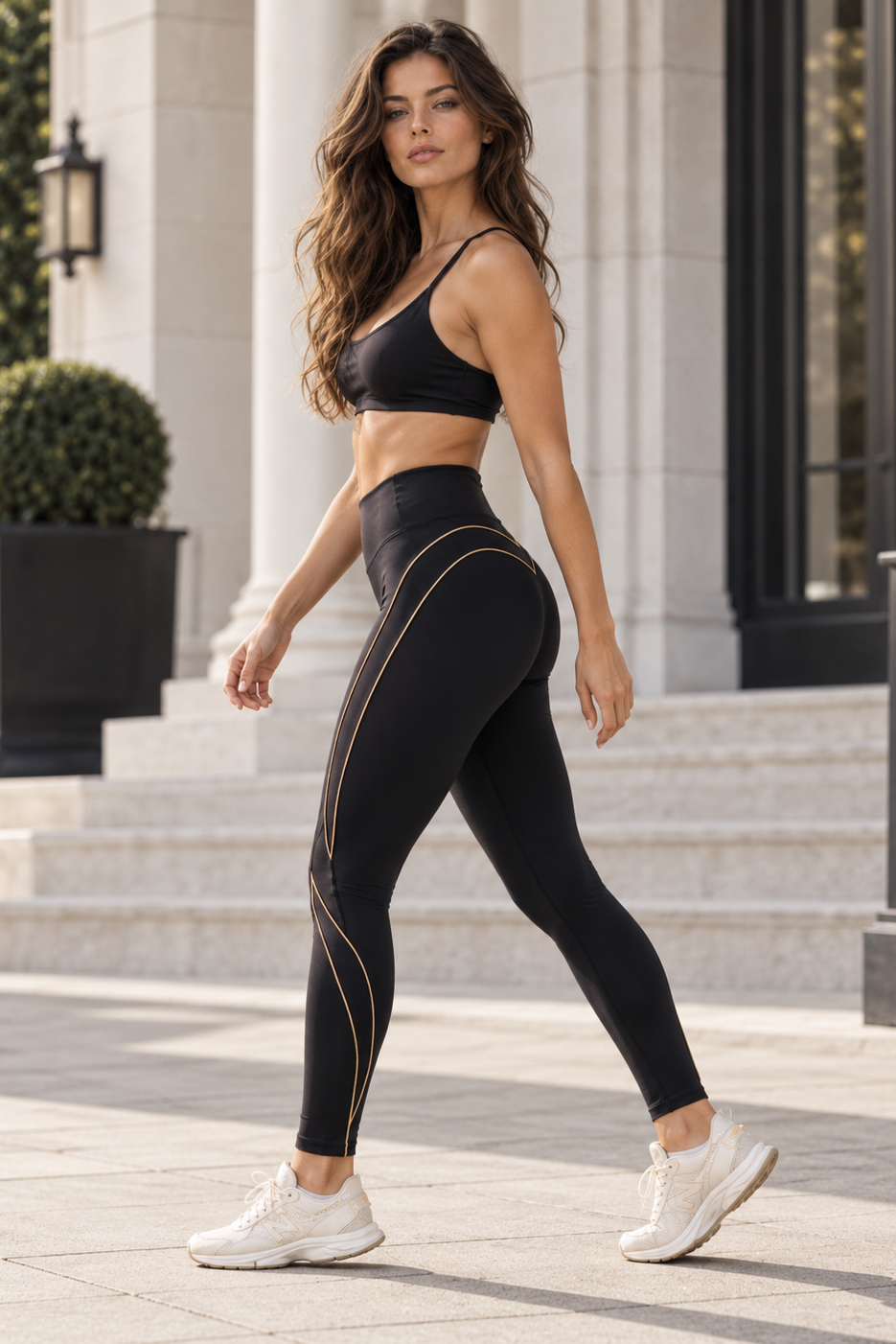
The seam governs how the fabric meets the body. Curved seams at the back frame the seat and give it a rounder line. Seams at the sides mark the waist and draw the eye upward, which lengthens the leg. When the lines run high over the hip, the length of the leg is not cut by a horizontal seam. Placed wrong, the seam does the opposite: it breaks the line, gathers folds and shortens the silhouette. We go into this further in activewear with sculpting seams.
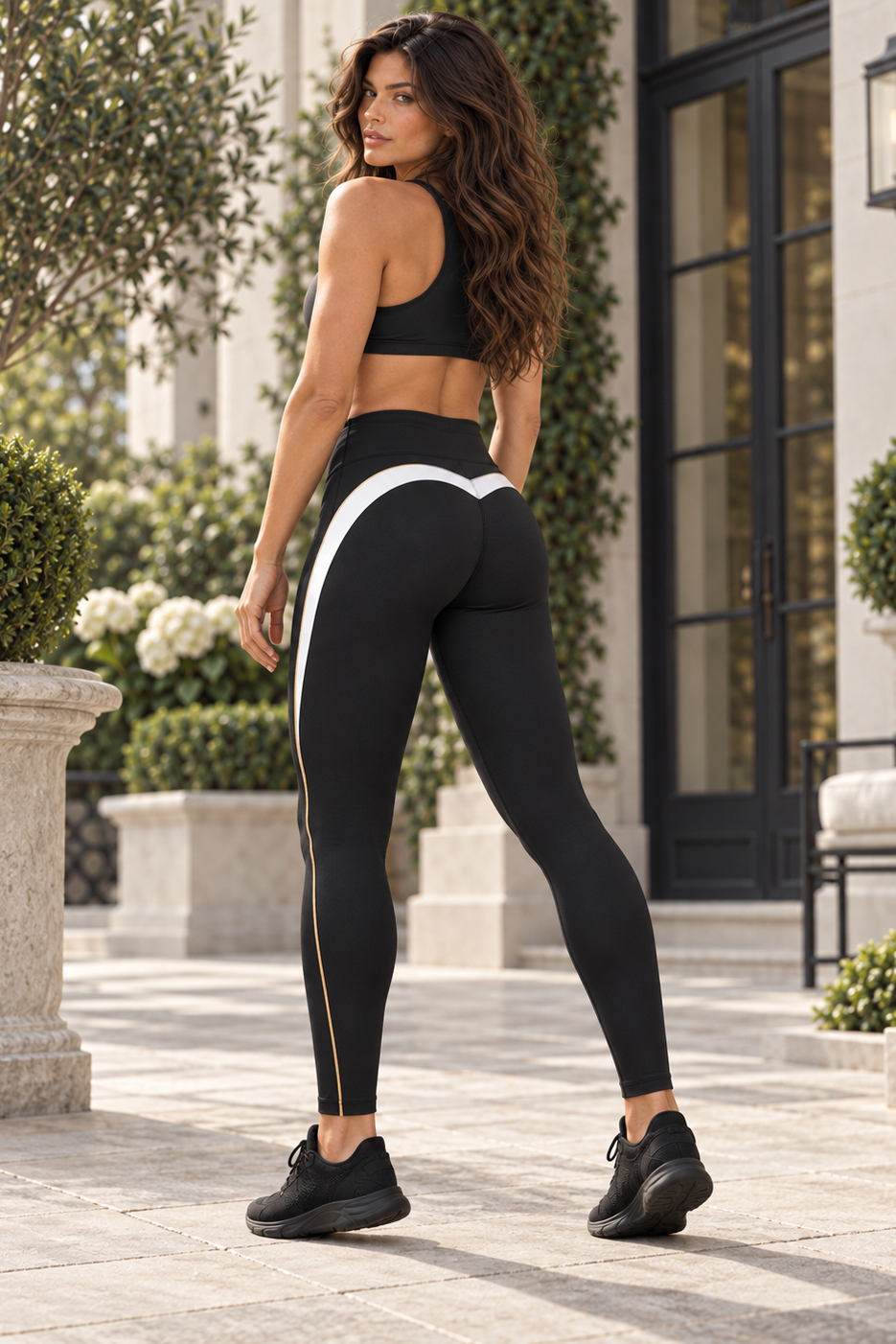
Slimline Sculpting Tights are cut in a heart shape at the back, precisely to shape the seat without the seam lying across it as a straight line. The waistband is high and shaped. The fabric is recycled ECO Circle polyester.
How high should the waistband be?
A high, shaped waistband does two things at once. It holds across the stomach, and it keeps the garment from sliding down when you bend. Width is what decides: a wide band spreads the pressure, a narrow one digs in. The test is simple. Sit down for five minutes. Stand up. If the band is still where it was, without rolling, it is right. The models with a high waist sit under training tights with a high waist.
Which fabric shapes without feeling stiff?
The fabric needs two properties that pull in different directions. Enough firmness to hold the shape. Enough give to follow the movement. Too soft feels pleasant for the first minute and then loses support. Too firm limits the movement. The balance lies in a dense knit, good recovery in the fibre and a smooth surface that holds wash after wash. That is also where the difference sits between a pair that lasts a season and a pair that lasts years.
Goldline Black Sculpting Tights are sewn in 73 percent polyester and 27 percent elastane, in recycled ECO Circle polyester, with four-way stretch and squat proof coverage. Edge Mesh Sculpting Tights solve the same task differently, with mesh panels at the sides that draw a sculpted line along the leg. Also in recycled ECO Circle polyester.


How should they feel on the body?
The feeling you are after is control, not pressure. The waistband sits steady. The fabric keeps its coverage when you stretch it, including in deep positions. The seat is shaped by the cut, so you are not pulling the garment up between sets. When the fit is right, the garment asks for no attention during the day. Then the same pair works for the session, the journey, the walk and dinner afterwards.
Is sculpting the same as compression?
No. Compression is built on graduated pressure with a physiological purpose, usually firmer lower down and lighter towards the top. Sculpting is built on line and fit. A pair can have moderate compression without shaping, and the other way round. We go through the differences in compression tights or ordinary tights.
Who are they for?
They suit you if you are exacting about how a garment sits, not only how it looks in a photograph. If tights that slide down, dig in at the wrong place or lose their shape after a few washes bother you, there is good reason to choose a construction with more work in it.
They also suit you if you want activewear to carry as naturally under a knitted jumper as it does at the gym. The expression can be pared back. The precision sits in the construction.
How do you judge a pair before you buy?
Look at the lines first. Do the side panels, the back piece and the waistband look like decisions that hang together, or like three separate ideas? Then examine the waistband. Wide and high gives a cleaner drape, but it has to be yielding enough not to press when you sit for a long time. Finally, feel the density of the fabric. A fabric with work in it is substantial without becoming heavy, recovers after stretch and keeps its surface over time.

What are you paying for in sculpting tights?
What costs is the precision. More panel pieces, more work on the cut, a fabric that recovers instead of stretching out. You are paying for the lines to sit where they were intended and to stay there after fifty washes. A pair that keeps its shape for years is cheaper per wear than three pairs that lose it in a season.
What are sculpting tights, in short? A garment where the shape is counted in from the start, in the cut and in the seam, rather than added afterwards with firmer pressure. Ask how they are sewn, how they sit when you move and whether the design really works with the body. When the answer is yes, you notice it without the garment having to say anything. Anything but ordinary.



Leave a comment
This site is protected by hCaptcha and the hCaptcha Privacy Policy and Terms of Service apply.