



How to Choose Gym Leggings That Actually Fit
You can feel it straight away when a pair of leggings is wrong. The waist rolls, the fabric turns sheer in a squat, or they sit fine standing and slip the moment you move. So choosing gym leggings that actually fit is less about trend and more about precision, in fit, fabric and construction.
For anyone buying premium activewear, it is not enough that leggings look good in a product photo. They have to hold their shape through the session, follow the body without cutting in, and feel as natural at the gym as on a long walk or a day in motion. That is where the gap between standard and considered design shows.

Start with the fit
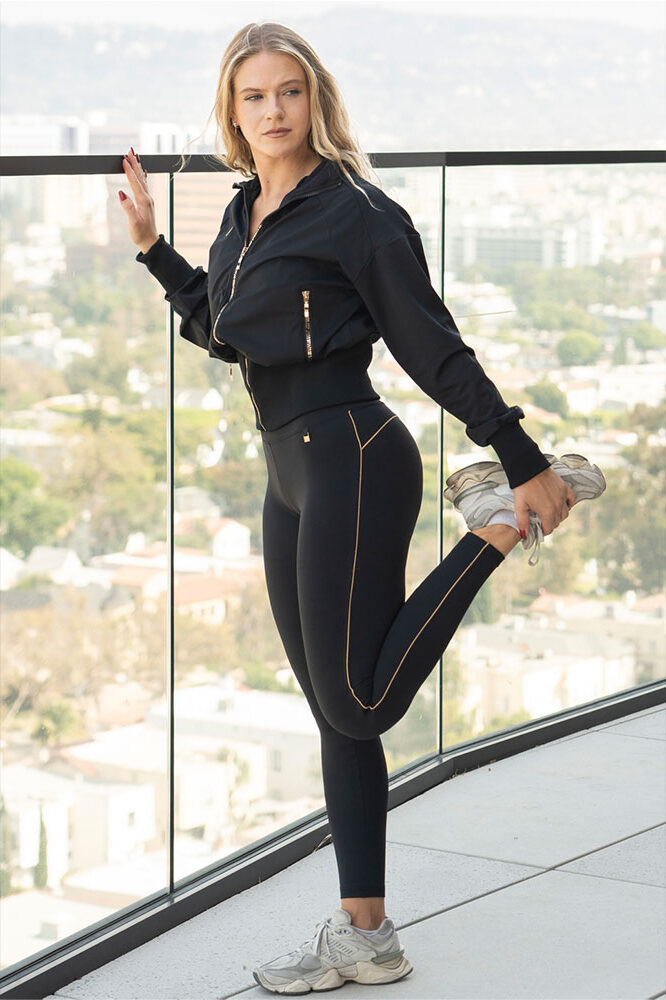
Fit is the first thing to judge, and it decides whether you wear the leggings often or leave them in the drawer. A good pair sits close without feeling stiff. It holds in where you want support but still gives freedom in every step, lift and stretch. The waist is central. A high waist usually gives more stability and a cleaner silhouette, and it sits more securely across strength work, running and everyday. Even within high waists there are differences: some compress hard, some shape more softly. For a sculpting feel without stiffness, the waistband has to be built to stay in place, not just to grip. Leg length matters too. Full length suits most of the year and reads more cohesive; ankle length can be better if you are shorter or want to avoid fabric bunching at the hem. What counts is that the proportions feel considered on your body.
Fabric decides how they feel in motion
Two pairs can look almost identical and feel completely different once on. That comes down to the blend, the density of the knit and how it recovers after movement. A denser fabric gives more support and a smoother finish, good if you want a shaping feel and a piece that holds the line under intense work. A softer, lighter material can be lovely for low-intensity sessions, yoga or comfort-first days. Neither is better; it depends on how you train. Recycled fabric is a natural part of many premium pieces now, but sustainability also means how long the leggings hold shape, colour and function. A considered fabric takes repeated wear and washing without going slack or shiny.
Construction that shapes without distracting
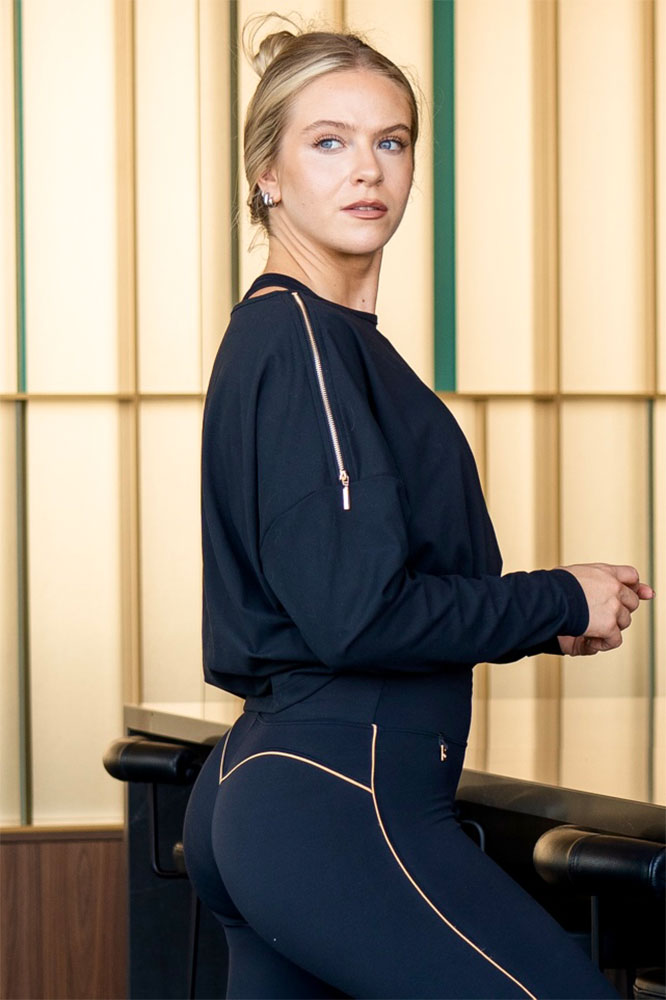
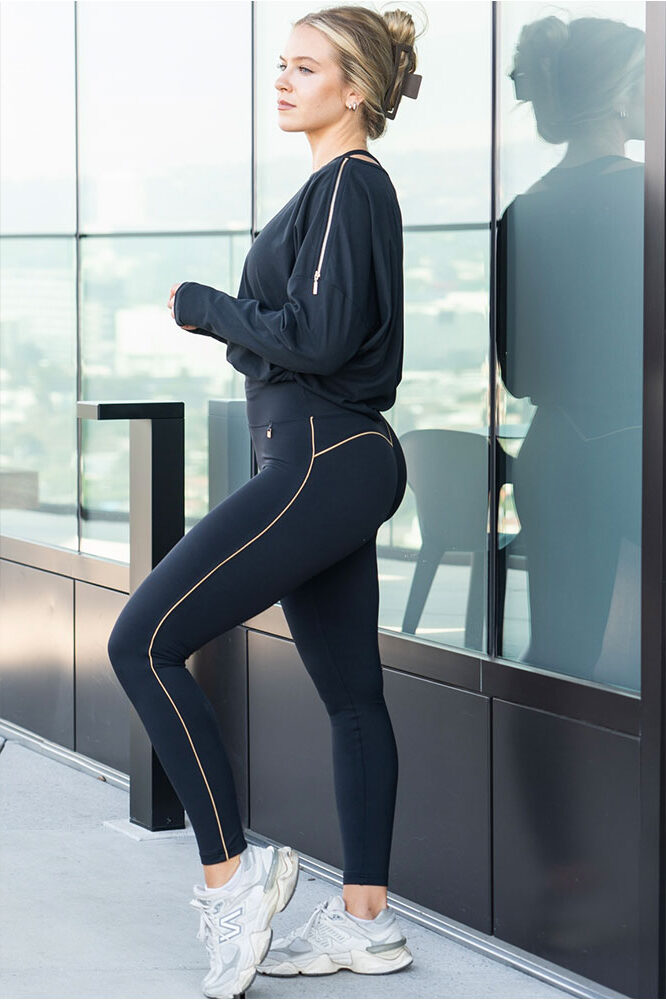
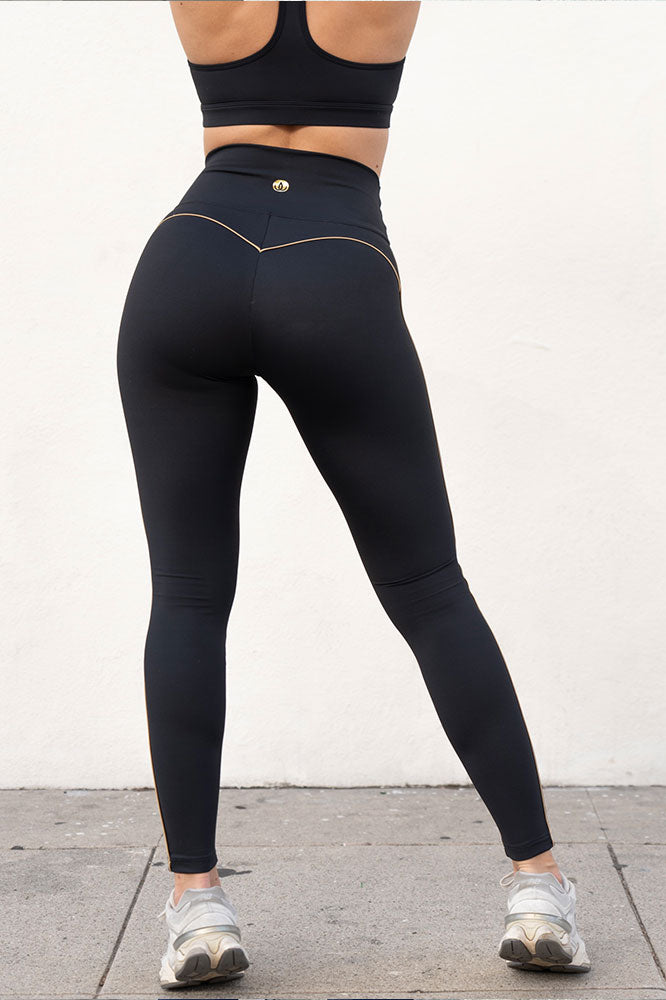
What sets really well-made leggings apart is rarely the first thing you see. It is how seams, panels and cuts are placed. Good construction follows the body and supports the proportions without disturbing movement. Sculpting leggings are built on exactly that thinking: shaping seams and panels are part of the pattern, creating a clearer line through leg, hip and waist. Lines set high over the hip lengthen the silhouette instead of breaking it; back seams give a rounder, more defined shape. There is a real difference between design and decoration. Seams added only for effect can rub or shift focus. A worked-through sculpting design starts from the female form in motion. If the idea is new, see what sculpting leggings are.

How to choose gym leggings for your training
The best choice always depends on use. For strength work, you want leggings that stay put through bends, deadlifts and lunges, so a squat-proof knit, a high waist and good recovery matter more than extreme lightness. For running and power walks, stability decides it: if they slide down or shift on the inner thigh, looks do not matter. For yoga, pilates or studio formats, a softer hand can be more relevant, with seams you do not feel in floor positions, though the pair should still hold its shape. And for many, use does not end with the session: if you want to wear them on to errands, travel or a relaxed everyday, the design needs to be clean and easy to combine.
Common mistakes when buying leggings
The most common mistake is choosing a size that feels good in the fitting moment but not in motion. Too small and they press, cut in and turn sheer when stretched. Too large and they slide and lose the sculpting effect. The size should feel close, not fighting. Many also go on softness alone. A very soft fabric can feel nice immediately, but without enough density you get less support and a shorter life. And buying one pair for every context without setting priorities rarely works: the most compressive pair is not always best for everyday, and the softest is not always best for heavy training.
What feels genuinely premium
Premium is not only a price. It shows in how the leggings behave after ten, twenty and fifty wears. Does the waist stay put? Does the fabric keep its density? Do the seams still feel clean against the skin? Does the pair still look considered at the gym and beyond it? For many women that long-term quality is what justifies the investment. A pair that fits right, shapes with precision and lasts becomes a wardrobe staple. It is why brands like Wallderinska put so much into Scandinavian design, durable construction and sculpting details that actually have a function. The bestsellers are a good place to start.
Choosing gym leggings: quick answers
How do I know if leggings will fit well?
Look for a high, engineered waistband, a dense recovering knit and seams placed with intent. They should feel close but not fighting, and stay opaque in a deep bend.
Full length or ankle length?
Full length suits most of the year and reads cohesive; ankle length can suit shorter heights or avoid bunching at the hem.
Should gym leggings be tight?
Close, not constricting. They should support and shape while letting you move freely. If they press the breath or limit movement, the size or construction is off.
Leave a comment
This site is protected by hCaptcha and the hCaptcha Privacy Policy and Terms of Service apply.