


Article: When should tights be replaced? How to read the signs
When should tights be replaced? How to read the signs
A pair of tights can look flawless on the hanger and still feel wrong in the first squat. The waistband rolls down. The fabric lightens over the knee. A seam that used to hold suddenly feels soft. So the question of when tights should be replaced rarely has much to do with age. It has to do with how they behave when you move.
We build tights to follow the body, hold their shape and stay put. When that function starts to give, the garment tells you, but rarely loudly. The small signals are the ones to read.
When should tights be replaced?
There is no deadline to lean on. A pair that goes to the gym four times a week and into the wash just as often wears faster than a pair that mostly comes along on walks and trips. The quality of the material counts. The wash temperature counts. The friction against mats, benches and floors counts.
The measure that actually tells you something is how they feel in movement. If the tights sit steady, recover after the session and keep their coverage, they can stay an obvious choice in the drawer. If the fit starts to falter, it is better to change in time than to wait until the fabric gives up.
Why does the waistband roll down?
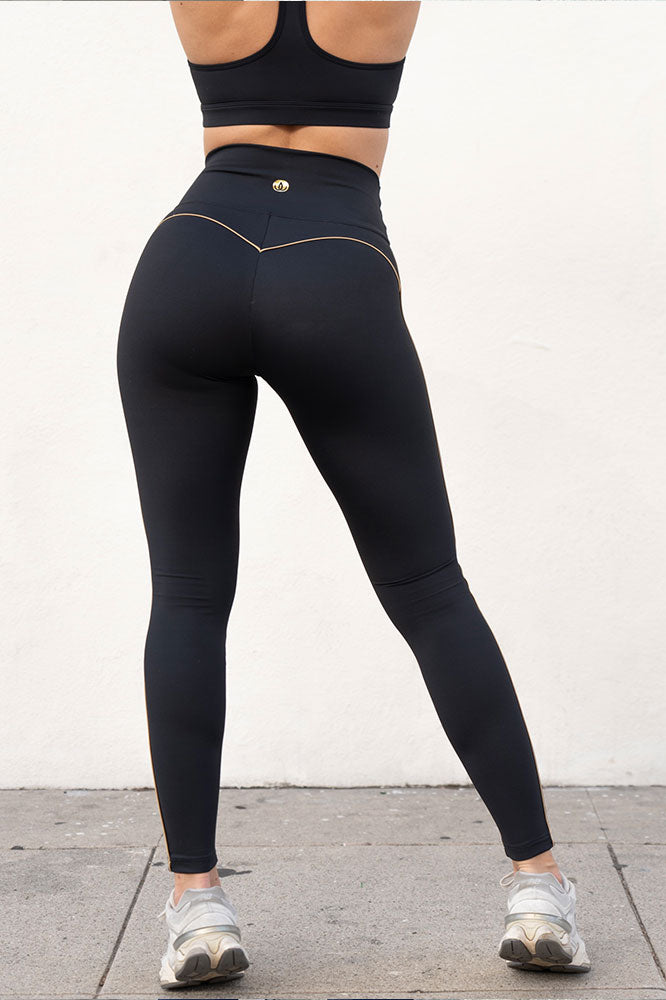
A high waist should feel supple and still firm. If you have to pull the tights up between sets, halfway through the walk or as you rise from a chair, the elastic in the waistband has started to give. It can also show as creases over the stomach, or a waistband that sits unevenly.
This is one of the clearest signs. The tights do not have to go straight away, they can have a quieter life at home. But for training, where you want to think about the movement and not the waistband, it is time for a pair with recovery left in the material. Our high waist tights are shaped at the waist to hold in and stay put. More on what a waistband actually does is in our piece on tights that do not slide down.
Has the fabric gone sheer?
A material can lose its density long before it gets holes. Stand in good light, go down into a squat and look at the seat, the knees and the thighs. If the colour lightens clearly when the fabric stretches, the fibres are worn.
That says nothing about the original quality. Frequent wear, friction and many washes affect all stretch over time. But coverage is a basic function, not a bonus. If you no longer feel secure in how the fabric behaves in movement, the tights have done their work at the gym. We have written more about it in how to avoid see-through tights.
Has the stretch stopped recovering?
Stretch is not only a feeling, it decides whether the garment returns to its shape. If the fabric hangs at the knees, goes baggy behind the thighs or feels slack straight out of the wash, the elasticity has weakened.
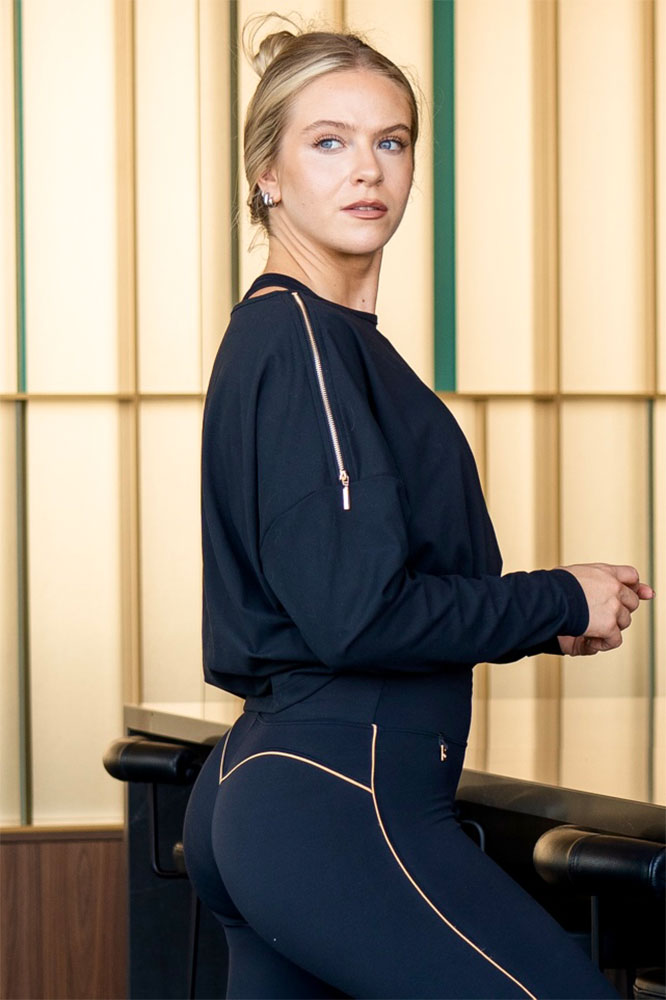
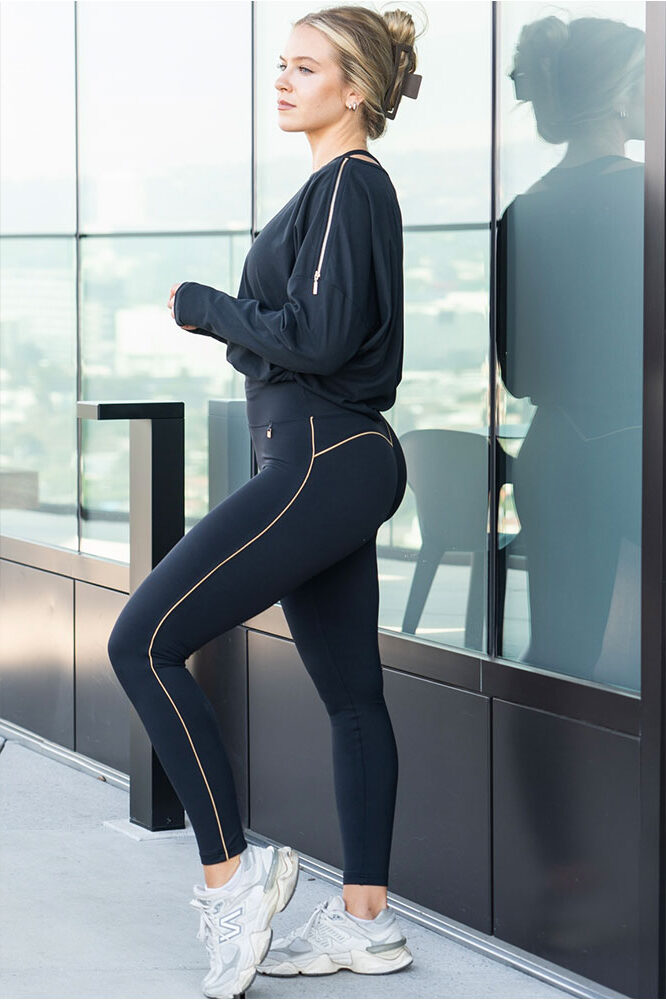
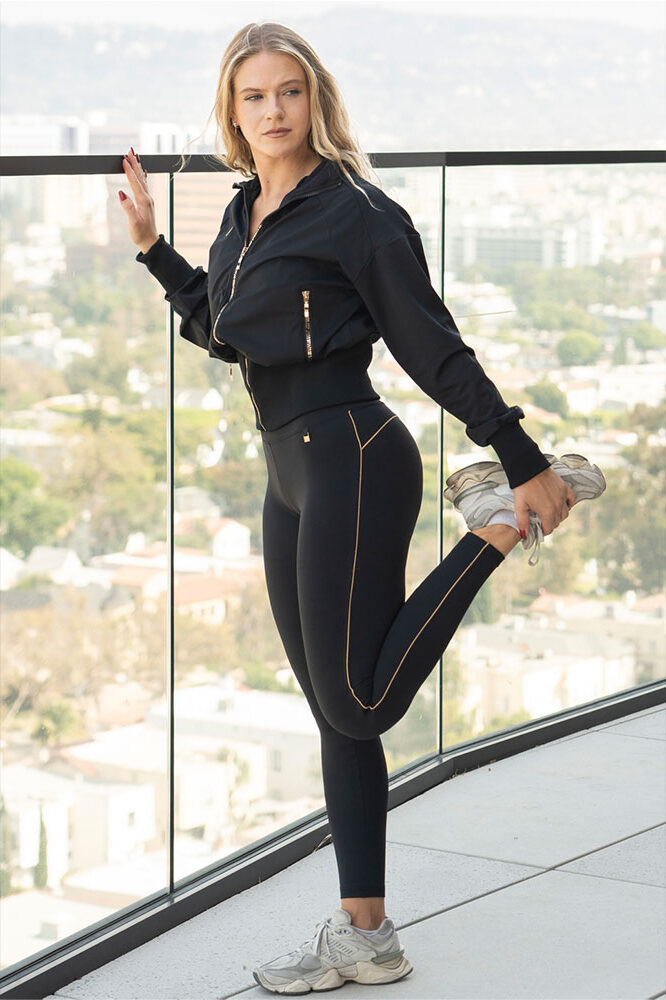
This shows most in sculpting tights, where every panel and seam works with the tension in the material. Slimline Sculpting Träningstights have seams built to lift and shape the glutes and thighs, and a high shaped waist that holds in. That effect rests on the fabric keeping its stability. Once the tension is gone, the construction still sits where it should, but the feeling is different.
What do the seams say?
Wear is not always where you look first. Lay the tights flat and go through the inside as carefully as the outside. Seams at the crotch, waistband and inner thigh take the most load. The surface over hip and seat is worn by bags, benches and outerwear.
A few pills on a small area do not mean the tights are finished. If the material goes rough across larger sections, if seams draw together or threads loosen in several places, both comfort and durability suffer. A loose thread can be secured carefully. A seam sliding apart is a signal that the garment will not take the same load again.
Notice the feeling against the skin as well. A fabric that was soft and now feels coarse or stiff may have been changed by detergent, heat or broken fibres. Comfort is part of the function.
Do tights wear differently at the gym and in everyday life?
Yes. Strength training brings concentrated friction against mats, floors and equipment. Running loads the inner thigh, waistband and knees through thousands of repetitions. Tights worn on trips, on walks or at home often keep their structure longer, but are affected by long stretches of sitting and by frequent washing.
So it is worth rotating between several pairs. The material gets time to recover, and you can choose by the day. Goldline Black Sculpting Tights are squat proof with a high shaped waist and carry the heavy sessions. A softer pair can take the errands, the work and the rest.
How do you make your tights last longer?
Care makes more difference than most people think, especially for garments with a lot of stretch. Wash the tights inside out to protect the surface. Close the zips on other garments in the same machine. Choose a low temperature and a mild detergent, and skip the fabric softener. It settles on the fibres and affects both elasticity and moisture transport.
Let the tights air dry. Tumble dryers and strong heat break down elastic fibres, even when the garment looks untouched afterwards. Do not wring the material hard. Press the water out gently and let the garment dry in its own shape. The whole routine is in our guide on how to wash training tights.
The fit at purchase affects durability too. Tights that are too small sit under constant tension in seams and fabric. Too large and they slide, creating more friction. A pair that lies close to the body without pinching, with freedom of movement in squats and lunges, has a better chance of keeping its construction.
What do you do with the old pair?
Tights that no longer feel reliable at the gym can work at home, for recovery or as a layer on colder days. Be honest about the limit. If the fabric is sheer, the waistband stretched out or the seams damaged, it is not a garment to trust outside the door.
If they are still fresh but wrong in size or style, they can be sold or passed on. Textiles too worn to use belong in textile collection where it exists. Wearing a garment for a long time is part of a considered wardrobe. Holding on to a garment after the function has gone is something else.
When you do replace them, choose by how you actually move. A pair that holds the waist, follows the body and returns to its shape gives more worn days than a pair that only looks good in the first fitting. It should feel steady from the first squat to the last errand on the way home.

Leave a comment
This site is protected by hCaptcha and the hCaptcha Privacy Policy and Terms of Service apply.