


High Waist or Mid-Rise: Which Suits You?
High waist or mid-rise decides more of the fit than most people expect. The rise determines how the leggings sit over the stomach, how the lines fall across hip and leg and how stable everything feels when the pace picks up. The wrong height shows immediately. Leggings that roll down in a squat or cut in on a walk rarely get worn, whatever the colour or the material.
There is no universally right answer. What works in a hard gym session does not always work through a full day in leggings and a knitted jumper. But there are clear differences to choose from.
High waist or mid-rise: the difference in construction
The difference is not only where the waistband ends. It is how the whole garment is cut.
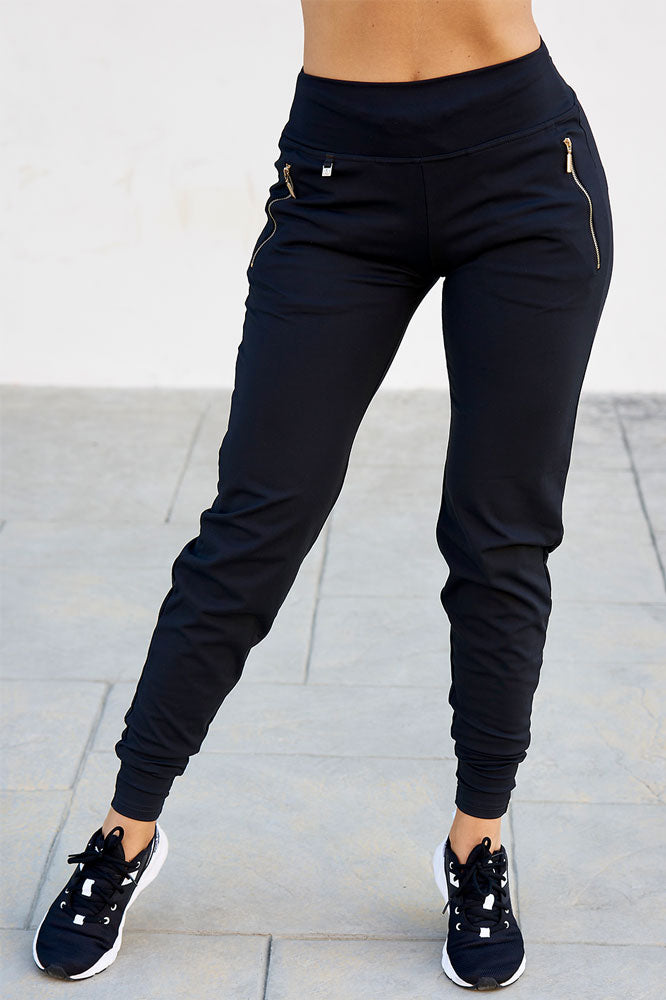
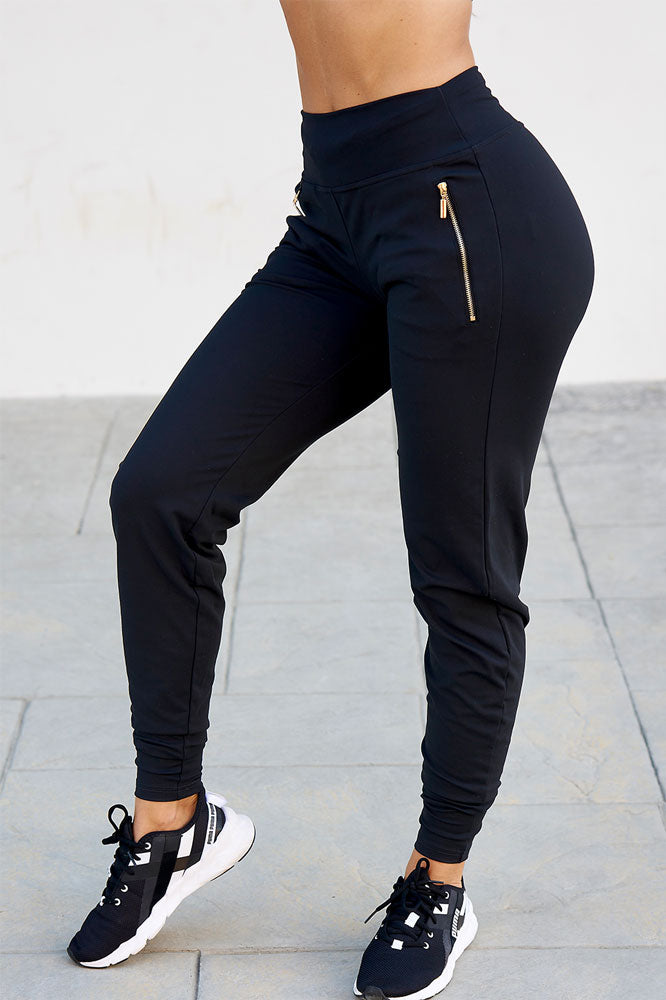
A high waist comes up over the stomach and ends at the natural waistline or just above the navel. For it to stay there, the waistband needs to be wide, shaped and sewn in a fabric that returns after stretch. A straight, narrow elastic placed high will roll down. Stability comes from the construction, not from the height.
A mid-rise ends lower, at or just below the navel, closer to the top of the hip bone. The garment feels freer across the torso and less enclosing. At the same time, the lower waistband puts more demand on the balance between cut, elastic and fabric, because it has less surface to hold on to.
Two pairs with an identical rise on paper can therefore feel completely different. Shaped side panels, the placement of the seams and the density of the fabric shape the experience more than the centimetres do.
When a high waist is right
A high waist is the first choice for most women who want their leggings to stay put through the whole session. In strength training, intervals and movements where you bend, twist and lift, a higher waistband gives more control over the core. The garment moves less and you adjust it less often.
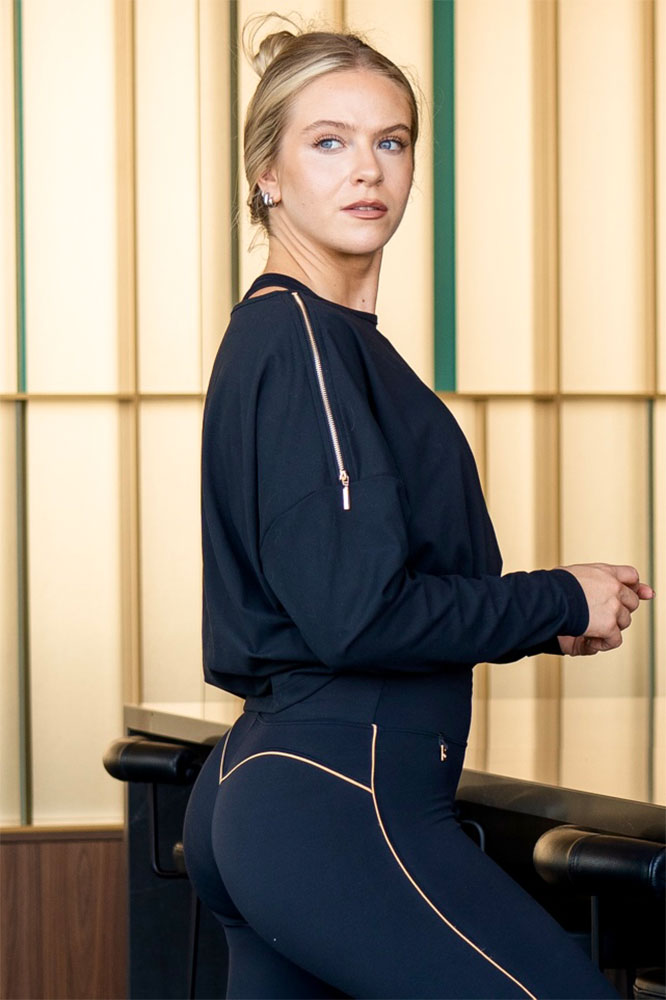
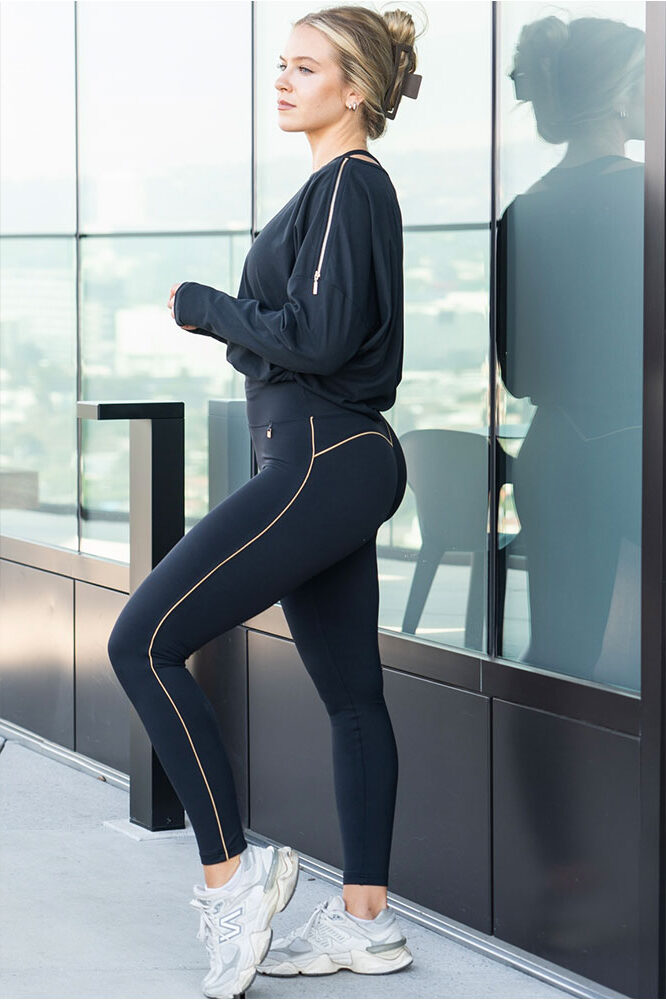
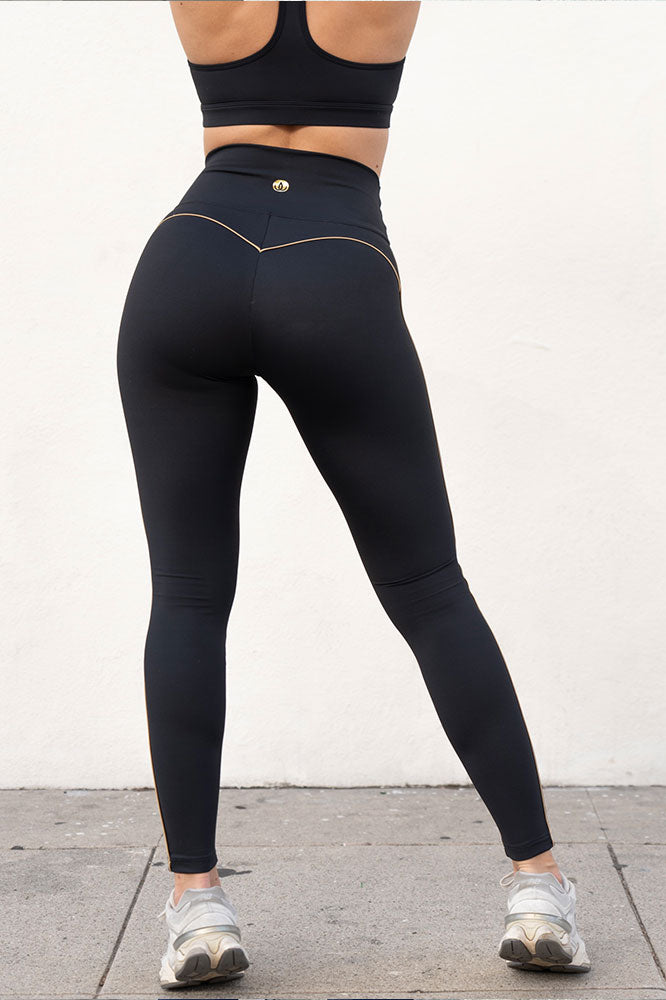
There is a visual advantage too. When the waist sits higher and is combined with panels that mark the waistline, the proportion between waist, hip and leg reads more clearly. On Sculpting models it shows especially when the lines run high over the hip without breaking the length of the leg. That is an effect of the pattern construction, not of styling.
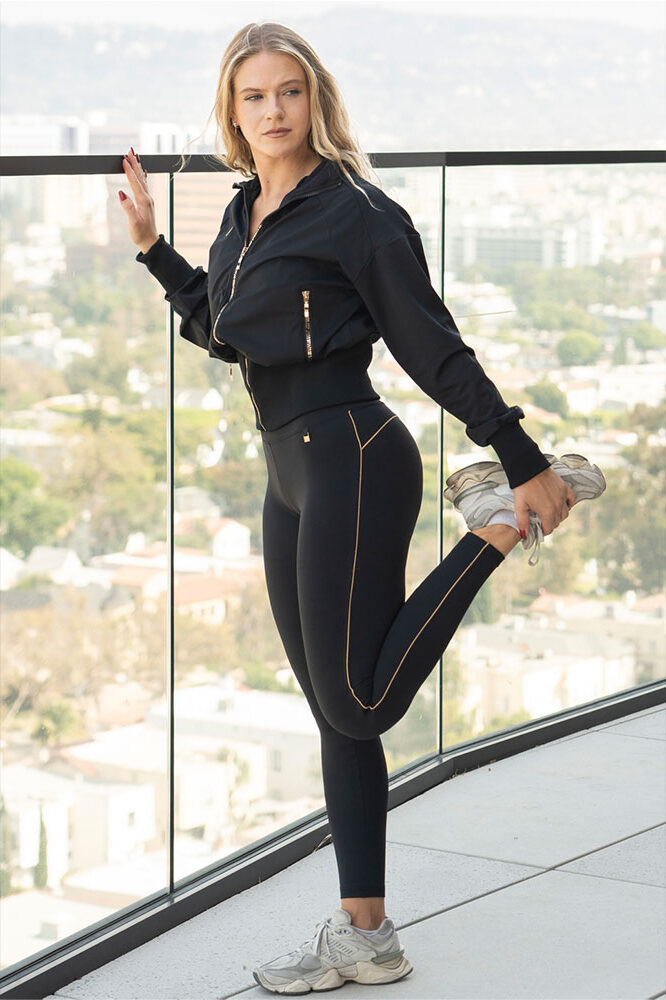
Edge Stripe Leggings are one example. A high shaped waist that holds, a heart-shaped cut at the back and a hidden pocket in the waistband. The fabric is 78 percent recycled polyester and 22 percent elastane, with four-way stretch and moderate compression. You will find more models among our high waisted training leggings.
A high waist does not suit every body and every day. If the waistband is too firm or too high in relation to your upper body, it becomes limiting instead of supportive. With a shorter upper body, a very high waistband can end up too far up and disturb the balance of the whole fit.
When a mid-rise is right
The mid-rise gets less attention, but for many women it is the most natural fit.
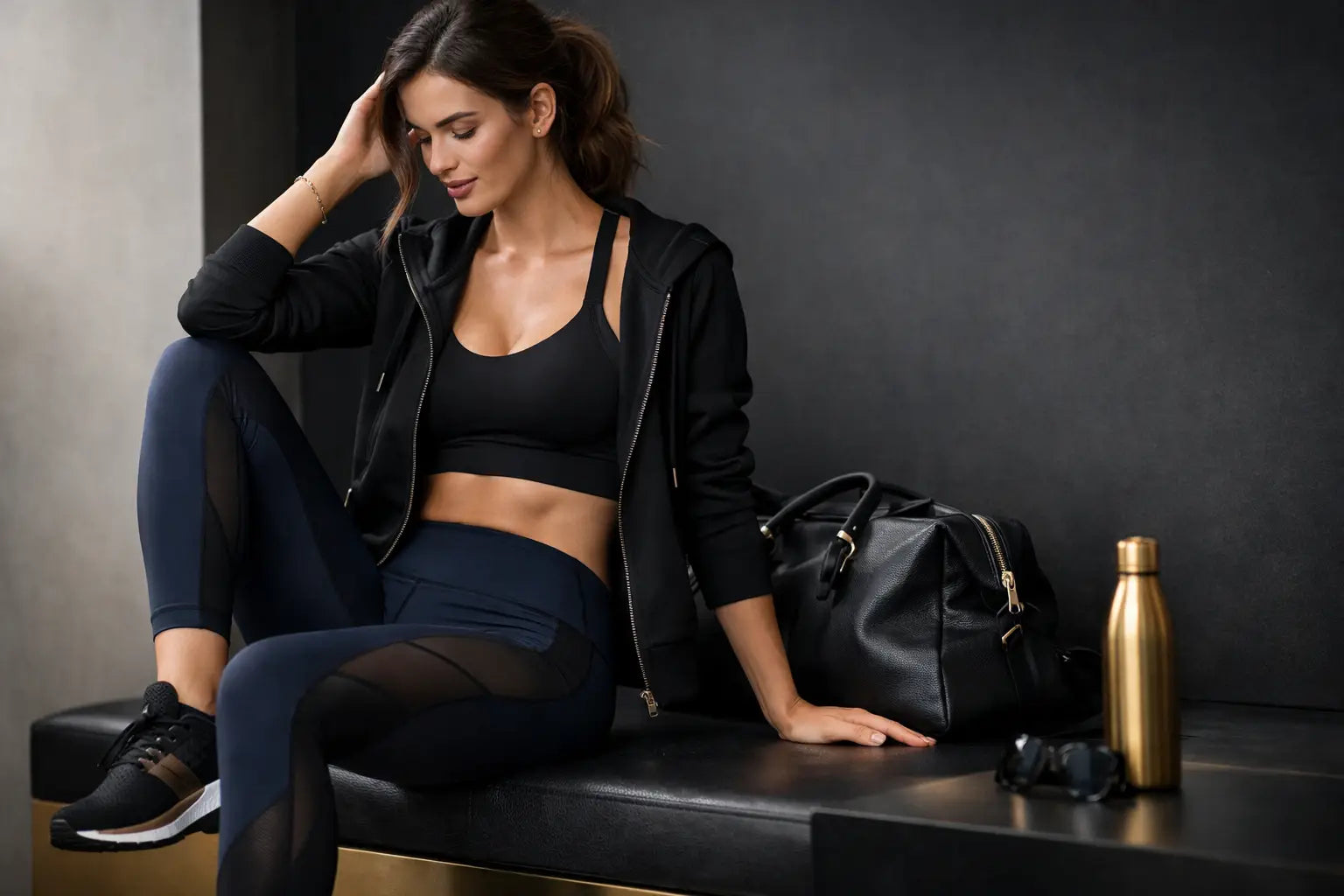
Choose it if you want a lighter feeling over the stomach, if you often find high waistbands warm and compact, or if you simply prefer less fabric across the torso. For low intensity training, walks and long travel days, a mid-rise can be the more comfortable choice. The garment feels more like a second layer than like support.
A mid-rise also demands more precision to work. Because the waistband sits lower, cut, elastic and fabric have to work together exactly. Without that balance the leggings start to slide, particularly in more dynamic training. A well made mid-rise pair is harder to get right than a well made high waisted pair.
Body shape matters, but not as a rule
It is tempting to look for a simple rule. Measurements do not decide the experience. Two women with almost the same measurements can prefer completely different rises, because they want the garment to feel different against the body.
A few patterns still hold. If you want to mark the waist and create a clear transition between upper body and hip, a high waist gives the most effect. If you want a softer expression with less focus on the waist, a mid-rise feels more balanced. With a long upper body you carry a higher waistband comfortably. With a short upper body, a mid-rise is often easier to wear all day.
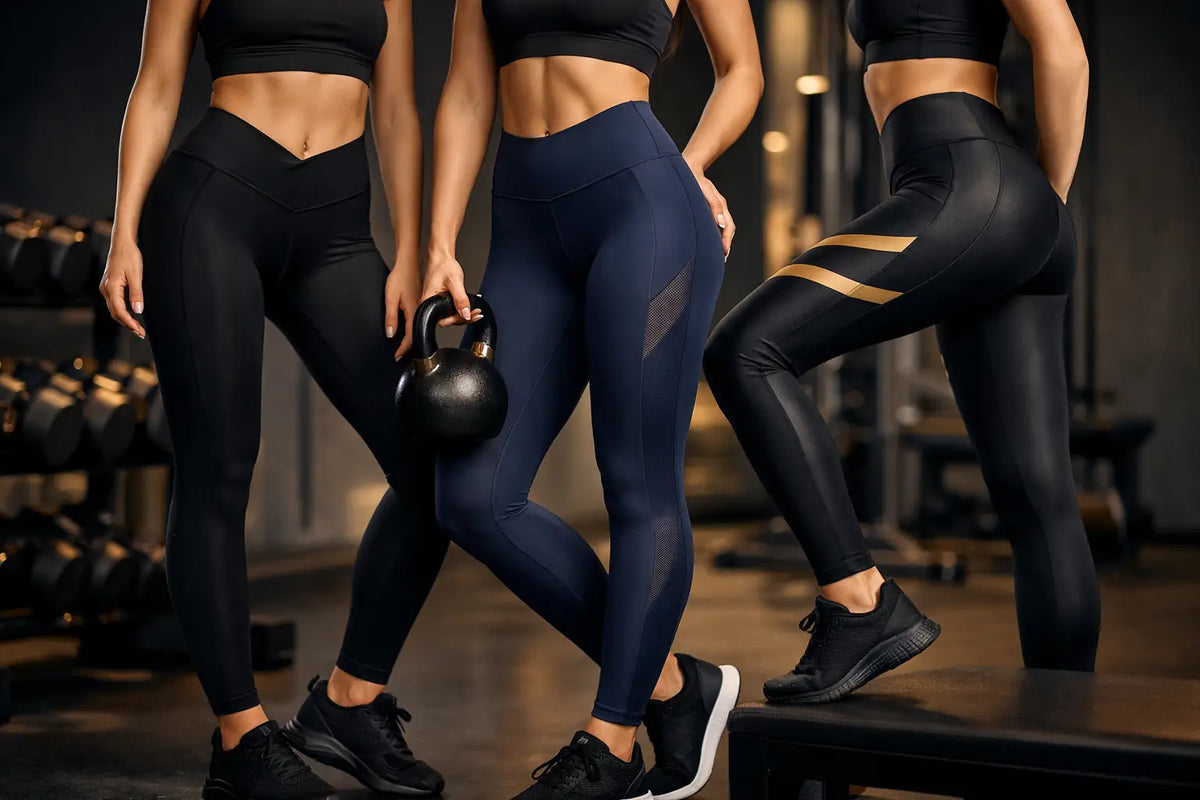
The placement of the seams counts for more than many people think. On a considered garment the seams are functional. They follow the lines of the body, keep the garment in place and give the drape over hip and seat a direction. That is how our Sculpting leggings work, whatever the rise.
How to choose in practice
Start from how you use your leggings most, not from how you wish you used them.
If you mainly train strength, want support and appreciate a clearly shaped silhouette, a high waist is a strong choice. If you prioritise lightness and everyday comfort, or already know that you fold high waistbands down, a mid-rise makes more sense.
Then look at what usually bothers you. Pulling the leggings up during a session is rarely only a sign that the rise is too low. It can just as easily be the wrong size, a waistband that is too soft or a fabric with no recovery. Our guide to choosing training leggings goes through those causes one at a time.
Many women who train regularly use both heights. A high waist for sessions where firmness and shape come first. A mid-rise for days when comfort should be more pared back. A matching training set also makes the choice easier, because the pieces are already tuned to each other in tone and fit.
Common questions
Which rise gives the most support over the stomach?
A high waist gives more support and a smoother line over the stomach, provided the waistband is wide and shaped. A narrow, firm elastic placed high risks creating a fold instead. Width matters more than height.
Do high waisted leggings always roll down?
No. Rolling comes from a size that is too small, a waistband without enough width or a fabric that has lost its recovery. A well constructed pair in the right size stays put through the whole session.
Does a mid-rise work for strength training?
Yes, if the garment is well made. You get less support across the core than with a high waist, so for heavy lifts and deep squats most women prefer a higher waistband.
Anything but ordinary.

Leave a comment
This site is protected by hCaptcha and the hCaptcha Privacy Policy and Terms of Service apply.