


Best Gym Leggings: How to Choose the Right Pair
The best gym leggings are recognised by how little you think about them. The waistband stays put in a squat. The fabric holds its shape through the whole session. You are not pulling anything up between sets.
The difference rarely shows in a product image. It sits in the construction: how the waist is cut, where the seams run, how well the material recovers after washing. A pair can feel soft in the fitting room and still give up after a few weeks at the gym.
What decides which leggings are best for the gym?
Three things: the waistband, the material and where the seams sit. The rest is taste.
The gym asks for things a walk does not. You go deep in a squat, you sit down in machines, you stand up, you hinge forward over a barbell. The piece has to follow every position without moving. Fabric that is too thin loses density in deep positions. Fabric that is too firm locks the hip. What works sits between the two.
Size decides less than you think. Two pairs of training tights in the same size can sit completely differently depending on cut and stretch. Read the construction, not the label.
The waistband is the first check
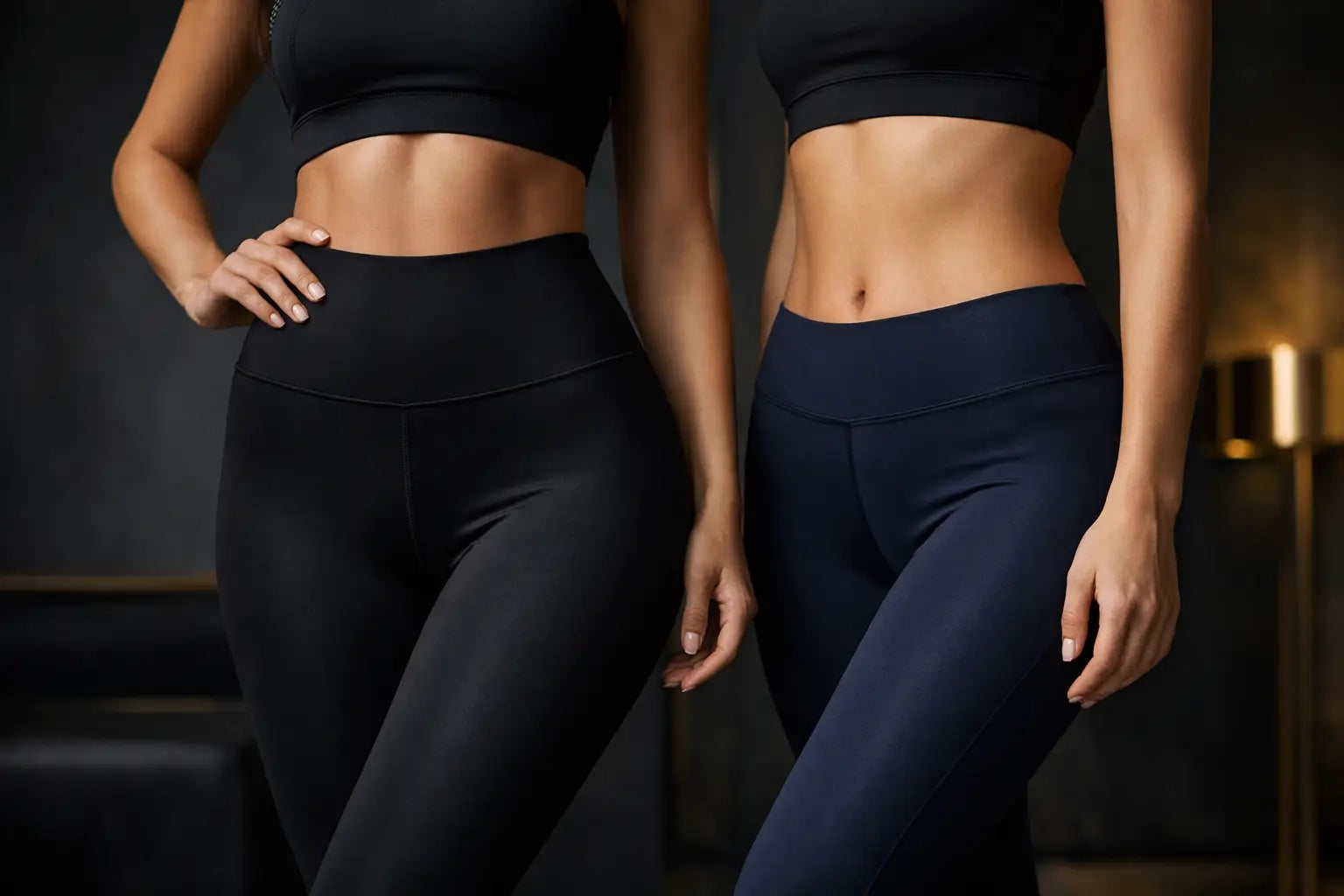
If the waist rolls, the rest matters less. A waistband that is only high on paper, with no firmness in the fabric, folds in the first squat. A sculpted waistband stays where it is without pressing over the stomach.
A high waist is usually the right choice at the gym. It gives support through the core and a clean finish against the top. If you want to go deeper into what the height actually does to the fit, there is a comparison of high waist and regular waist in the Journal.
Test it like this: pull the leggings up, do three squats, stand up. If the waistband is in the same place, the construction is right. If it has travelled down a centimetre, it will keep doing that, session after session.
Check how the waistband meets your stomach when you sit down too. A waist built properly does not fold double in a seated position. It lies flat and stays there.
The material decides how long the fit lasts
The feel of the fabric tells you about day one. The recovery tells you about month six.
A good performance fabric returns to its shape after use and washing. A weaker one turns shiny over knees and seat, loses its spring and starts sliding. Cost per wear is decided there, not on the price tag.
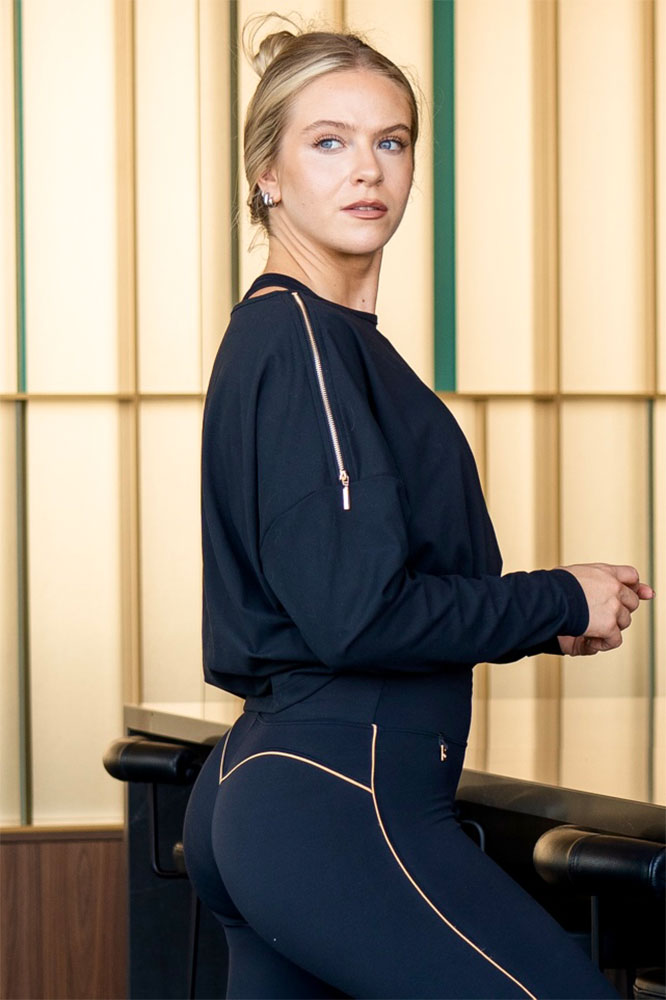
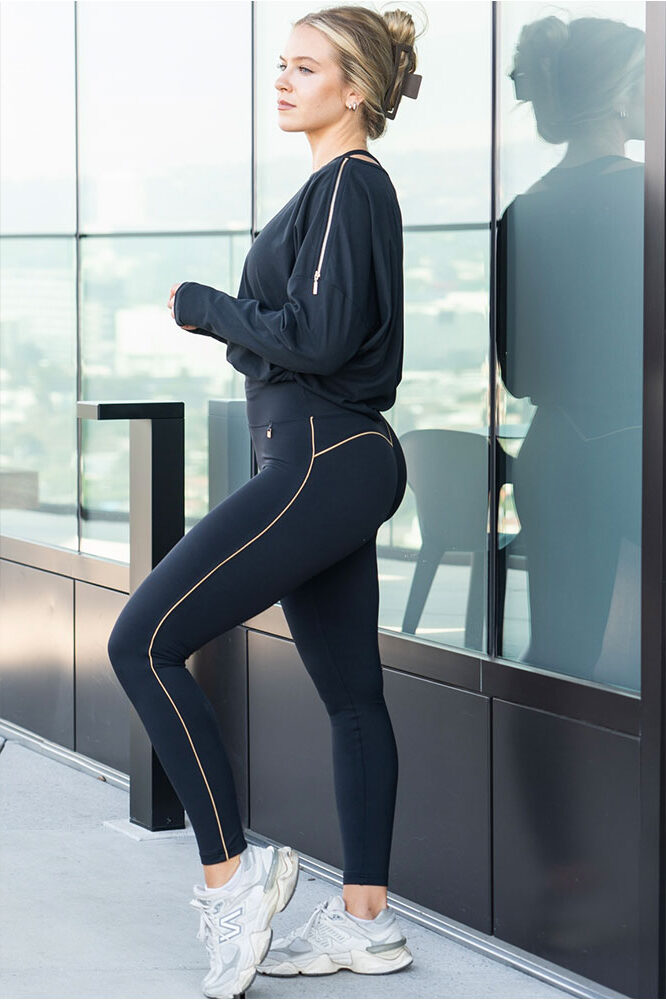
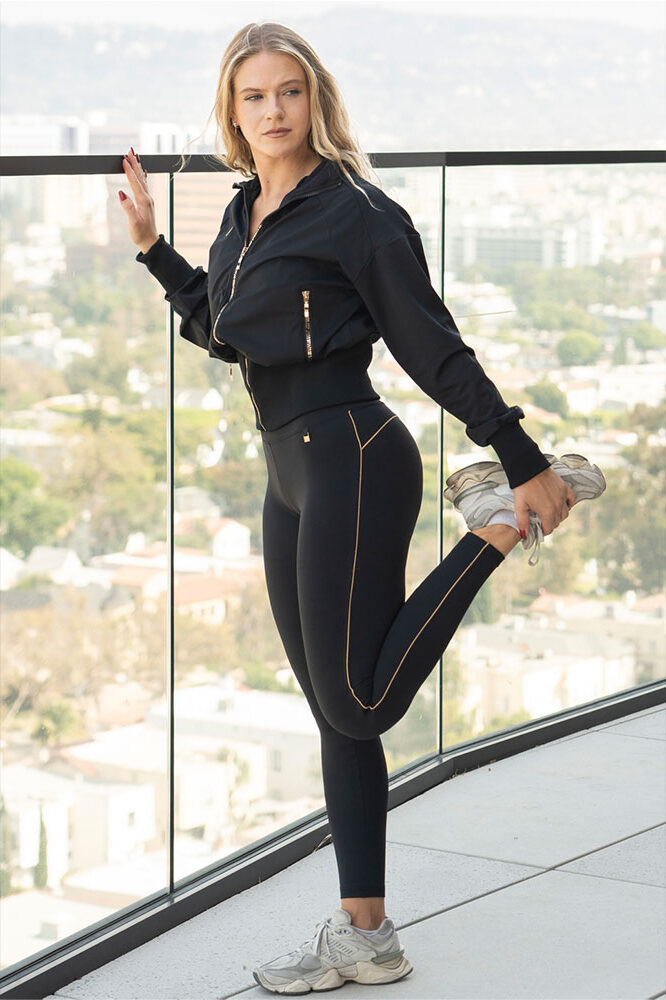
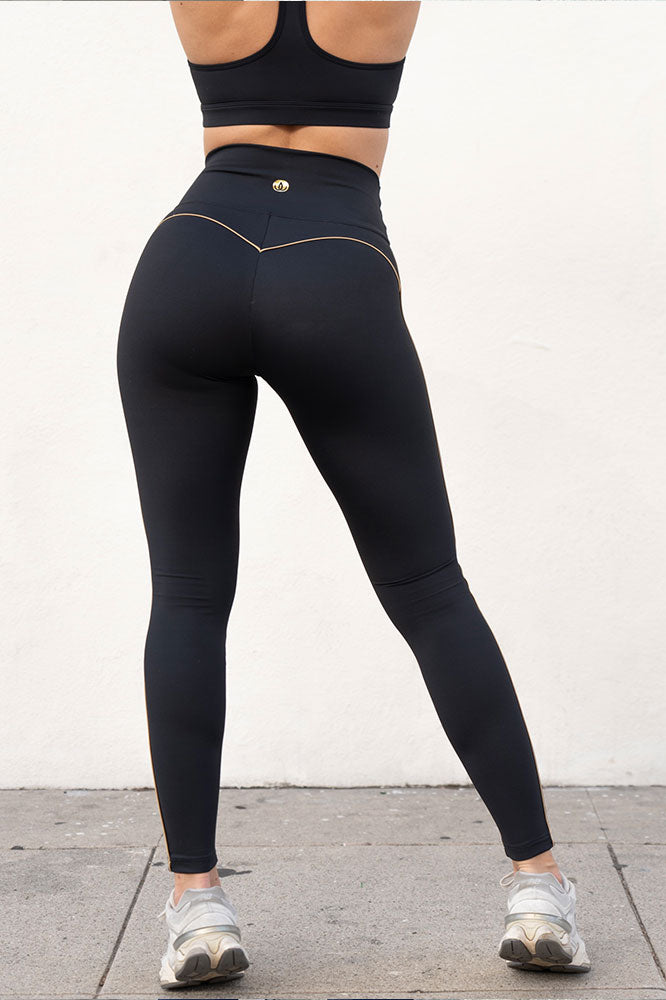
Edge Stripe Leggings are built from 78 percent recycled polyester in ECO Circle fabric and 22 percent elastane. Four-way stretch, moisture-wicking and quick-drying. The high sculpted waist holds, the leggings are squat proof, and there is a hidden pocket at the back of the waistband. That is the kind of specification you want to be able to read before you order.
The elastane content is worth a check of its own. Too little elastane gives a fabric that stretches and stays stretched. Too much can give a surface that feels rubbery against the skin. Around a fifth elastane usually gives both give and return.
A more expensive pair is not automatically a better pair. The difference lies in how many parts of the garment are considered: the fibre choice, the seam placement, the build of the waistband and how the leggings behave after twenty washes. Train once a week and you barely notice. Train four times a week and you notice every time.
The seams do the work
In a well-made pair, the seams are working. They are placed to follow the lines of the body, not to be seen.
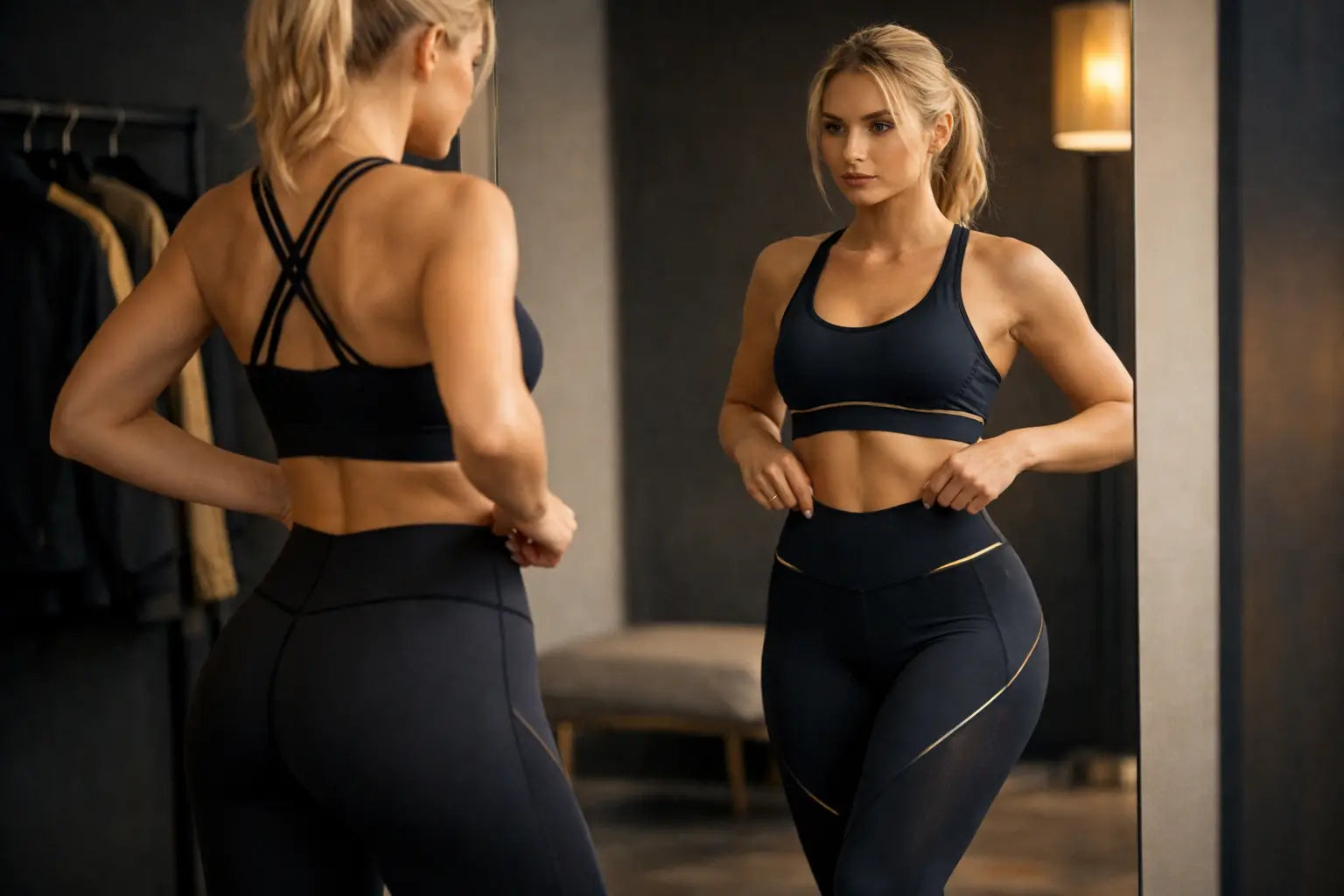
Lines drawn high over the hip lengthen the leg. Shaped side panels mark the waist. A heart-shaped cut at the back gives the seat a rounder line without extra fabric. That is pattern construction. Done right, you do not notice it at all. You only notice that the piece sits. Our collection of sculpting leggings starts from that principle.
Seams that pull askew already in the fitting room never improve. They rub in the same place every time. Check the symmetry on both legs before you decide.
Different sessions ask for different things
If you lift heavy, stability matters most. High waist, dense fabric and a fit that does not move when you switch between exercises. Here, coverage at the bottom of a squat is a requirement, not a detail.
If you run intervals or circuits, ventilation and give weigh more. The leggings still need to sit close to the body, without feeling heavy when the pace goes up.
If you carry on straight after the session, the look counts. Black training tights with clean lines work under a coat on the way to a meeting. A pair with a large logo across the thigh rarely does.
Many women buy one pair for everything and end up disappointed on all three counts. Two pairs with different jobs solve it more often than one pair meant to handle every situation equally well.
How to test before you decide
Standing still in front of the mirror tells you little. Do three things instead.
One: squat to the bottom and check the density of the fabric. Two: step up with a high knee and feel whether the seams pull askew. Three: sit down for a minute and stand back up.
If you want to take the piece off straight after the session, it is the wrong model, however good it looks. The right pair is barely noticeable.
Common questions
Which leggings work best at the gym if I mainly lift heavy?
Choose a high sculpted waist and a dense fabric with good recovery. Stability over waist and hip means more than how thin the material feels in your hand.
How do I know the leggings will not go see-through?
Test in a deep squat, not standing. A dense material with the right elastane content and considered compression keeps its coverage at the bottom of the movement too.
How often do I need to replace my gym leggings?
As long as the waistband stays put and the fabric returns to its shape, they work. When the waistband starts travelling down or the material turns shiny over the knees, the piece is done.
Anything but ordinary.

Leave a comment
This site is protected by hCaptcha and the hCaptcha Privacy Policy and Terms of Service apply.