


Article: Black blazer for women: six things that decide if you wear it
Black blazer for women: six things that decide if you wear it
A black blazer is the piece most people own and fewest people wear. It stays on the hanger because something is off. The shoulder sits a centimetre wrong, the fabric creases after an hour, the sleeve ends in the wrong place. All of it can be seen in advance.
What does the blazer have to handle?
Start with the use, not the model. A blazer worn to meetings once a month is a different piece from one that follows you through whole days. The one worn often has to survive being sat in, packed down and washed. The one worn rarely is allowed to be stiff.
Most people buy the first kind of blazer and choose the second kind of fabric. That is why it stays on the hanger.
Which length should I choose?
The length decides what the blazer can be worn with.
- Short, to the hip bone. Works over a dress and high-waisted trousers. Lengthens the legs.
- Mid-seat. The most useful length. Works with both trousers and a skirt.
- Long, below the seat. Needs something narrow underneath, or the waist disappears.
If you are only going to own one black blazer, take the middle one.
How do I know the shoulders sit right?
The seam where the sleeve meets the shoulder panel should land on the outer edge of the shoulder bone. If it lands inside, the blazer pulls across the back the moment you reach forward. If it lands outside, the sleeve drops and the whole piece looks borrowed.
The shoulder is also the one thing a tailor struggles to change. Sleeve length, waist and overall length can be adjusted. The shoulder cannot. Choose for the shoulder and adjust the rest.
Does the fabric matter?
Three questions are enough.
- Does it crease after an hour of sitting? Sit down in the fitting room and stand up again.
- How does it feel in the armhole? That is where the lining sits, and where a poor blazer shows first.
- Can it be washed at home?
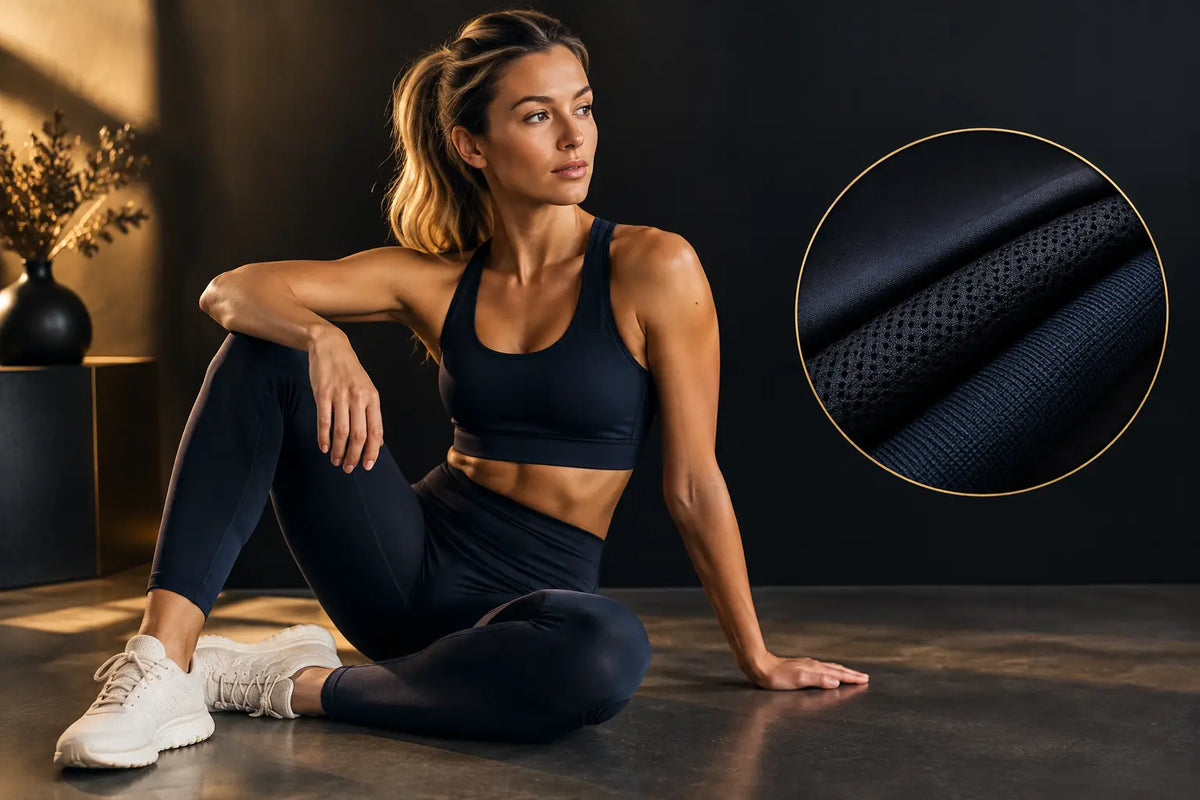
Wool breathes and holds its shape, but costs more and wants dry cleaning. Polyester blends with stretch crease less, take more and can often be washed at home. A blazer in performance fabric with 4-way stretch moves with the arm instead of resisting it. That is the difference between keeping it on all day and taking it off at lunch.
Single-breasted or double-breasted?
Single-breasted is neutral and works open. Double-breasted gives a clearer line but wants to be buttoned, and open it hangs heavy. If you choose double-breasted, expect to button it.
Should it have pockets?
Ask whether the pockets have been opened. Many blazers arrive with the pockets stitched shut so they hang straight in the shop. They need to be opened before the piece is worn, or you walk around with pockets that do not exist. A blazer without real pockets means your phone in your hand all day.
Which size should I take?
Take the size for your shoulders and chest, not your waist. The blazer should button without the lapels being pulled apart into an X across the bust. If you can button it and breathe out, the size is right, even if it feels a little roomy at the waist. A waist can be taken in. A shoulder cannot be built out.
How do I wear it?
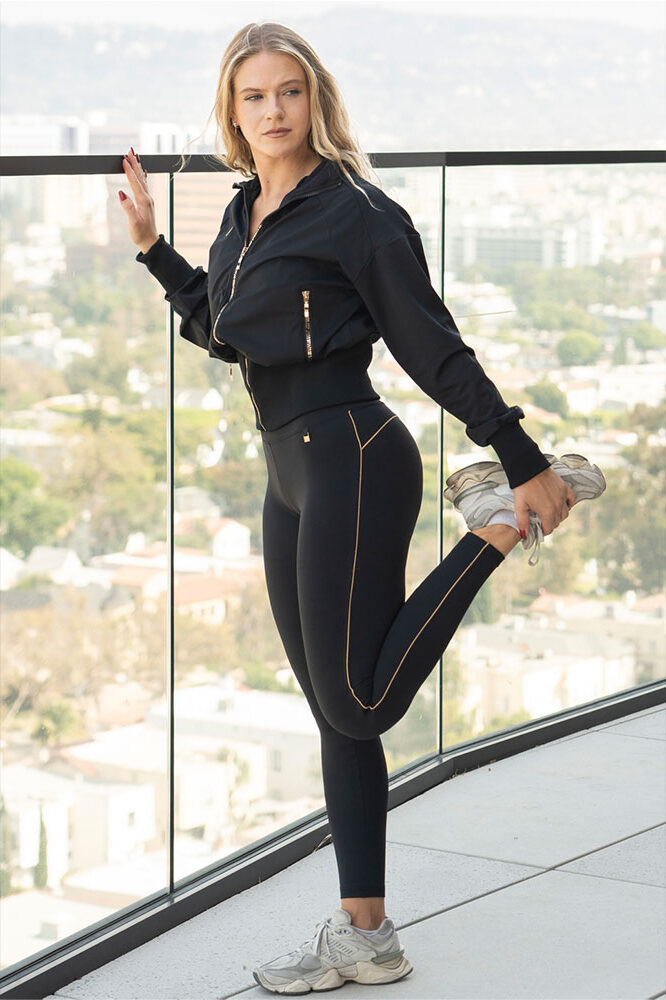
Open over a tank and leggings is the quickest way to turn workout clothes into something else. Buttoned over trousers it becomes a set. Over the shoulder it becomes nothing at all, which is sometimes the entire point. The blazer does not decide the outfit. What is underneath does.
Ours
Edge Women's Blazer is built for the first kind of blazer, the one worn often. 4-way stretch in recycled polyester, faux leather at the edges, side pockets, XS to XXL. It belongs to Edge, the collection that moves between training and everyday.
Read also Which fabrics breathe best in workout clothes? and see Studio and Everyday.

Leave a comment
This site is protected by hCaptcha and the hCaptcha Privacy Policy and Terms of Service apply.