


Which fabrics breathe best in workout clothes?
A piece can feel cool in the fitting room and heavy after twenty minutes. The question of which fabrics breathe best rarely has a short answer. The fibre is part of it. The knit, the fabric weight, the fit and how quickly moisture leaves the skin are the rest.
We build pieces for movement that continues after the session. That asks something of the fabric. It should feel soft against the skin, hold its shape through many washes and release moisture before it turns uncomfortable.
What does it mean that a fabric breathes?
Two things, at once. Air should be able to pass through the fabric. Moisture should be carried from the skin to the surface and evaporate there. A fabric that manages the first but not the second feels cool for the first few minutes and clammy after that.
So reading the fibre content is not enough. The same fibre can be knitted dense or open, heavy or thin, and the result is two different pieces. Construction weighs as much as the name on the label.
Polyester: fast moisture transport when the pulse rises
Polyester absorbs very little moisture in the fibre itself. Sweat is carried to the outside of the fabric and evaporates there. The feel stays drier through intervals, cycling and warm sessions.
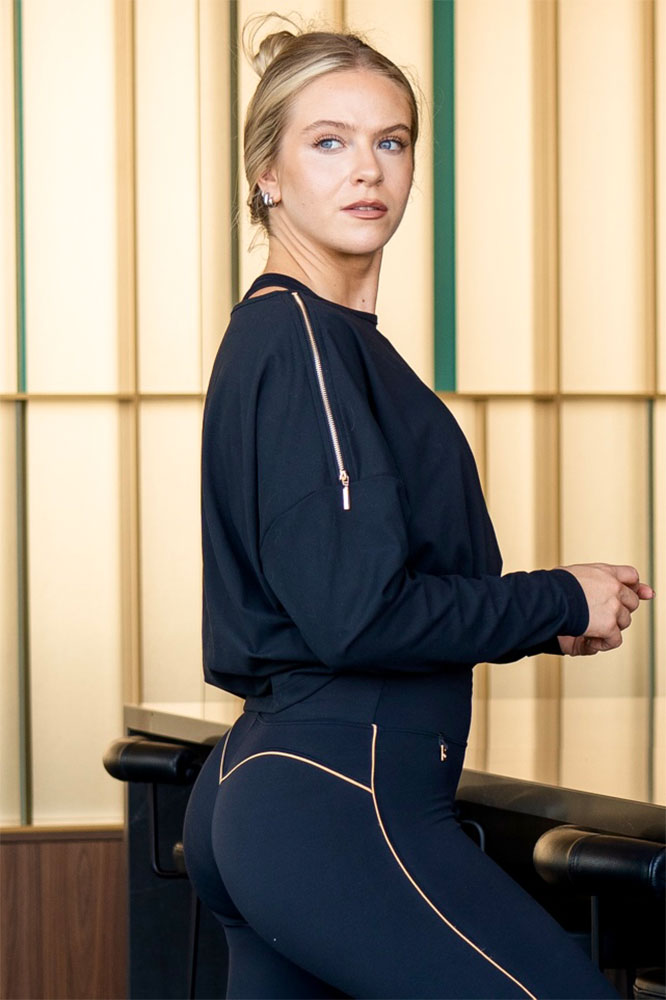
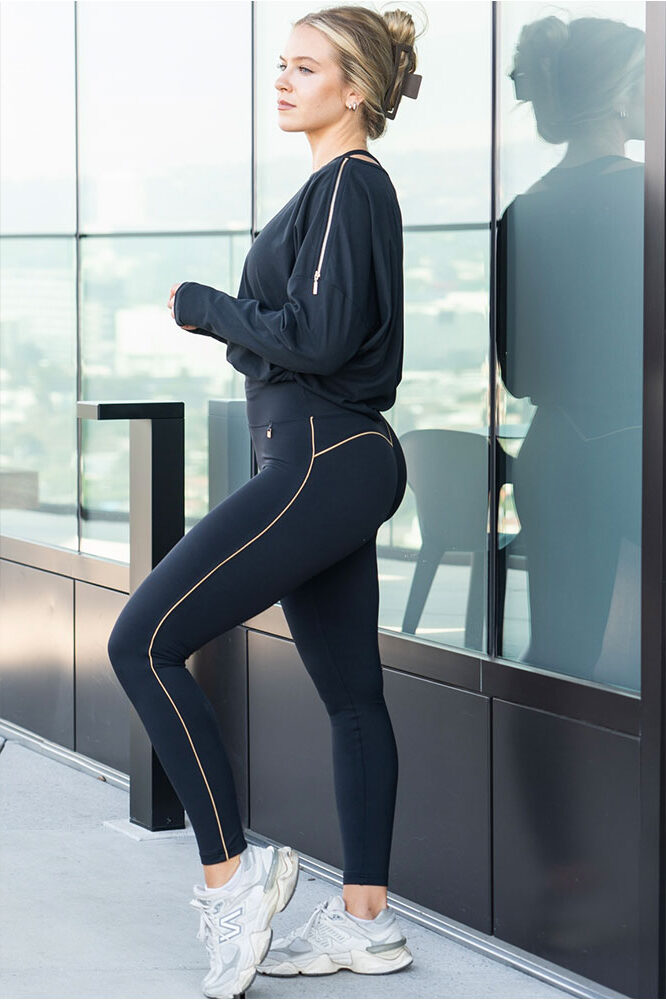
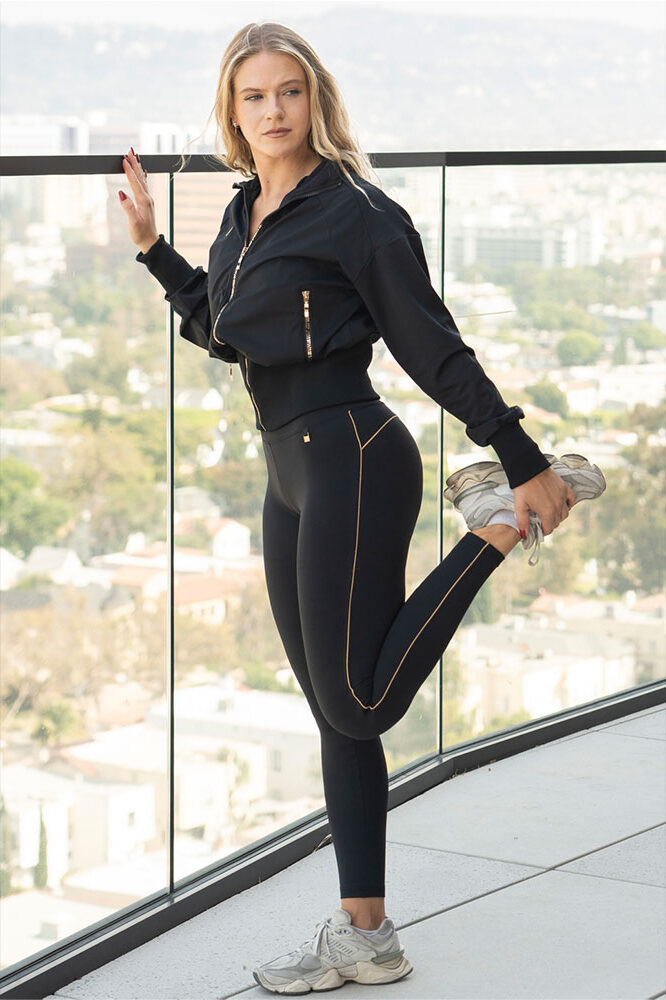
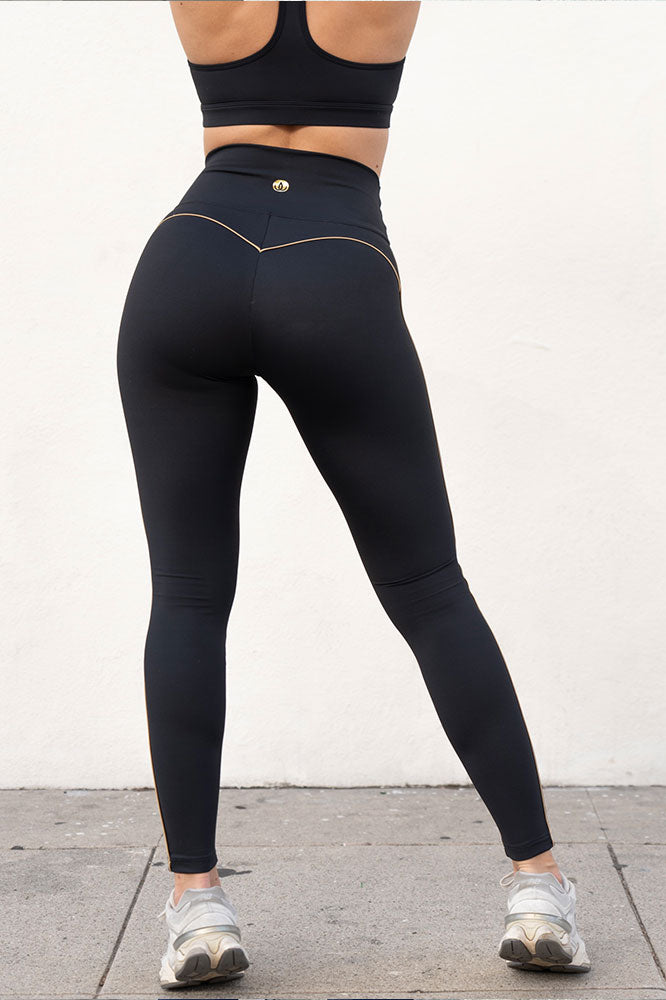
Several of our pieces are built on that fibre. Goldline Black Sculpting Leggings are made in 73 per cent recycled ECO Circle polyester and 27 per cent elastane. They are squat proof, moisture-repellent and quick-drying, with a shaped high waist that stays where it should. More styles in Leggings.
Polyamide: supple and hard-wearing
Polyamide is soft, durable and recovers well after stretch. The fibre is often used in tights where the fabric has to hold its shape through squats, stairs and long walks. It takes up slightly more moisture than polyester, but still dries quickly.
Together with elastane, polyamide gives the recovery a high waist needs to stay put. Elastane on its own does not make a piece airy. It gives freedom of movement, and freedom of movement is part of comfort.
Merino wool: temperature rather than maximum ventilation
Merino wool can take up moisture as vapour without feeling wet against the skin. Its strength is temperature regulation. That makes the fibre lovely for walks, outdoor training in changing weather and travel. For a sweaty gym session, quick drying time matters more, and there are lighter options for that.
Cotton: pleasant dry, slow wet
Cotton lets air through and feels soft as long as it is dry. Then the fibre soaks up sweat and dries slowly. For a quiet day at home or a sweatshirt on the way to the studio it works well. For a session with a high pulse there are sharper choices.
Why do two pieces in the same fibre breathe differently?
Because the knit separates them. A densely knitted fabric gives a smooth, shaping feel and good coverage. A more open or perforated section lets heat out where it builds, along the back, behind the knees, under the arms.
Mesh is the clearest version of that idea. Edge Long Sleeve Mesh Top has mesh details that ventilate, with sleeves that cover fully. Edge Mesh Sculpting Leggings use mesh at the sides to draw a line along the leg. The full selection is in Mesh Activewear.
How much does the fit matter?
A great deal. A fabric can only carry away the moisture it reaches. A piece that sits close to the body works more efficiently than one hanging loose, provided the fabric is made for it. If it pulls across shoulders, waist or thighs, comfort runs out before the session does.
An outer layer follows the same logic. A jacket should hold the warmth through the warm-up and let it go once you get going. Zip, collar and sleeve construction decide that as much as the fabric. Our styles are in Training Jackets.
What do you choose for which training?
For strength and the gym, a mid-dense fabric with elastane works well. It gives stability, handles movement close to the body and does not turn sheer when you bend.
For running and intervals, choose light and quick-drying, ideally a top with ventilation where the heat gathers. The selection is in Tops.
For everyday and travel, something else weighs more: that the piece holds its shape hour after hour. Then fabric weight and recovery matter more than how airy the fabric feels in your hand.
What can you check before you decide?
Pull lightly at the fabric and let go. It should return without leaving a ripple. Feel whether the waistband sits steady against the body without digging in. Bend forward and look in the mirror, preferably in daylight.
Then look at the seams. They should follow the movement, not slow it. More on how different qualities behave in motion is in our guide to training fabrics.
Does it matter that the material is recycled?
Recycled polyester can give low weight, good stretch and effective moisture management. But recycled content says nothing in itself about how a piece feels or lasts. The quality of the yarn, the fabric weight and the construction decide that.
The piece you wear often is the one that does the most good. Tights with a steady waist, well-placed seams and a fabric that recovers after washing stay in the wardrobe longer than one that only looks right in the shop.
A fabric that breathes well is worth a lot. It is worth more when the fit lets you move freely. Choose the fabric for the movement, not for the label.
Anything but ordinary.

Leave a comment
This site is protected by hCaptcha and the hCaptcha Privacy Policy and Terms of Service apply.