


Why do my tights slide down during training?
Updated 24 September 2026
Short answer: Leggings that slide down are usually too big, or have a waist that is too narrow or too soft to hold. If the leggings are too small instead, the waistband can roll down or dig in. The solution is the right size and a high, wide waist in a dense fabric that returns to its shape. Then the leggings stay in place through the whole session, and you no longer have to think about them.
You often notice it first when the pace picks up. You pull the waistband up after the squat, again on the walk and once more on the way out of the gym. There is almost always an explanation, and it can be found.
Why do my leggings slide down?
| What happens | Likely cause | How to fix it |
|---|---|---|
| The whole garment slides down from the waist | The leggings are too big | Choose a smaller size, or a style with a high shaped waist |
| The waistband rolls down or digs in | The leggings are too small, or the waistband is too narrow | Check the size and choose a wide waist |
| The fabric turns see-through in a squat | The leggings are too small, or the fabric too thin | Choose the right size in a denser fabric |
| Fits well at first but slides once you have warmed up | The fabric has poor recovery | Choose a dense fabric with plenty of elastane |
| Started sliding after many washes | Heat and the tumble dryer have weakened the elastane | Wash at 30 degrees and line dry |
Are my leggings too big or too small?
Leggings that are too big slide down. The fabric has a little excess around the hips, thighs and waist, and with every step it moves downwards until you have to adjust the garment. That also applies to leggings that feel comfortable when you stand still.
Leggings that are too small behave differently. The fabric is too tight over the waist, hips and stomach, and the waistband digs in or rolls down when you bend at the hip. If the fabric also turns see-through in a deep squat, the size is too small.
So try your leggings on in motion, not just in front of the mirror. Walk up the stairs, sit down, do a few squats and stretch your arms above your head. If they stay in place then, you have found the right size. Measurements and advice are in the leggings size guide.
How should I put my leggings on?
Like a pair of tights, a little at a time. Ease the fabric upwards bit by bit until the waist sits where it should, and take hold of the fabric at the front and back, never at the sides, the piping or the mesh. Then every seam falls into place and the leggings fit the same hour after hour. More in how should workout leggings fit.
Why does the waist matter so much?
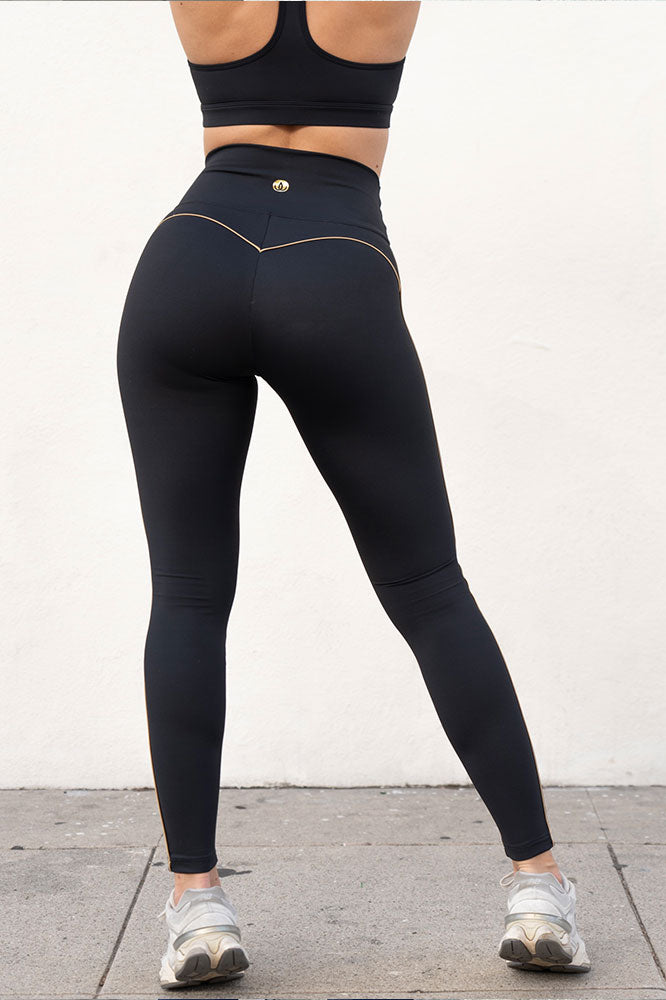
Because the waist is what holds. A narrow waistband struggles to keep leggings in place, while a wide waist spreads the pressure over a larger area and stays put. A higher waist also holds better than a low one.
That is why we use no elastic band in our full-length leggings. The waist is shaped in double fabric. It gives structure, supports the stomach and holds you in comfortably, and it does not chafe or pinch. When you sit down, it never feels like it takes your breath away.
“Fit as they should, without rolling down at the waist. The fabric feels super luxurious and my bum gets a good lift.” Gabriella, on Slimline Sculpting Leggings
Which leggings don’t slide down?
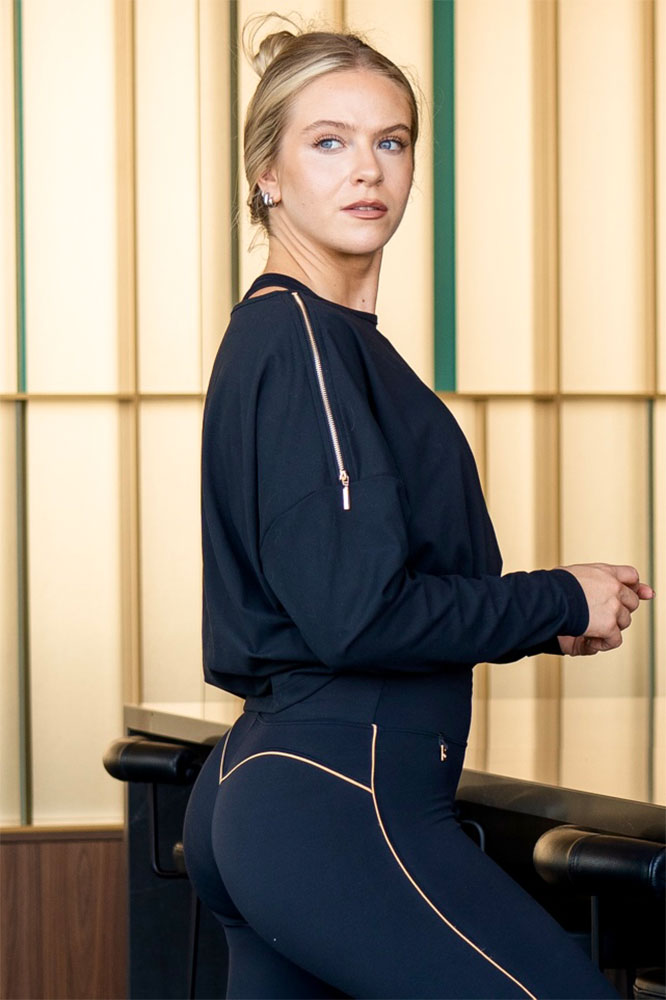
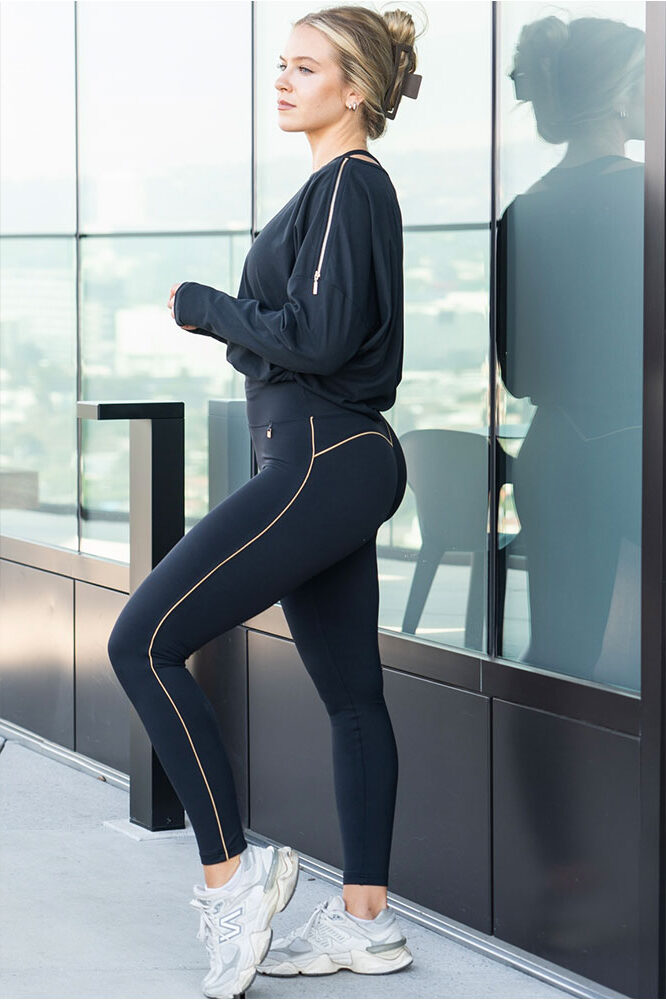
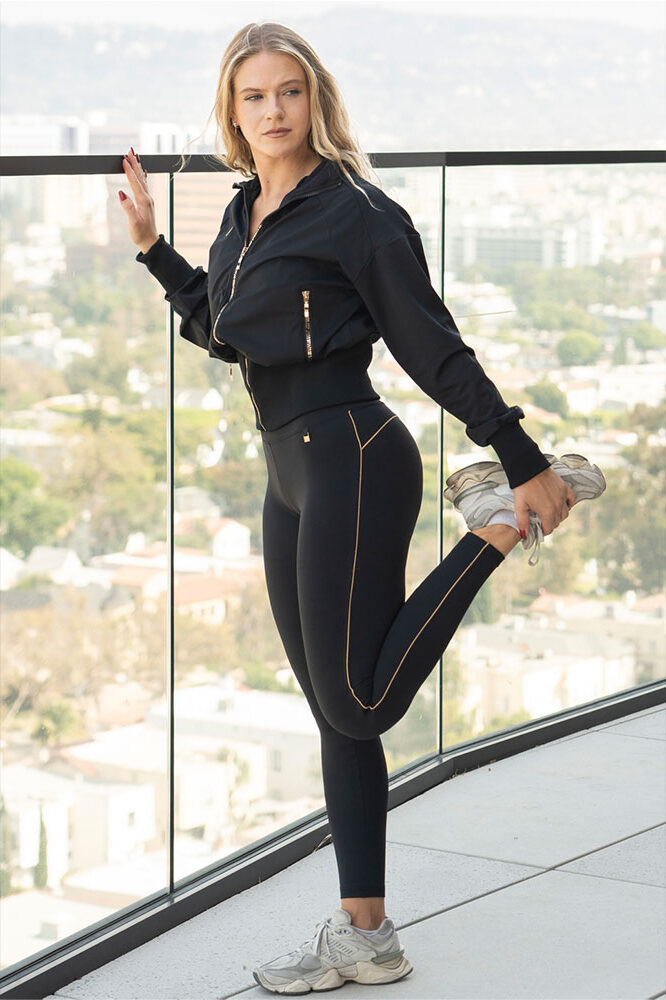
Goldline Black Sculpting Leggings are our best-selling leggings, with an average rating of 4.97 from 64 reviews. The fabric is unusually soft and supple, 73 percent recycled ECO Circle polyester and 27 percent elastane. The high shaped waist holds in the stomach and does not slide down, and the cut lifts and shapes the seat and thighs.
“Fit perfectly, don’t slip down and last wash after wash.” Ingela, who owns three pairs
Slimline Sculpting Leggings have the same fabric and seams that lift and shape the seat and thighs. They are squat proof and move with you through every movement.
Edge Stripe Leggings have just the right compression, a high shaped waist, a heart-shaped cut at the back and a hidden pocket in the waistband for your key or card.
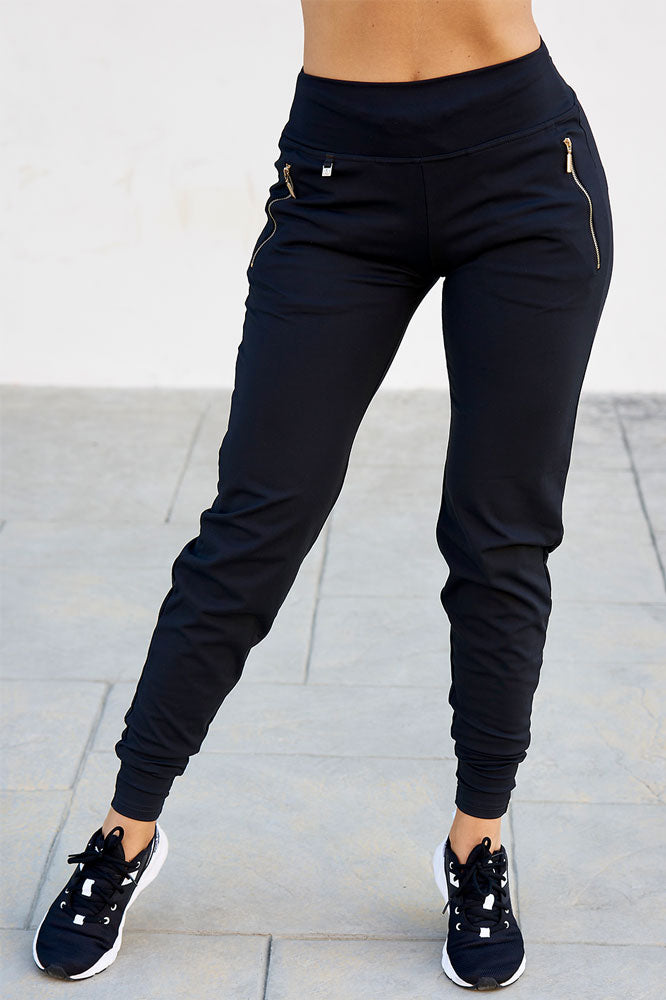
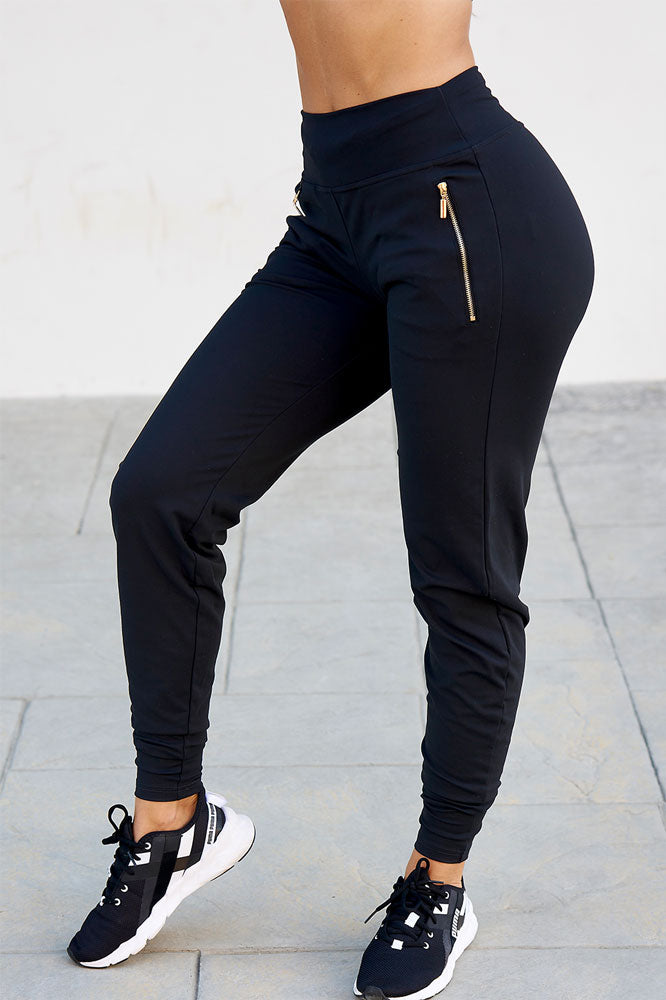
Iconic Stripe Leggings with Pockets have pockets on both legs, so your phone comes along without you having to hold it.
All models with a high waistband are under high-waist leggings.
Can the fabric make leggings slide?
Yes. A fabric with good recovery returns to its shape after being stretched. A fabric with poor recovery goes baggy and loses its shape, and body heat and moisture play a part too. More elastane often gives better recovery, but how the fabric is knitted and how dense it is matter just as much.
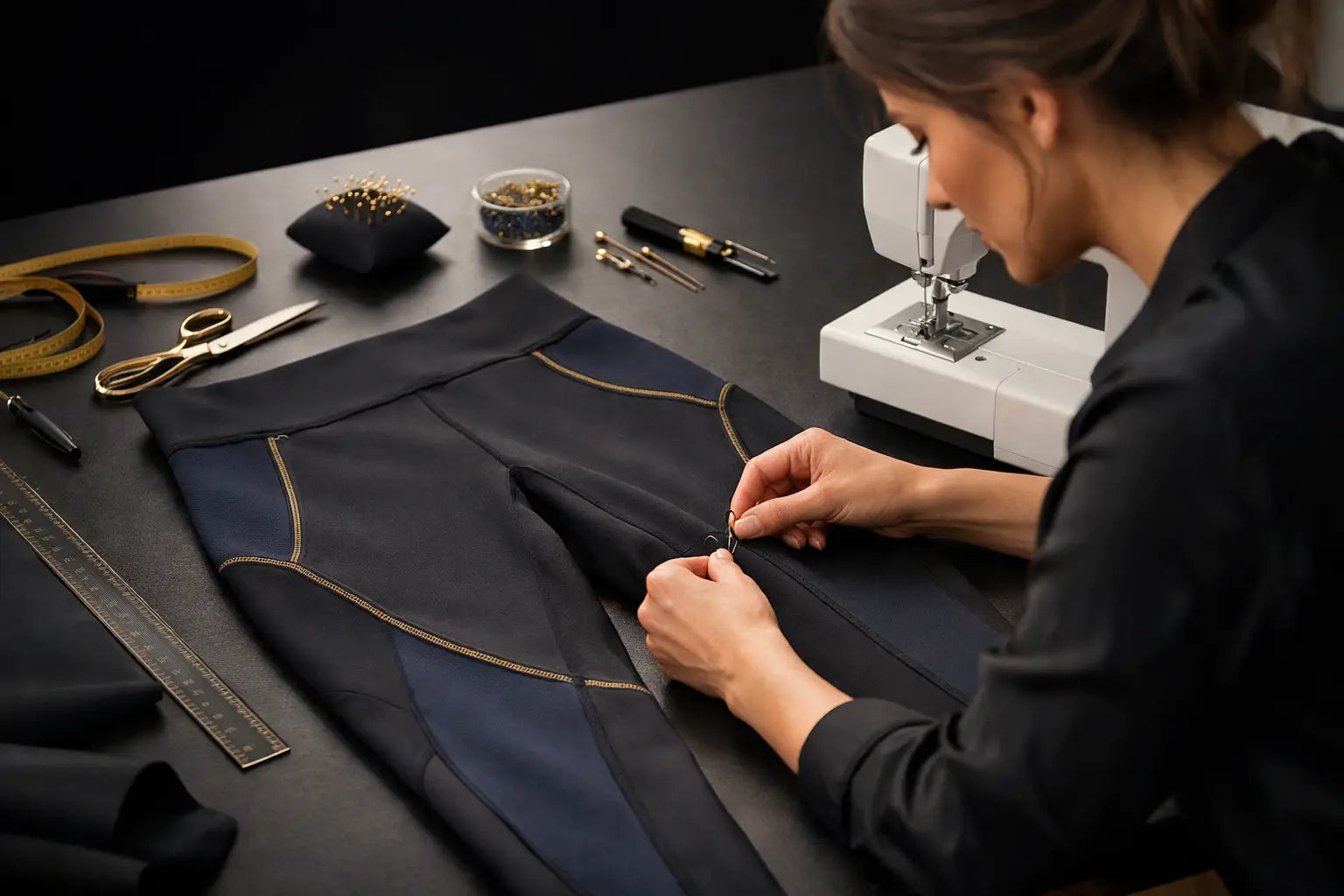
We choose the finest fabrics we can find, dense, soft against the skin and shape-retaining. That is the difference you feel when a pair of leggings still fits like the first day after several years.
Can washing make leggings start to slide?
Yes. Heat and the tumble dryer weaken the elastane, and the elastane is what makes the leggings return to their shape. Fabric softener leaves a coating on the fibres that reduces the fabric’s ability to wick moisture.
Wash at 30 degrees inside out, on a gentle programme and without fabric softener. Let the leggings line dry. More in how to wash workout leggings.
Frequently asked questions
Why do my leggings slide down when I work out?
Usually because they are too big, or because the waist is too narrow or too soft. A high, wide and shaped waist in the right size stays in place.
Should I size down if my leggings slide?
If the whole garment slides down from the waist, the size is usually too big. If the waistband rolls instead, the size may be too small. Measure your waist and hips and compare with the size guide.
Does a high waist stop leggings from sliding down?
Yes, if the waist is wide and shaped. A high waist holds better than a low one, and a wide one better than a narrow one.
Why does the waistband on my leggings roll?
It can be because the leggings are too small, or because the waistband is too narrow to keep its shape.
Can washing make leggings start to slide?
Yes. Heat and the tumble dryer weaken the elastane. Wash at 30 degrees, line dry and do not use fabric softener.
Anything but ordinary.


Leave a comment
This site is protected by hCaptcha and the hCaptcha Privacy Policy and Terms of Service apply.