




Size guide for tights
Updated 24 September 2026
Short answer: Measure your waist at its narrowest and your hips at their widest, and compare with the size guide for that particular style. If the measurements fall into different sizes, go by your hips. You can tell the size is right when two fingers slip inside the waistband, the waist stays in place when you move and the fabric does not turn see-through in a squat. If the product page says a style is small in size, choose one size up.
The right size is the difference between a pair of leggings you put on every week and a pair that stays in the drawer. The number on the label tells you some of it, but not all. Here is how to find the pair that fits as it should.
How do I measure myself for leggings?
| Measurement | How to measure | Why it matters |
|---|---|---|
| Waist | At your narrowest, with the tape measure level and without pulling it tight | Decides whether the waistband stays in place without pinching |
| Hips | At your widest, over the seat | Weighs most when waist and hips fall into different sizes |
| Inside leg | From the crotch down to the ankle bone, on the inside of the leg | Decides whether full-length leggings end at the ankle or bunch into folds |
Then compare with the size guide for the style you are looking at, not with the size you usually buy from other brands. Sizes differ between brands and can vary between styles.
Which measurement matters most?
Your hips. If your waist and hips fall into different sizes, go by your hip measurement. Leggings are under the most strain over the hips and thighs, and a pair that is too tight there never really fits well, however good the waist is.
If you have long or short legs, measure your inside leg too. It is the length that decides whether the leggings end where they should.
“Finally long leggings that also fit well on those of us who aren’t over 165cm” Ann, on Goldline Black Sculpting Leggings
How should the right size feel?
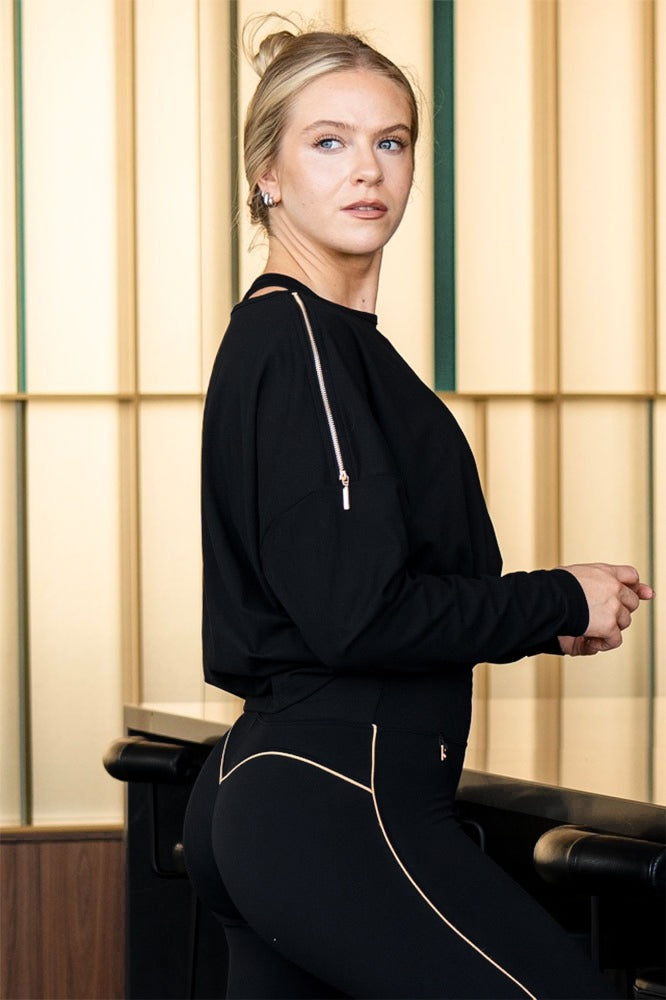
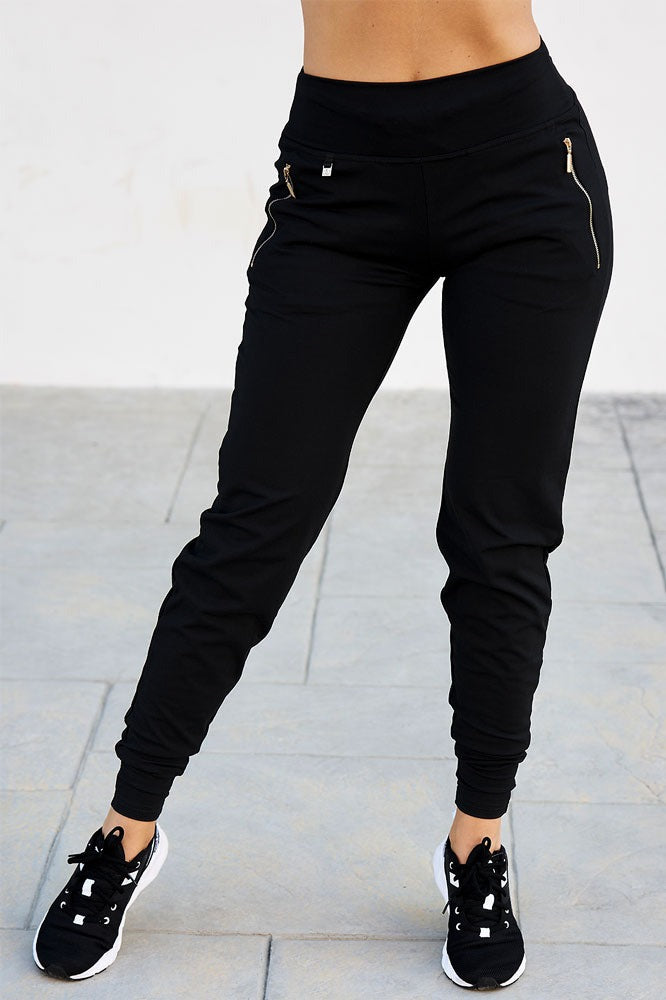
Like nothing is bothering you. The waist stays in place when you sit down. The fabric is dense enough not to turn see-through when you bend your knees. The seams run straight along the leg.
A simple test: you should be able to slip two fingers inside the waistband without the fabric straining. If nothing fits, the leggings are too small. If they slide down, they are too big. More signs to go by are in how should workout leggings actually fit.
What do I do if I am between two sizes?
Start with the product page. It says when a style is small in size, and then you choose one size up.
Then go by the feel you want. Leggings meant to fit snug and firm during an intense session can be the smaller size, as long as the fabric does not turn see-through. If you will wear them all day, the larger size may be more comfortable. If the fabric turns see-through in a squat, the size is too small.
Does the fabric affect which size I should take?
Yes. A dense fabric with plenty of elastane shapes and returns to its shape. Edge Stripe Leggings are sewn in 78 percent recycled ECO Circle polyester and 22 percent elastane, with four-way stretch and just the right compression. Goldline Black Sculpting Leggings and Slimline Sculpting Leggings have 73 percent recycled ECO Circle polyester and 27 percent elastane.
Sculpting leggings get their shape from the cut: seams that lift and shape and a waist that is shaped. See sculpting leggings. Choose your size by your measurements. The cut does the rest.
The height of the waist plays a part too. A high, wide waist spreads the pressure over a larger area. In our full-length leggings we use no elastic band. The waist is shaped in double fabric that supports the stomach and holds you in, without chafing or pinching. All models with a high waistband are under high-waist leggings.
Which size should I take in a matching set?
Start with the leggings. They sit closest to the body and have the least margin. Choose that size first and let the top follow. All styles are under leggings, and the sets under matching sets.
Frequently asked questions
Should I size up in leggings?
Only if the product page says the style is small in size, or if your measurements fall between two sizes and you want more comfort for a whole day.
Do workout leggings shrink in the wash?
Polyester and elastane fabrics barely shrink when washed at a low temperature, but heat can affect the shape. Wash at 30 degrees inside out and line dry.
How do I know my leggings are too small?
The waistband digs in or rolls down, or the fabric turns see-through when you bend over.
How do I know my leggings are too big?
They slide down and form wrinkles, on the thighs, behind the knees and at the ankle.
Which measurement matters most for leggings?
Your hip measurement. If your waist and hips fall into different sizes, go by your hips.
Anything but ordinary.

Leave a comment
This site is protected by hCaptcha and the hCaptcha Privacy Policy and Terms of Service apply.