


Training tights or running tights: which suits you?
Updated 24 September 2026
Short answer: The difference between workout clothes and running clothes lies in what they are sewn for. Running clothes are made for the running stride, often in a lighter, more breathable fabric with reflective details and a pocket at the back. Workout clothes are made for many kinds of movement and more often have a denser fabric that gives more support. If you train across the board, with strength, walks and the occasional run, a really good pair of workout leggings is the piece you will wear most.
A pair of leggings should ideally handle the gym session, the walk, the trip and a long day at home. So it is worth knowing what sets them apart, and what you actually get in a pair of workout leggings sewn to come along for all of it.
What is the difference between workout clothes and running clothes?
| Workout clothes | Running clothes | |
|---|---|---|
| Made for | Many kinds of movement: squats, lifts, stretching, walking | The running stride, repeated thousands of times |
| Fabric | Often denser, with more support and coverage | Often lighter and more breathable |
| Details | With us: a high shaped waist, sculpting seams, a pocket on the leg or in the waistband | Often reflective details and a pocket at the back |
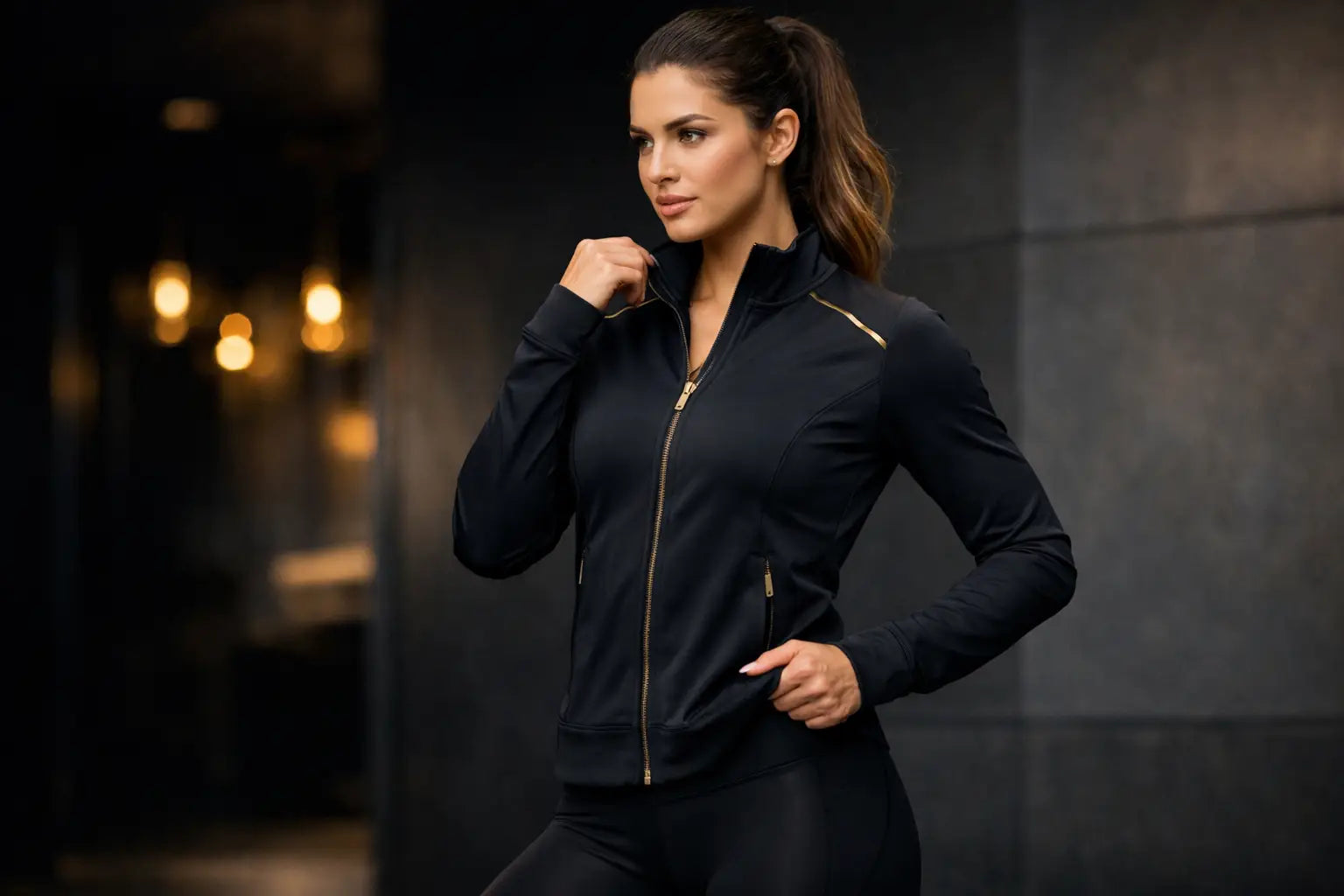
The same goes for tops. A running top is thin and airy to let the heat out. A training jacket or a training tank is fitted, moves with you through big movements and is happy to come along after the session too.
Why choose workout leggings?
Because they do the most. A denser fabric gives support in the squat, stays in place as you go down and up again and again, and does not turn see-through when the fabric stretches. That is also why you can wear them all day, not just for the session.
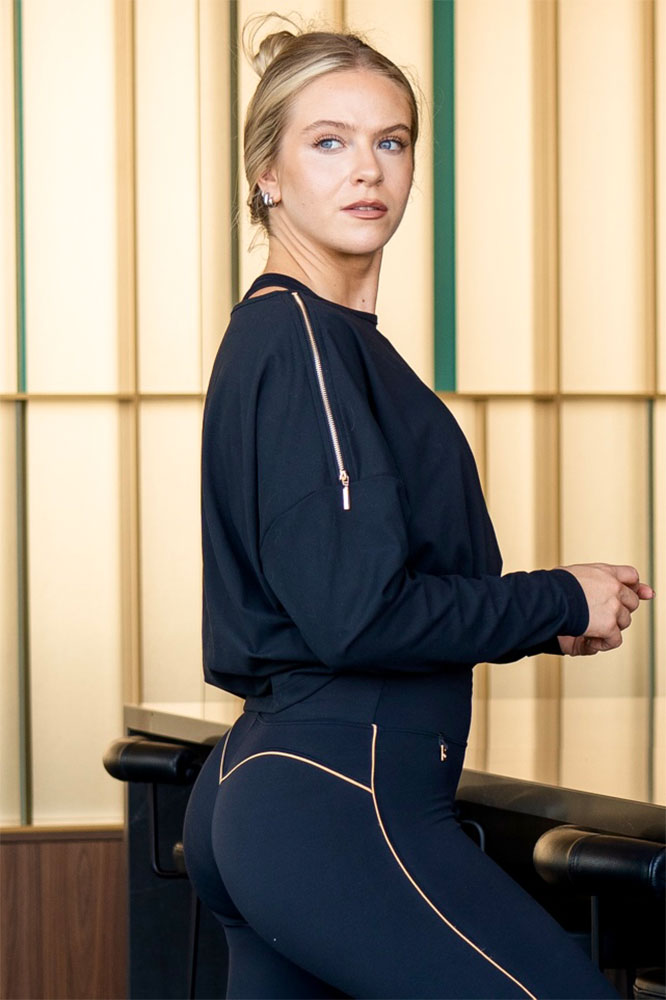
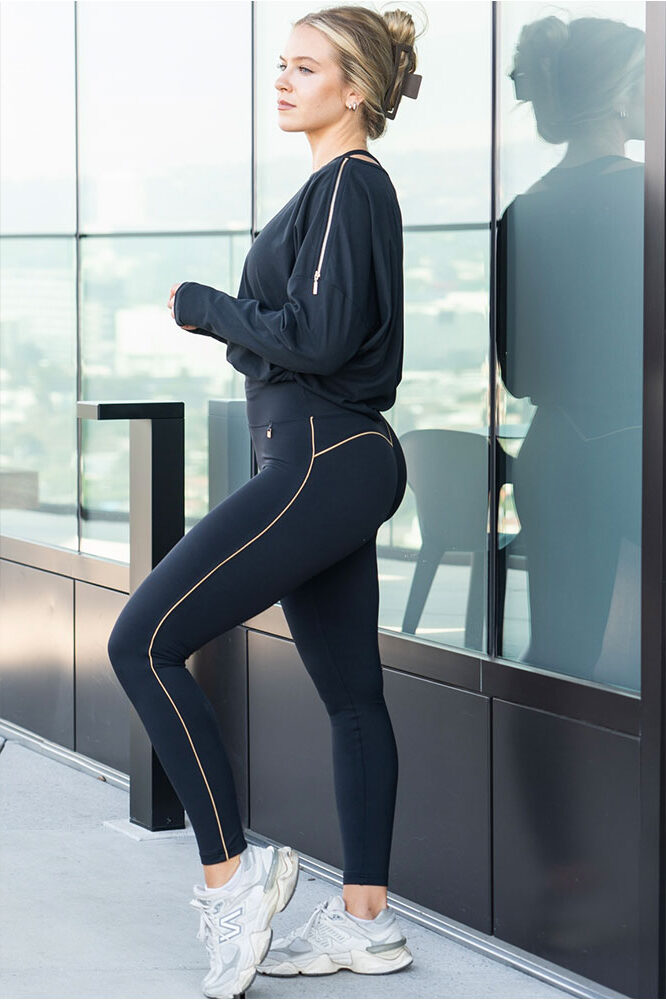
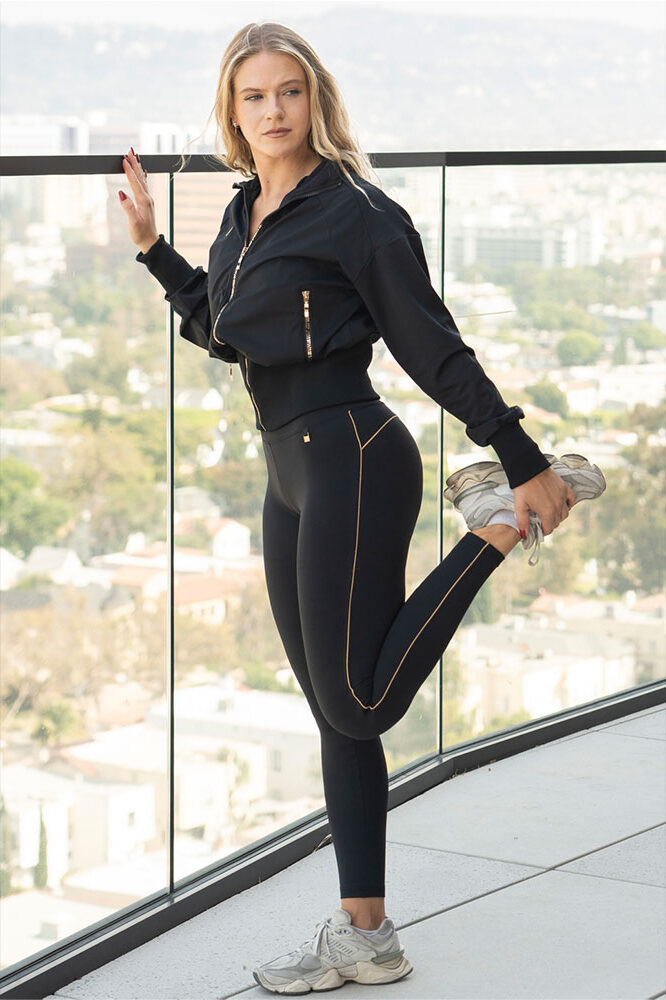
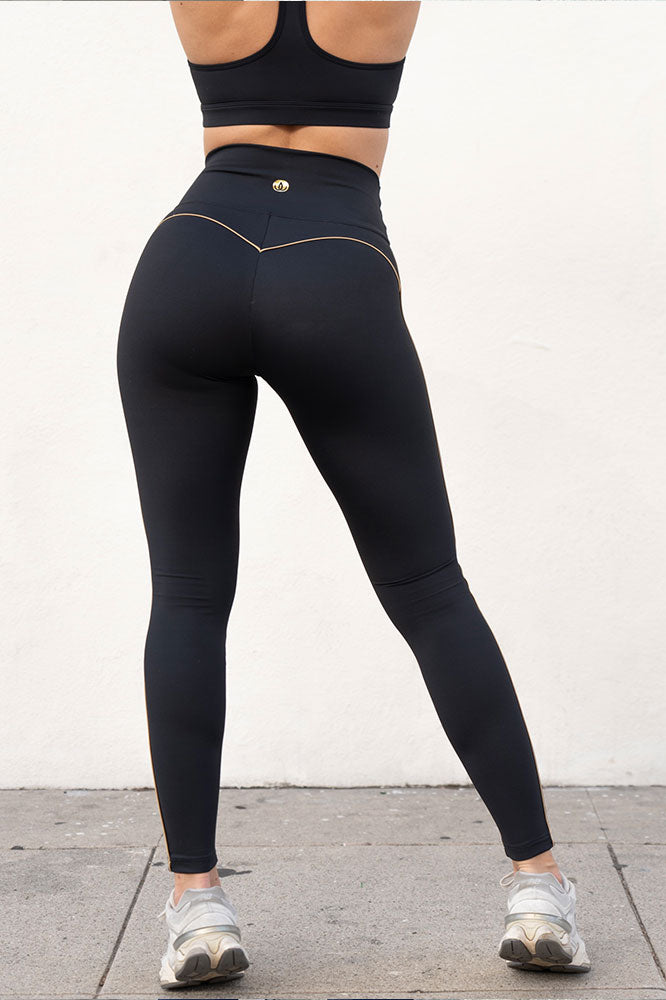
Edge Stripe Leggings are a good example. They are sewn in 78 percent recycled ECO Circle polyester and 22 percent elastane, with just the right compression that supports without pressing. The high waist is shaped and does not slide down. At the back they are cut in a heart shape, and in the waistband sits a hidden pocket for your key or card. They are squat proof, moisture-wicking and quick-drying.
“Super comfortable leggings, fit perfectly and don’t slide down during the workout.” Marie L., on Edge Stripe Leggings
In our full-length leggings we use no elastic band. The waist is shaped in double fabric that supports the stomach and holds you in, without chafing or pinching. It stays in place in the squat, on the walk and when you sit.
Can you run in workout leggings?
Yes. Close-fitting workout leggings that wick away moisture work well for running. What you do not get are dedicated running details such as reflectors. If you run long distances several times a week and do little other training, a pair of running tights is right for you. For everyone else, a good pair of workout leggings goes a long way.
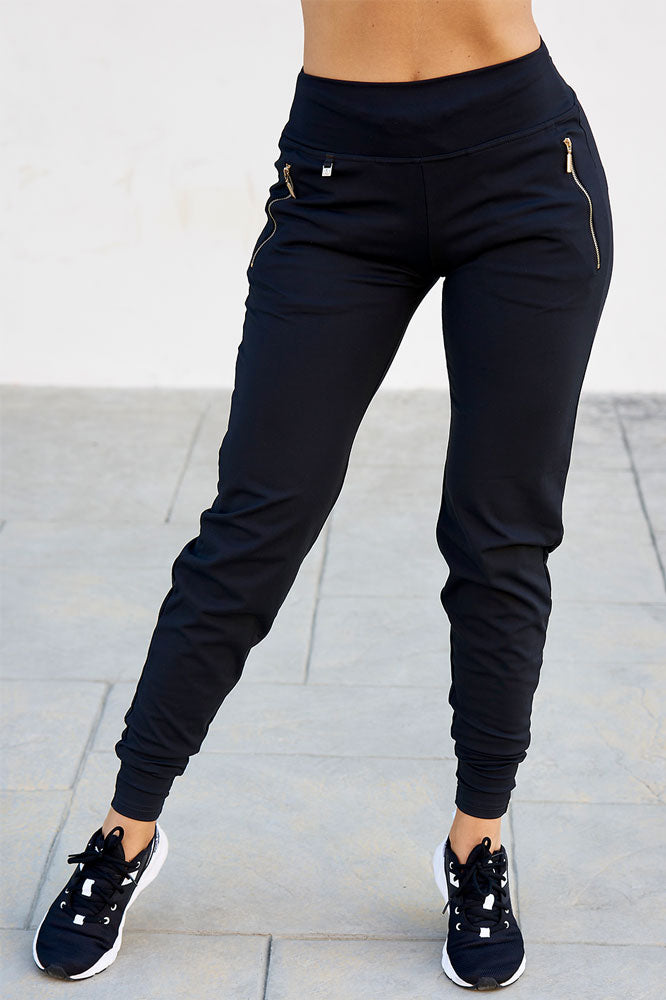
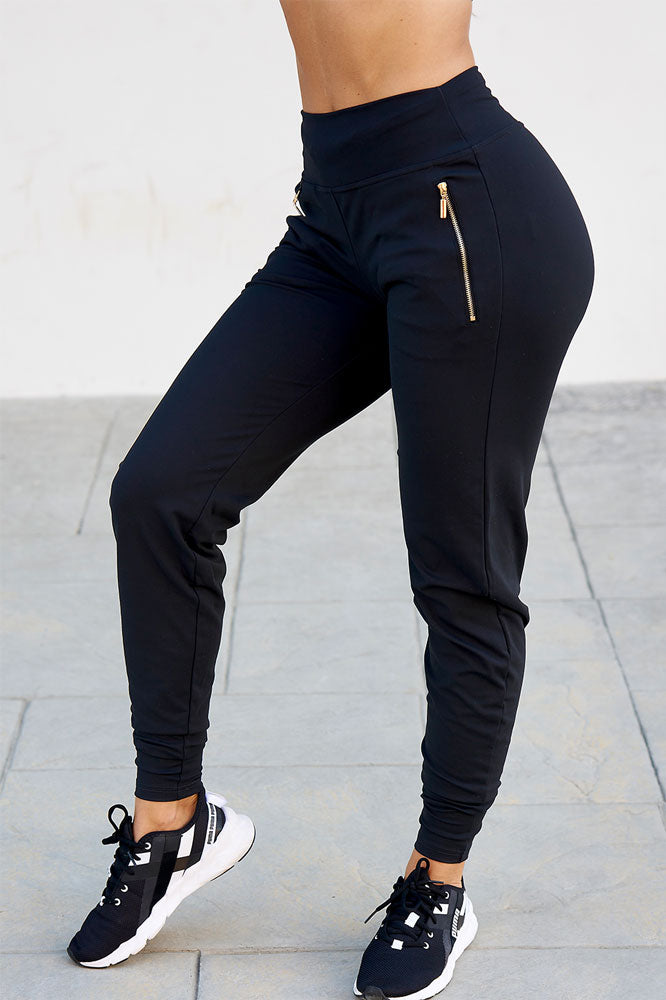
If you want to bring your phone on your run, Iconic Stripe Leggings with Pockets and Edge Mesh Leggings with Pockets have pockets on both legs. Edge Mesh also has mesh panels at the sides that let air through.
“They sit comfortably around the waist and stay in place without slipping down.” Anna, who does both runs and strength sessions in Iconic Stripe Leggings with Pockets
What should I look for in a pair of workout leggings?
Start with the waist. It should stay in place when you hinge at the hip and not dig in when you stand up. A wide, high waist spreads the pressure and holds better than a narrow one. All models with a high waistband are under high-waist leggings.
Then look at the fabric. Hold it up to the light and stretch it over your hand. If you can see through it when stretched, it will turn see-through in a squat. A dense fabric with plenty of elastane returns to its shape. A fabric with poor recovery can lose its shape and bag at the knees over time.
Last, look at the seams. Seams on the inner thighs can chafe, since the thighs rub against each other with every step. Our sculpting styles have seams that follow the lines of the body and lift and shape the seat and thighs. See sculpting leggings.
If the leggings already slide down in the fitting room, they are too big. More on the causes in why do my leggings slide down, and on measurements in the leggings size guide.
How do I choose without buying twice?
Think about which piece you will put on most often this month. That answer weighs more than which construction is best at one single thing.
A premium-quality pair you wear three times a week for several years is worth more than a cheaper pair that loses its shape after one season. That is what our customers write about, time and again.
“Had my set for several years. Still like new.” Hanna, on Goldline Black Sculpting Leggings
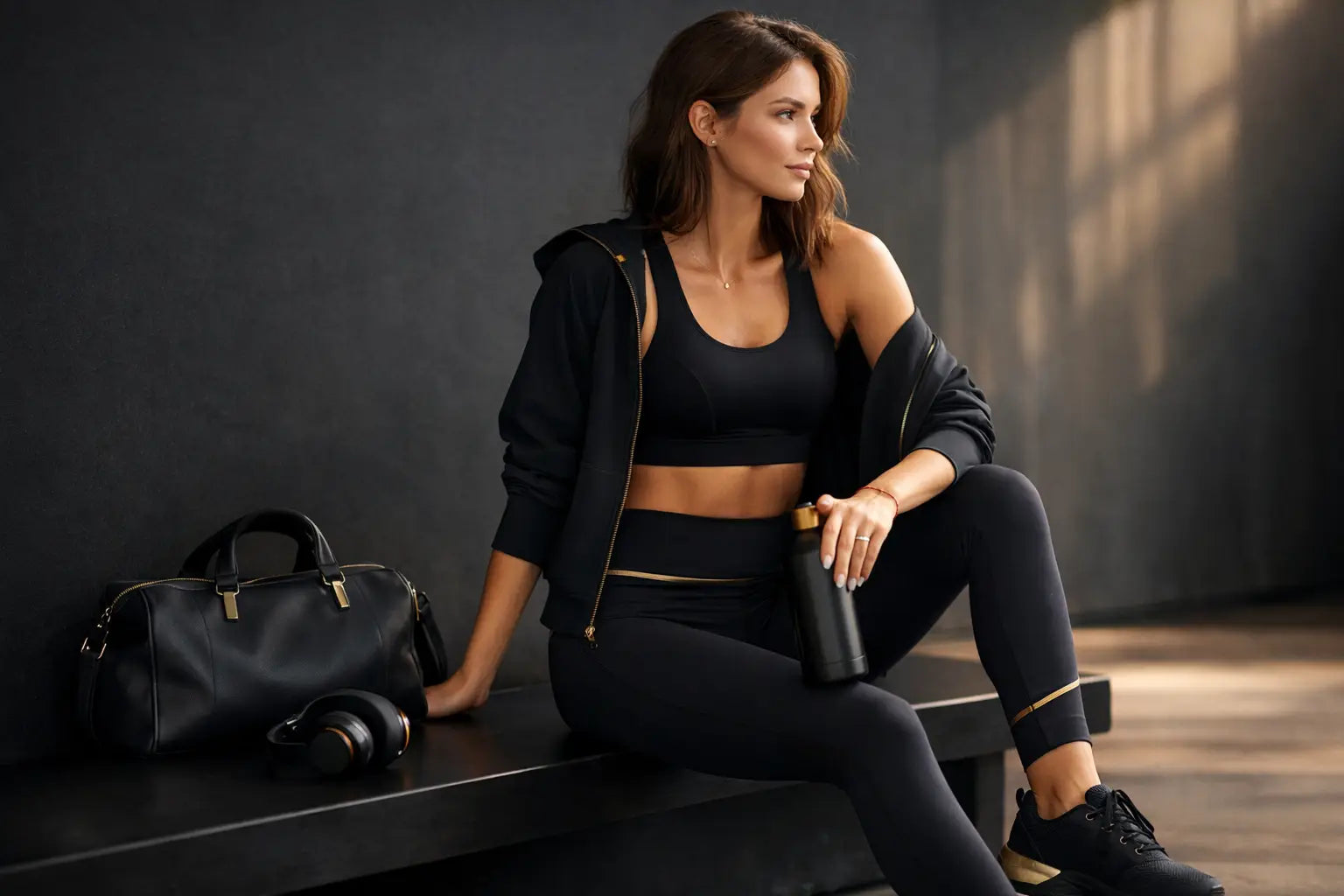
Think in combinations too. Leggings that go with a training jacket or a tank from the same line get more days of use, at the gym and beyond. See our matching sets.
Frequently asked questions
What is the difference between workout clothes and running clothes?
Running clothes are made for the running stride, often in a lighter, more breathable fabric with reflective details and a pocket at the back. Workout clothes are made for many kinds of movement and more often have a denser fabric that gives more support.
Can you run in workout leggings?
Yes. Close-fitting workout leggings that wick away moisture work well for running. They usually have no reflectors, but if you want to bring your phone there are styles with pockets on the legs.
Can you do strength training in running tights?
You can, but thinner fabrics turn see-through more easily in deep squats. For strength, a denser fabric is the safer choice. Our Edge Stripe, Goldline Black Sculpting Leggings and Slimline Sculpting Leggings are squat proof.
Which waist should I choose?
A high, wide and shaped waist stays in place best through big movements, both in strength training and on a walk.
Can I wear workout leggings every day?
Yes. With a jacket or a top over them, they go from the session on into town. Several of our customers write that they wear them as much in everyday life as at the gym.
Anything but ordinary.

Leave a comment
This site is protected by hCaptcha and the hCaptcha Privacy Policy and Terms of Service apply.