


Stable Leggings for Strength Training That Hold Their Shape
When the bar leaves the rack, you should be able to focus on your lift, not on a waistband rolling down or a fabric that slides. Stable leggings for strength training are therefore about more than choosing an attractive silhouette. They are about precision in the fit, a material that follows the movement and a construction that holds together from warm-up to the last repetition.
Strength training makes different demands than a short walk or a calm yoga session. You go deep in squats, brace your core in deadlifts, move between machines and carry weights. The leggings should be close to the body without restricting it. When the balance between support and mobility is right, the garment becomes a natural part of the session rather than something you need to adjust.
Why stability changes the session
A stable feel starts at the waist. A high waist with a considered elastic and pattern construction should wrap the body evenly, without digging in or folding when you bend. For many, this is exactly where the difference shows between leggings that work at the first glance in the mirror and leggings that keep working after ten sets.
The material also needs to return to its shape. When a fabric becomes too soft or thin, it can feel pleasant in the moment but give less support as the session intensifies. A more compact, flexible material can instead create a composed feel and help the leggings stay where they should, even as the movement gets bigger.
Stability does not mean maximum compression for everyone, though. Some want a firmly held feel during heavy compound lifts, while others prioritise a lighter material for circuit training and more mobile sessions. The right choice starts with how you train, how you want the leggings to feel over time and whether they will also be worn for the rest of the day.
Stable leggings for strength training start with the fit
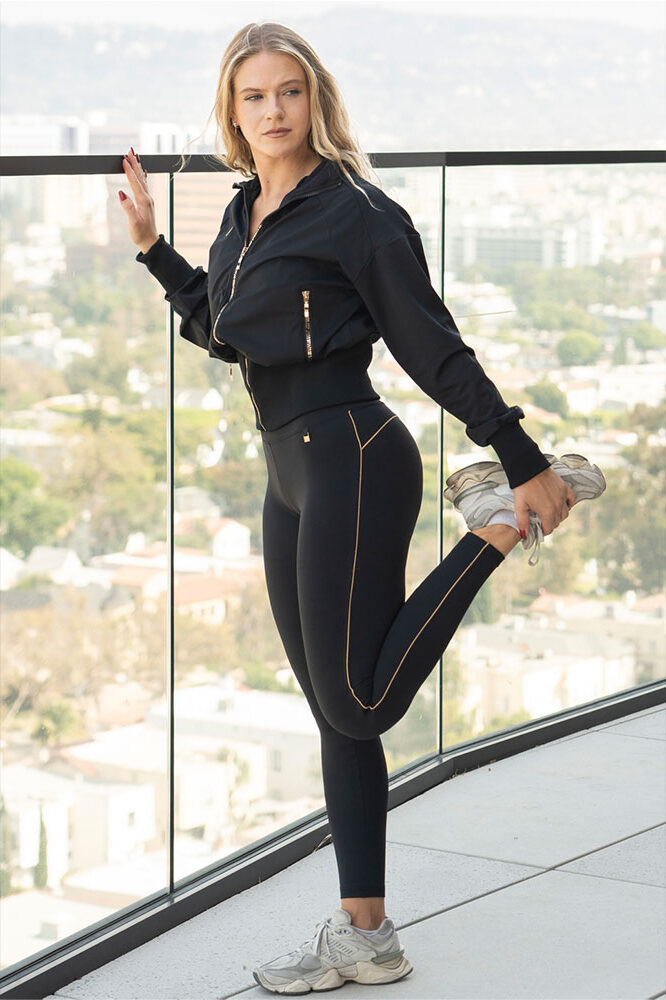
The size chart gives a direction, but the fit is decided in motion. Try the leggings with the movements you actually do: sit down into a deep squat, hinge your upper body forward and lift one knee at a time. The waist should stay in place, the crotch should follow the body without pulling and the fabric over the thighs should feel even.
If you constantly need to pull the leggings up, the waist is often too big, the style too long or the material too slippery in relation to your body shape. If they dig in instead, turn sheer in deep bends or restrict the movement of your hips, the size may be too small or the construction too firm for your kind of session.
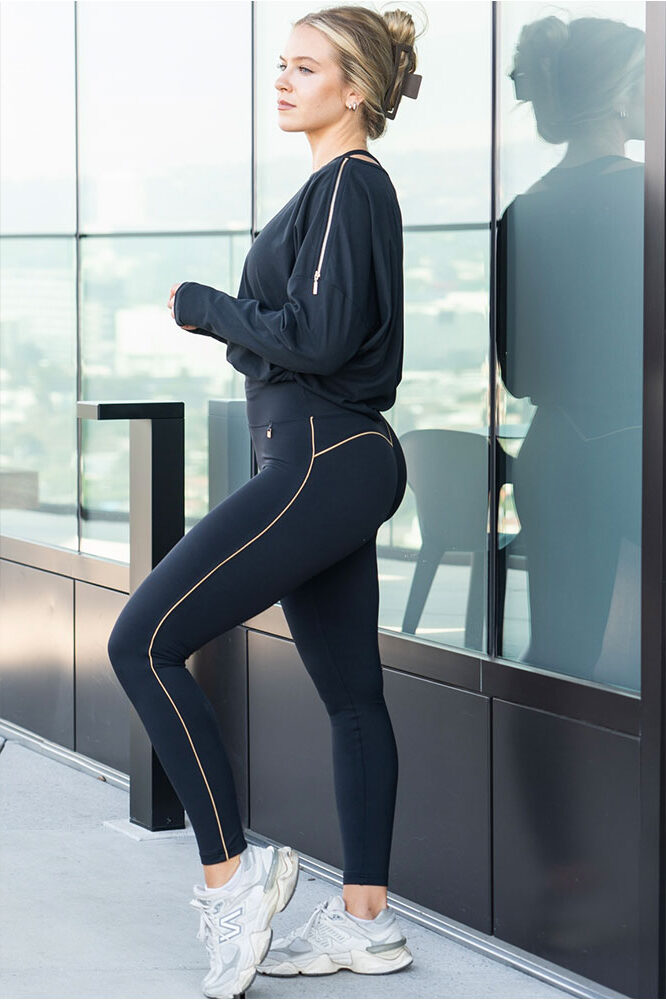
Length is a detail that deserves more attention. Leggings that gather behind the knees can disturb the feel of lunges and squats. An ankle-length style gives a clean, cohesive expression and works well with both training socks and sneakers. A shorter length can be a better choice if you are shorter, train in the heat or want a freer feel around the ankle.
A high waist with function
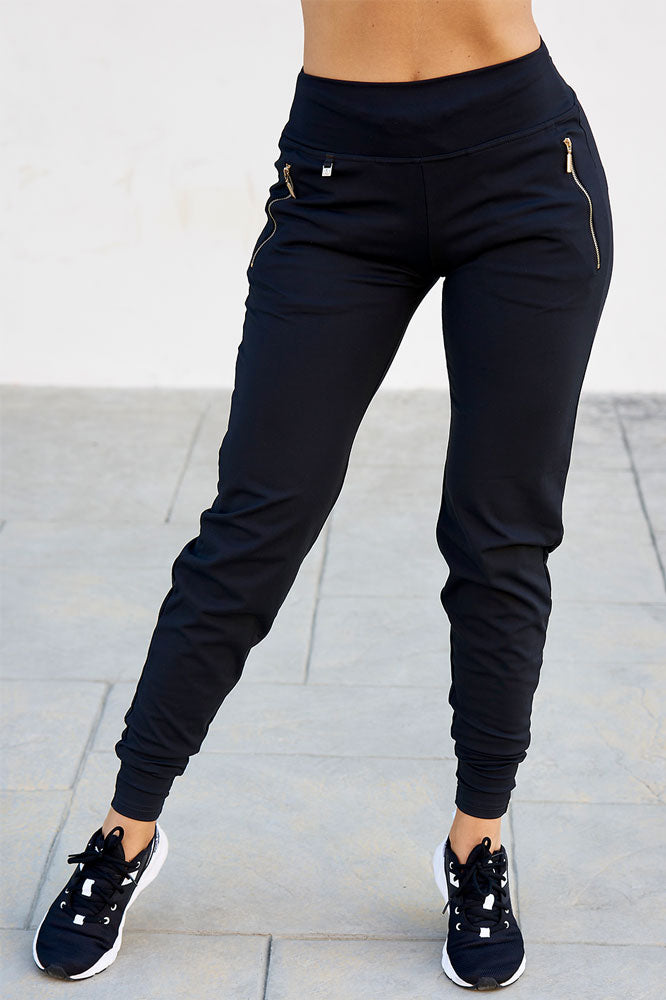
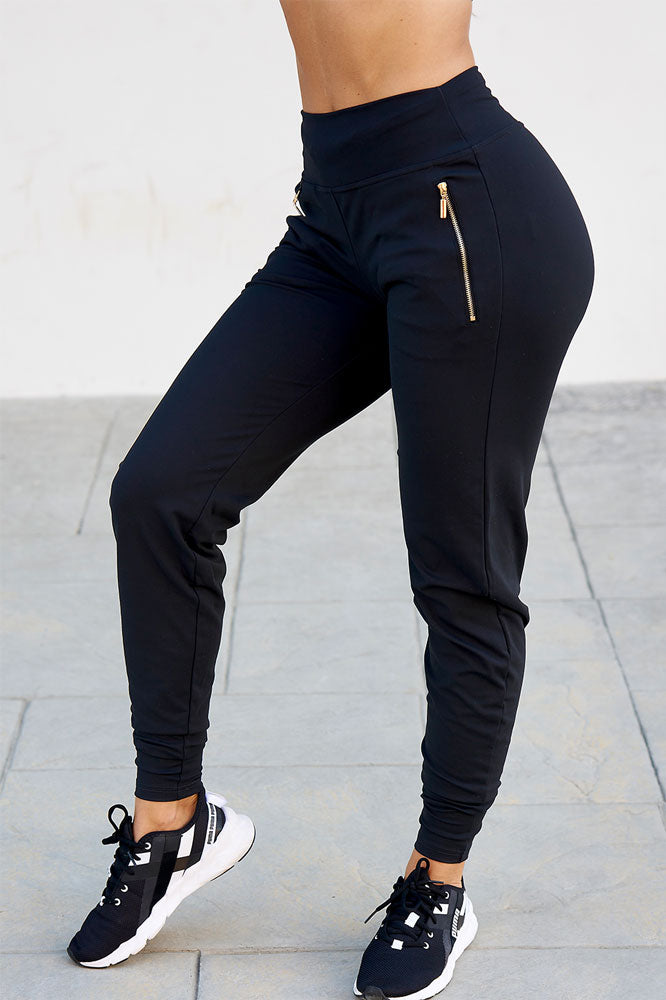
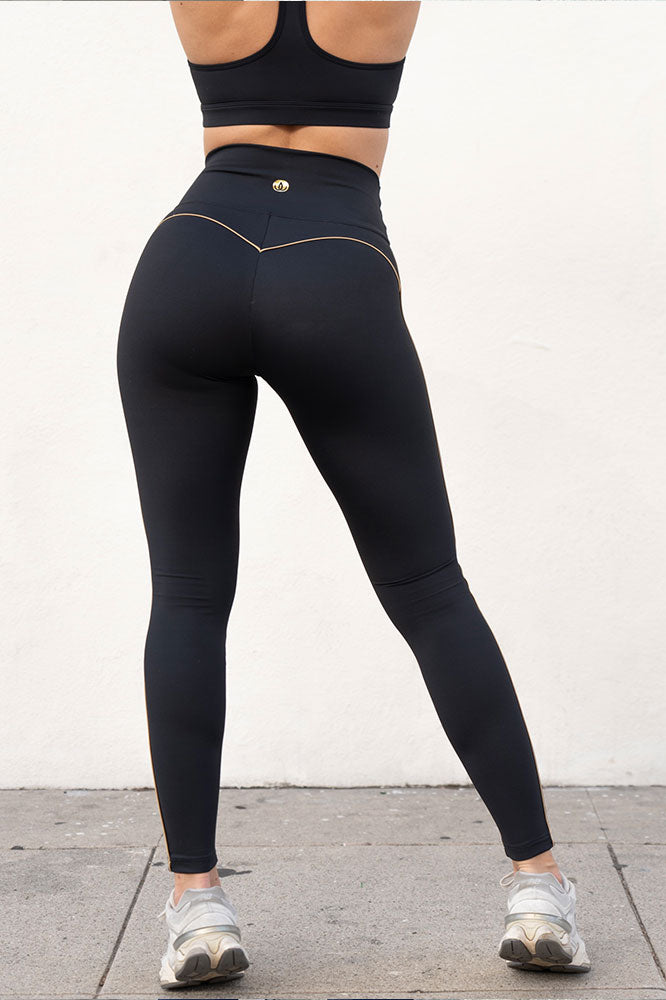
A high waist is popular for a simple reason: it can give a more composed fit when you work with your core. But the height alone is not enough. It is how the waistband is constructed that decides whether it sits stably. A wide, well-placed waist distributes pressure better than a narrow edge that easily rolls.
Also consider where the waistband ends on your body. For some, a really high style feels most stable, while for others the best fit comes when the waist finishes just above the navel. Bodies move differently, and good activewear should leave room for that.
A material that lasts repetition after repetition
In strength training, leggings are exposed to friction from benches, floors, barbells and recurring movements. That is why both fibre choice and fabric quality matter. A material with good elasticity should stretch with the movement and then recover, so that knees and seat keep a smooth expression even after many wears.
A slightly heavier fabric can feel more covering and stable in squats and deadlifts. At the same time, it needs to breathe and move moisture away as your pulse rises. The best material is rarely the one that feels most technical in the hand, but the one that stays comfortable when you are warm, focused and in the middle of the session.
Recycled materials can be a considered choice when combined with durable construction and good recovery in the fabric. Sustainable design is not only about the origin of the material, but also about the garment keeping its fit, colour and function over time. A pair of leggings you wear often and for a long time is a more relevant garment in the wardrobe than a pair that quickly loses its shape.
Your washing routine also affects lifespan. Wash leggings with similar colours, turn them inside out and avoid high heat. Fabric softener can affect elastic fibres and the fabric's moisture function, so a mild detergent goes a long way. Let them air dry to preserve the elasticity.
Seams and panels that follow the silhouette
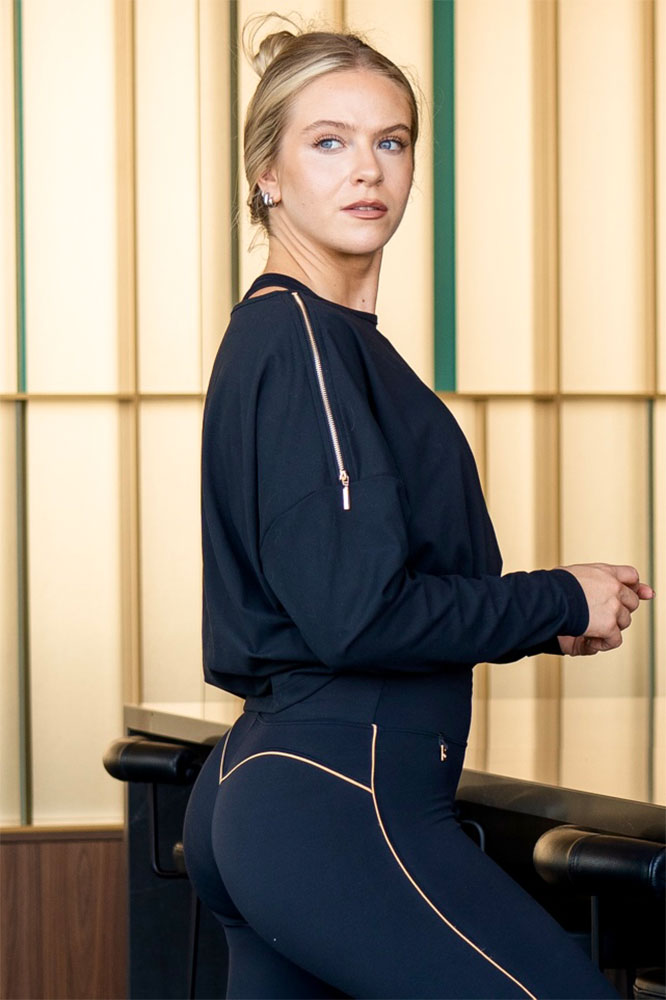
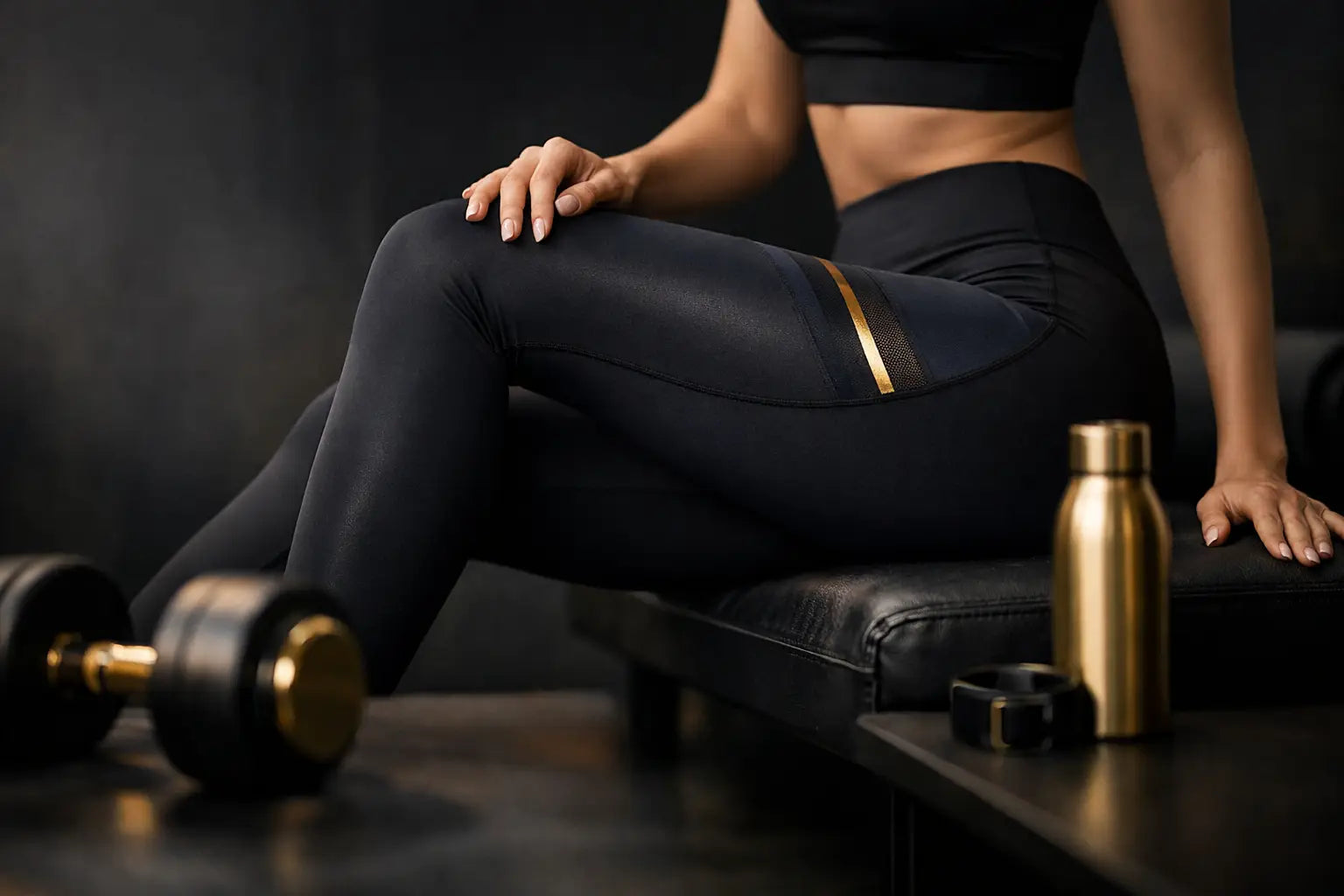
Sculpting is a design choice, not a promise about your body. Through shaped side panels, considered seams and lines placed to lift the silhouette, leggings can gain a more defined expression without feeling overworked. It is construction that makes the difference, both visually and in how the garment lies against the body.
In strength training, the placement of the seams is practical as well. Seams that land in the wrong place can chafe during repetitive movements, especially at the inner thighs or over the hip. A well-constructed style uses panels to create room for movement and a smoother feel where the body works the hardest.
If you prefer a minimalist expression, choose tone-on-tone panels and clean lines. If you want your activewear to feel more designed outside the gym as well, sculpting details give a clear silhouette together with a simple t-shirt, an oversized shirt or a training jacket with a defined fit.
Choose leggings for how you actually train
For sessions with heavy squats, deadlifts and hip thrusts, a high, stable waist and a more compact material are often a wise choice. You want to be able to sit deep without hesitating over coverage or fit. For machine training and upper-body sessions, the same qualities can be appreciated, but a softer feel can work just as well there if the leggings still stay in place.
If you train strength alongside intervals or shorter runs, you need to prioritise freedom of movement and moisture transport. Then it is worth checking that the waistband does not move when the pace shifts. On low-intensity days, walks and travel, comfort can take more space, but a well-fitting style still keeps that clean, held feel.
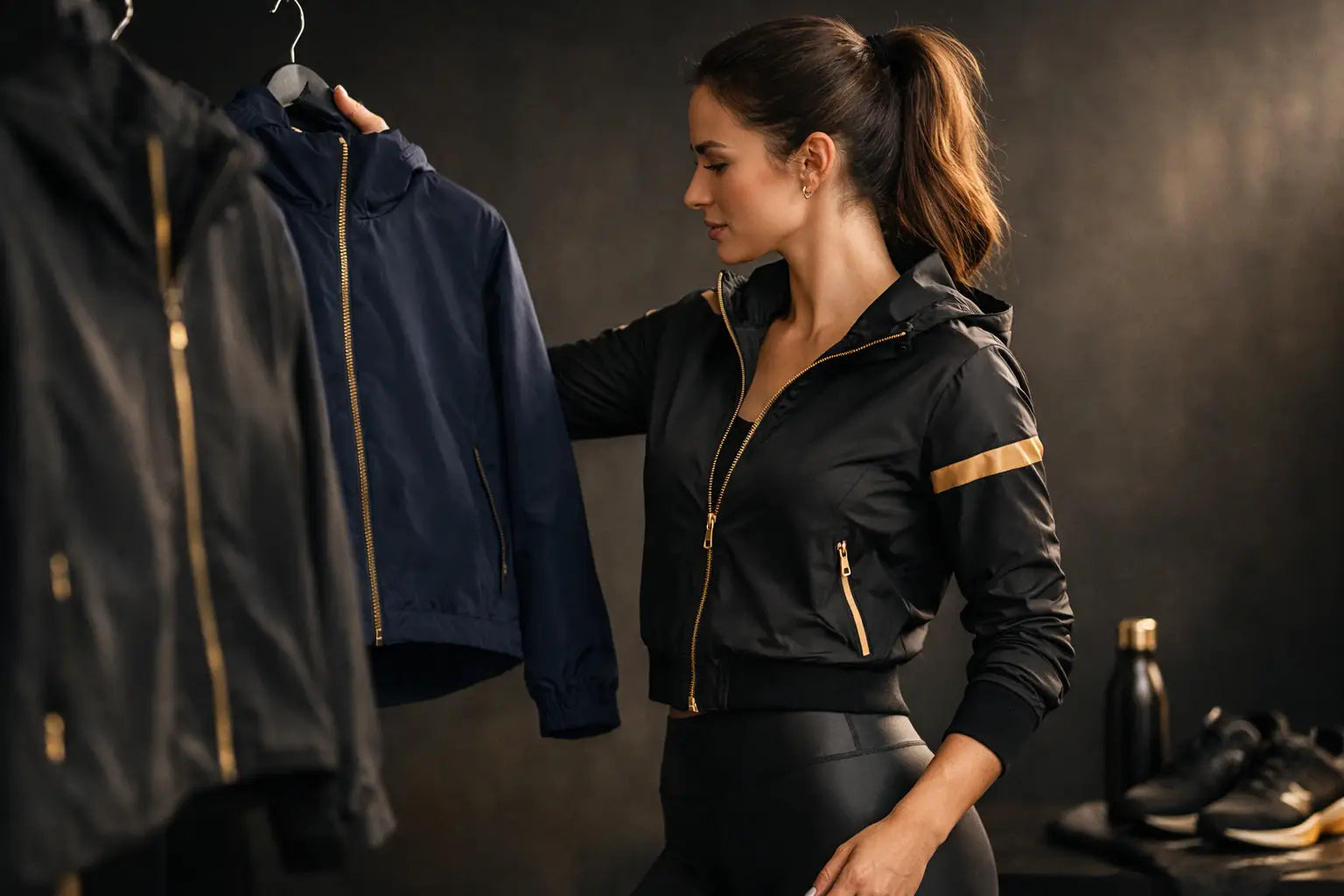
This is also why matching sets have become a natural choice for many. Leggings and a sculpting training jacket or sports top with the same design language create a consistent expression, without you having to build an outfit from scratch. After the gym, the set can easily meet the rest of the day with sneakers, a coat or a roomy bag.
From gym floor to everyday life without changing expression
The best training garments do not stay in the gym bag. A pair of black leggings with considered panels, a high waist and a matte surface works just as naturally for a walk through town as on a flight or during a quiet day at home. The difference lies in the details: a fabric that holds its shape, seams that feel refined and a fit that looks intentional.
Wallderinska works with exactly that balance between Scandinavian design and athletic precision. Sculpting leggings, training jackets and sets are designed with seams and panels that elevate the silhouette through construction, while the garments are made for the female body in motion.
In customer reviews of premium activewear, the same values keep coming back: leggings that do not slide, materials that feel pleasant through long days and garments that keep being worn far beyond the session itself. That is a better measure of quality than how the leggings look on the hanger alone.
Next time you choose leggings, do not start with the colour. Start with the movement you want to be able to do without interruption. When the waist holds, the material follows and the seams are placed with precision, it becomes easier to wear the garment with the same ease at the gym, in the city and on the way to what comes next.

Leave a comment
This site is protected by hCaptcha and the hCaptcha Privacy Policy and Terms of Service apply.