


How Long Do Premium Leggings Actually Last?
A pair of leggings can look perfect on the hanger but only reveals its true quality after squats, washes, walks and long days in motion. How long do premium leggings last, really? The short answer is that it depends on how often they are worn, how they are washed and how well the fit works from the start. The more relevant answer is that a well-constructed pair should keep its stability, its support and its clean lines considerably longer than a garment that only feels good at first wear.
Premium does not mean leggings never change. Elastic fibres are made to work and will gradually be affected by friction, sweat, heat and movement. The difference lies in how long the fabric keeps recovering, how the seams hold their shape and whether the garment stays in place when the pace picks up.
How long do premium leggings last with regular wear?
For someone wearing the same leggings two to three times a week, a reasonable expectation is that they should perform well for a long time, often for one to several years. The range is wide because a pair worn for walks and everyday life is loaded differently from leggings used for intense gym sessions, running or frequent wear when travelling.
The fairest measure is therefore not the number of months, but how the garment performs after repeated wear. Does the high waist hold its position? Does the fabric return after stretching? Is the fabric still even and opaque when you bend, sit down or move quickly? When the answer keeps being yes after many washes, the construction has done its job.
A garment in the upper segment is often designed with a more considered fabric weight and a denser construction. That can give a sense of control without the leggings turning stiff. At the same time, seams, waistband and panels need to work together. A strong fabric is not enough if the waist rolls down or a seam starts twisting after a few wears.
Use decides more than the calendar
Two identical pairs of leggings can have completely different lifespans. A pair rotated with other activewear and washed gently gets better conditions than a pair worn almost every day and dried on high heat. The surface you train on matters too. Floor work, bike saddles, rough benches and repeated contact with velcro create more friction than a calm walk.
That does not mean you should save your finest leggings for special occasions. On the contrary, a good pair should work in your actual everyday life. But if you train often, rotation is a simple way to let the fibres recover between sessions. Three pairs worn in turn often last better than one pair asked to do everything.
The fabric should recover, not just stretch
When leggings start to feel stretched out, it is rarely down to a single wash. It is usually the result of many small strains. The fabric is stretched in motion, rubbed against surfaces and exposed to body heat. In well-chosen technical fabrics, soft fibres are combined with elastane or similar components that help the garment find its way back to its original shape.
What you notice is not necessarily a technical specification, but the feeling in use. The fabric should follow the body without bagging at the knees. The waist should sit stable without digging in. When you pull gently at the fabric, it should return evenly rather than leaving a slack surface or turning shiny from overstretching.
Recycled fabric can be a considered choice, but it is the construction and quality of the whole garment that decide how it behaves over time. A responsible material choice should not mean that fit or durability becomes a compromise. For leggings worn often, sustainable design needs to be felt in every movement.
Sculpting details demand precision
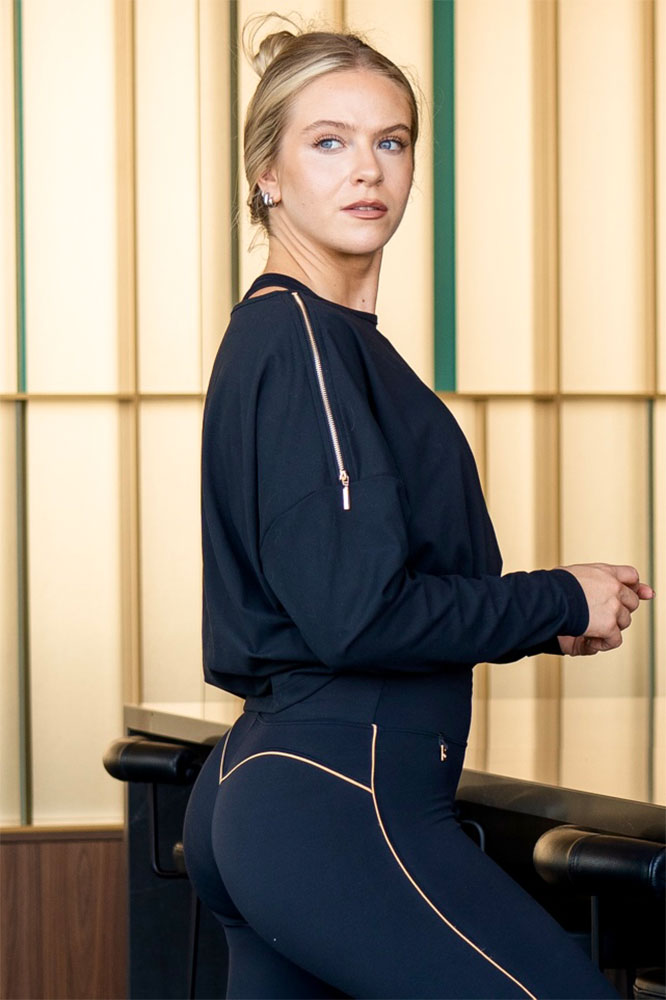
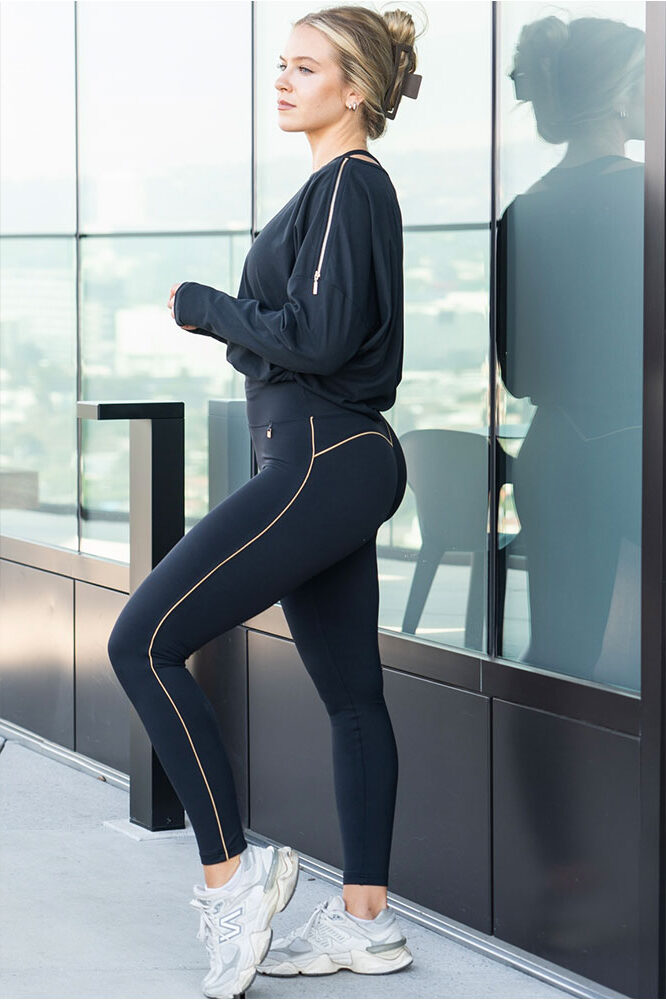
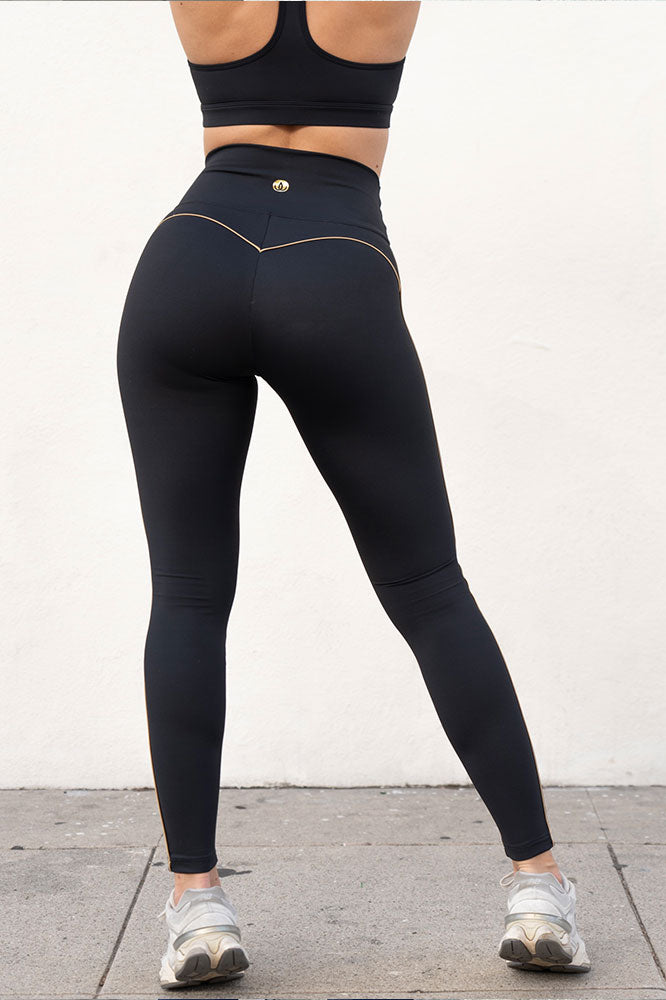
Sculpting leggings should not be confused with a body promise. The effect comes from pattern construction: a high waist, shaped side panels and seams placed to lift the silhouette. When these parts are well balanced, they strengthen the garment's lines and give a carefully worked fit, in training and everyday life alike.
That is exactly why wear in the construction becomes obvious. If a panel starts twisting, a seam pulls askew or the waistband loses its even tension, the overall impression changes even if the fabric otherwise looks fine. The premium feel sits as much in how the garment holds its shape as in how it feels against the skin.
The washing routine extends the life of your leggings
Washing is necessary, but the right routine makes a big difference. Turn the leggings inside out, wash them cool according to the care label and choose a gentle cycle. That protects the outside from unnecessary friction against zips, rough towels and other garments in the machine.
Avoid fabric softener. It can settle as a film on technical fabrics and affect both the feel and the fabric's properties. Detergent in a moderate amount is better than overdosing, especially since residue can leave the fabric less fresh and harder to rinse clean.
The tumble dryer is the biggest shortcut with a downside. High heat can strain the elastic fibres and shorten the time before the fabric feels less resilient. Let the leggings air dry instead. Preferably hang them so the fabric is not pulled out of shape by its own weight, and avoid a radiator or strong sunlight for longer periods.
If you train lightly and the leggings have not been soaked through with sweat, they do not always need washing straight after a short wear. Airing can sometimes be enough. After an intense session, however, they should be washed to remove sweat, skin residue and product residue that can otherwise remain in the fibres.
The right size is a question of durability
Many judge size by whether the leggings can be pulled on. That is too low a bar. A pair that is too small is constantly exposed to extra pull across seams, knees and hips. That increases the risk of sheerness when stretched, stretched-out fabric and seams under unnecessary strain.
Leggings that are too large have a different challenge. They slide, crease and create friction where the garment moves against the skin or against itself. The result is often that you pull them up during the session, while the fabric can wear on the inner thighs or around the knees.
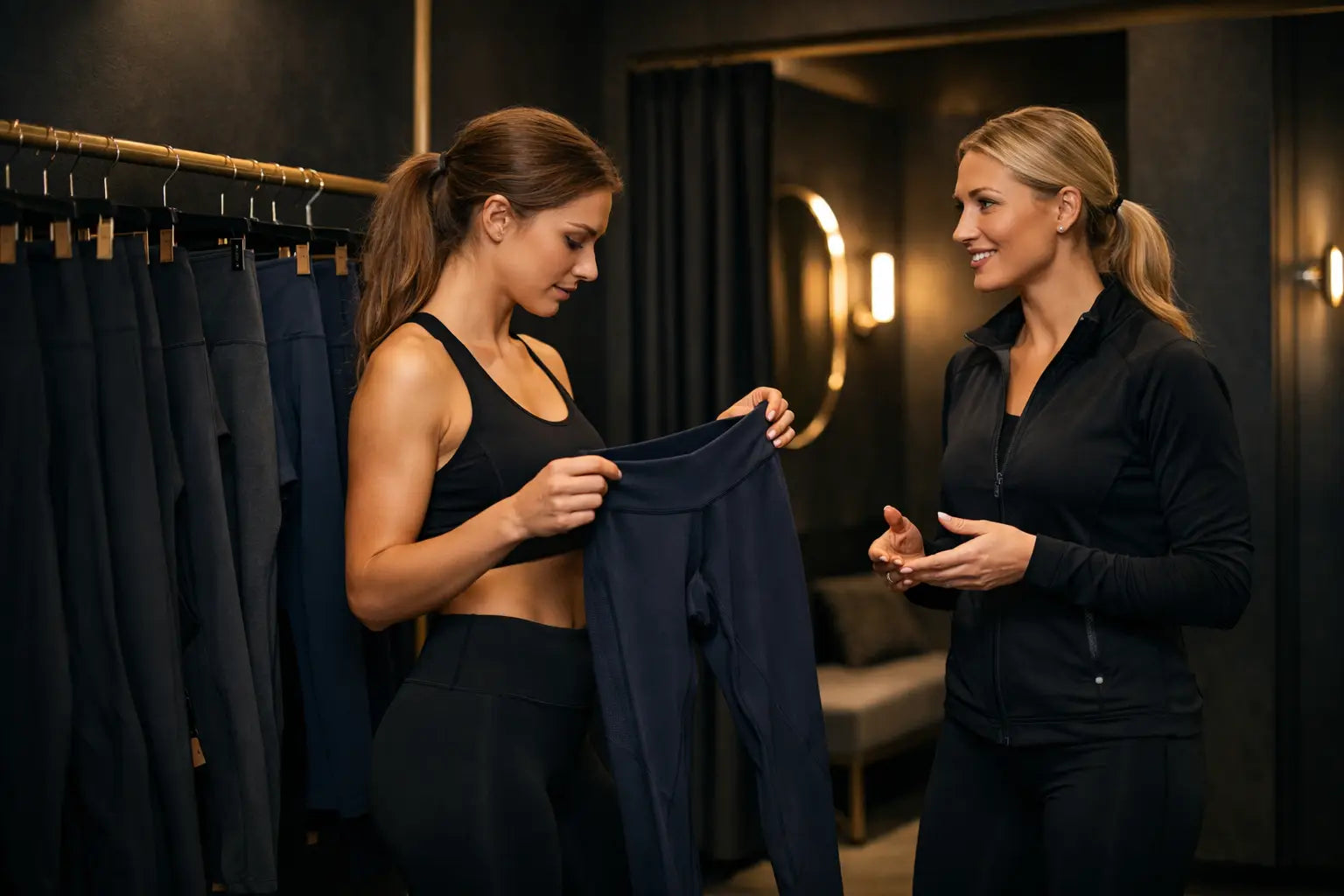
The right fit should feel close, stable and mobile. You should be able to go into a deep squat, take a brisk walk and sit comfortably without having to adjust the waist. If you are between two sizes, it is wise to start from your measurements, the intended use and how much compression you are comfortable in, not just the size label in other brands.
When is it time to replace your leggings?
Pilling, small bobbles, is not always a sign that leggings are worn out. Surface friction can occur even in durable fabrics, especially with intense use. Judge the whole instead: does the waist still sit firmly, is the fabric opaque, does it recover after stretching and are the seams intact?
It is time to review the garment when the fabric turns thin or shiny in exposed areas, when the leggings start sliding down despite the right size, or when you have to adjust them during every session. Seams that chafe or visible cracks in the fabric are clear signals too. A minor problem can sometimes be repaired, but for activewear that has to hold up in motion, function always matters more than extending its life at any cost.
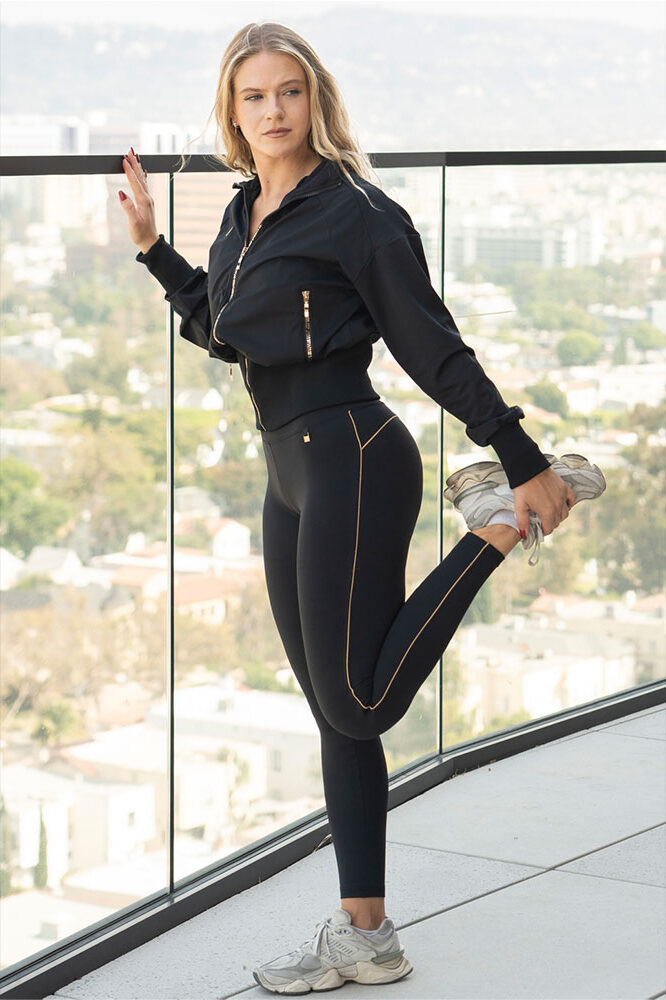
A well-chosen pair deserves to become a natural part of the wardrobe far beyond the gym. Match them with a sculpting training jacket on the way to a session, wear them with a considered set when travelling or use them with knitwear and sneakers on a day off. Wallderinska's focus on clean lines and close-fitting construction starts from exactly that kind of use: a garment should be able to follow you through the day without losing its sense of shape.
So when you choose leggings, do not look only for a fabric that feels soft in the fitting room. Choose a pair you want to wear often, but can also care for well. The best indicator of durability is that they still feel just as natural when you step into the next session as when you wore them the first time.

Leave a comment
This site is protected by hCaptcha and the hCaptcha Privacy Policy and Terms of Service apply.