



Premium women's activewear: what you are paying for
Premium women's activewear is easy to write on a product page and considerably harder to put into a garment. The difference rarely shows in the photograph. It shows in the seam, in the density of the fabric and in how the piece behaves after the twentieth wash. Here we go through what to look for, in the order that actually matters.
Where does quality begin?
In the construction. A garment is the sum of its seams, and the seams decide both how it shapes and how long it lasts. Turn the piece inside out. Are the seams flat and even, or thick and twisted? Do they sit where the body moves most, or are they placed to avoid chafing? Clean finishes at the waist and hem say more about the level than any label.
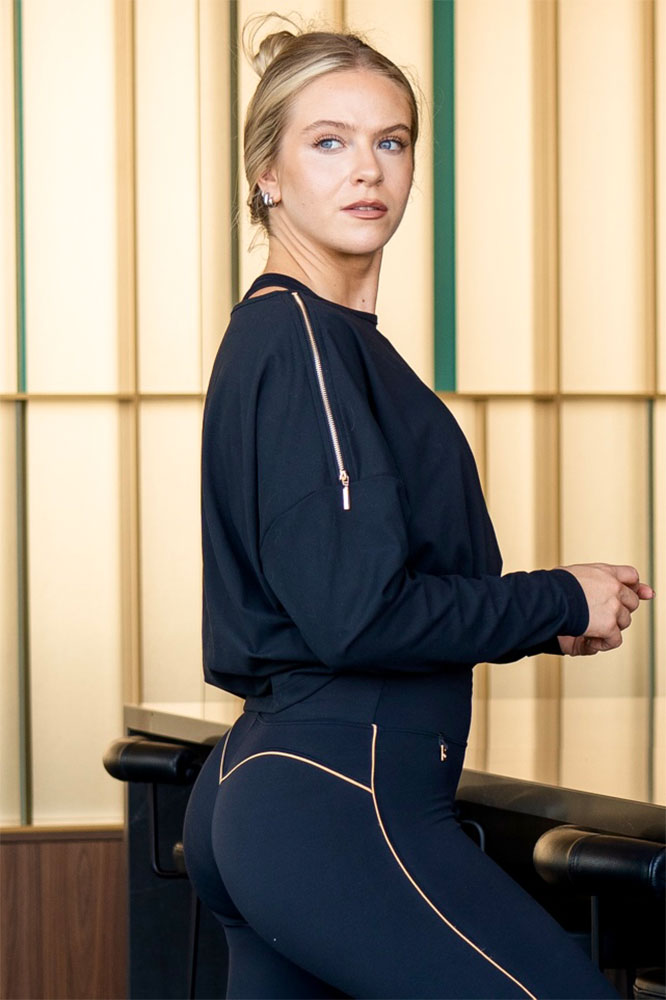
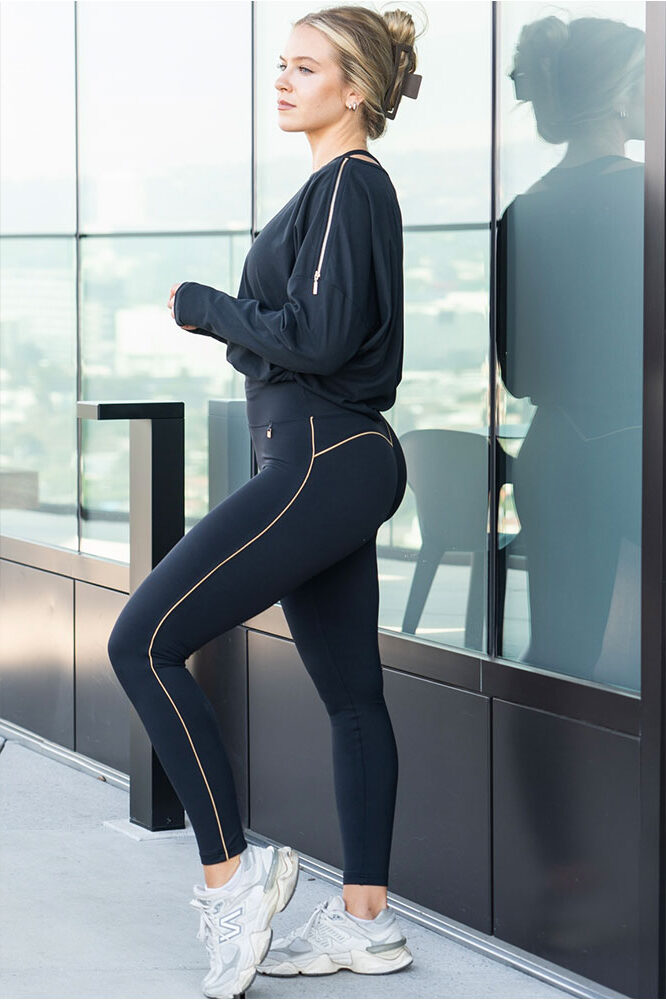
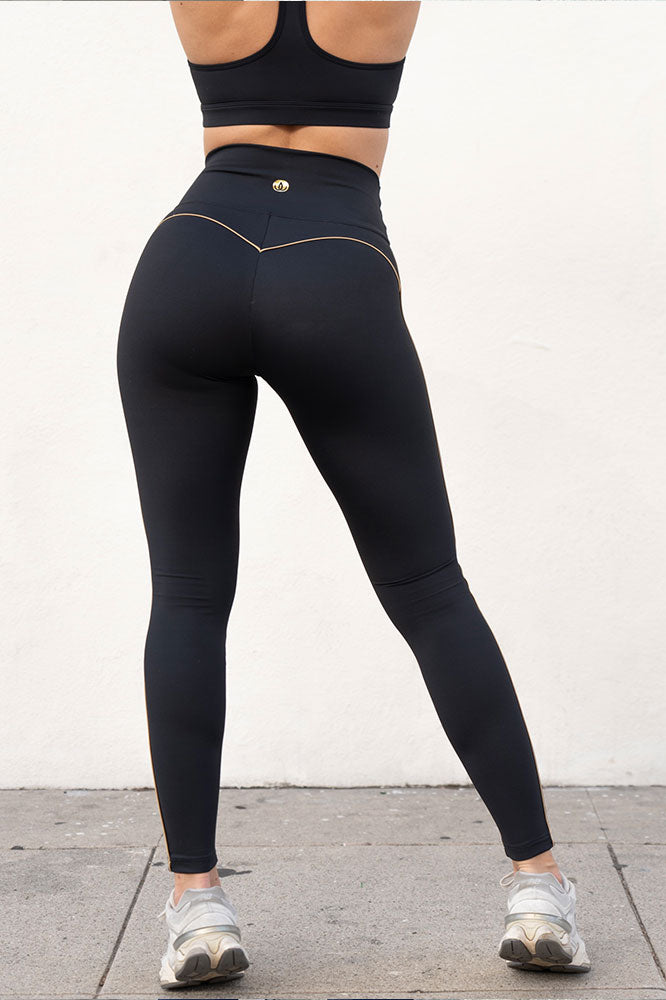
Sculpting seams are a craft of their own. In the Slimline Sculpting Leggings the seams are laid to lift and shape the seat and thighs, and the back is cut in a heart shape to shape the seat cleanly. You notice the effect the moment you pull them on. That is the kind of detail that takes time to engineer and that you wear every time.

How does a fabric that lasts feel?
A good fabric is dense without becoming heavy. It is smooth against the skin, and it recovers. Pull it and let go. Does it snap back, or does it stay stretched? Recovery decides whether the piece sits as well in November as it did in March.
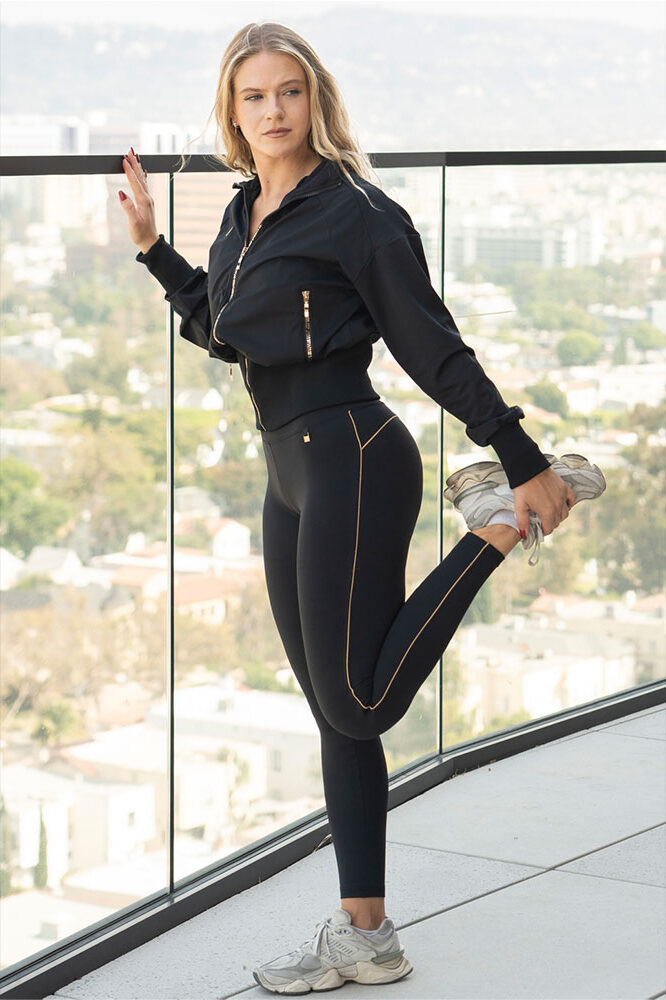
Where the material comes from belongs here too. The Slimline Sculpting Leggings are made from 73 per cent recycled polyester of the ECO Circle type with 27 per cent elastane. The Goldline Training Jacket is sewn in ECO Circle fabric of recycled polyester. We only state this on the pieces where the material is verified.
What does the waistband do?
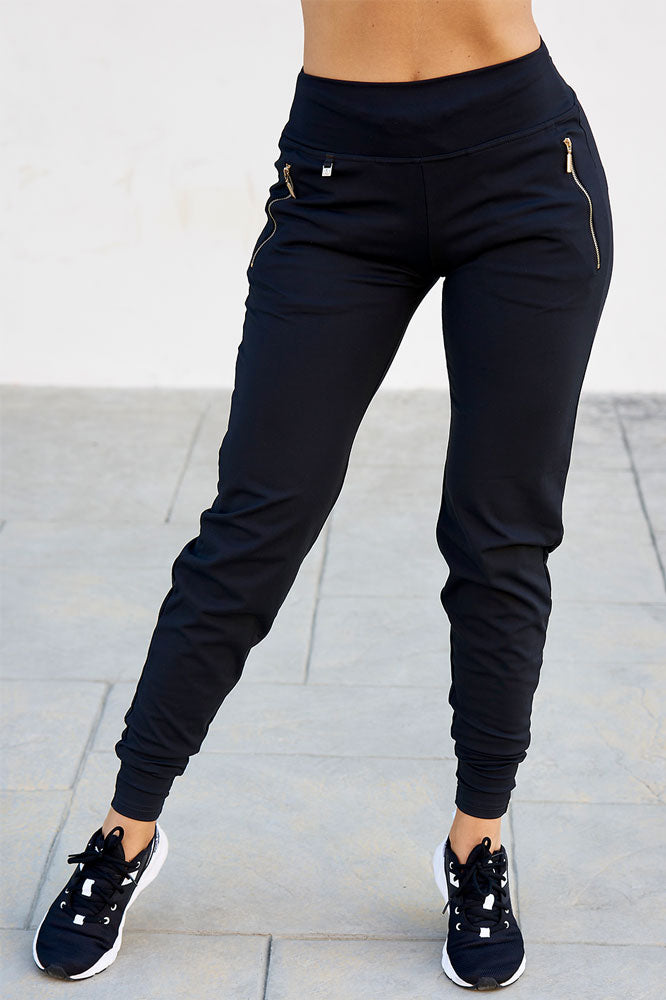
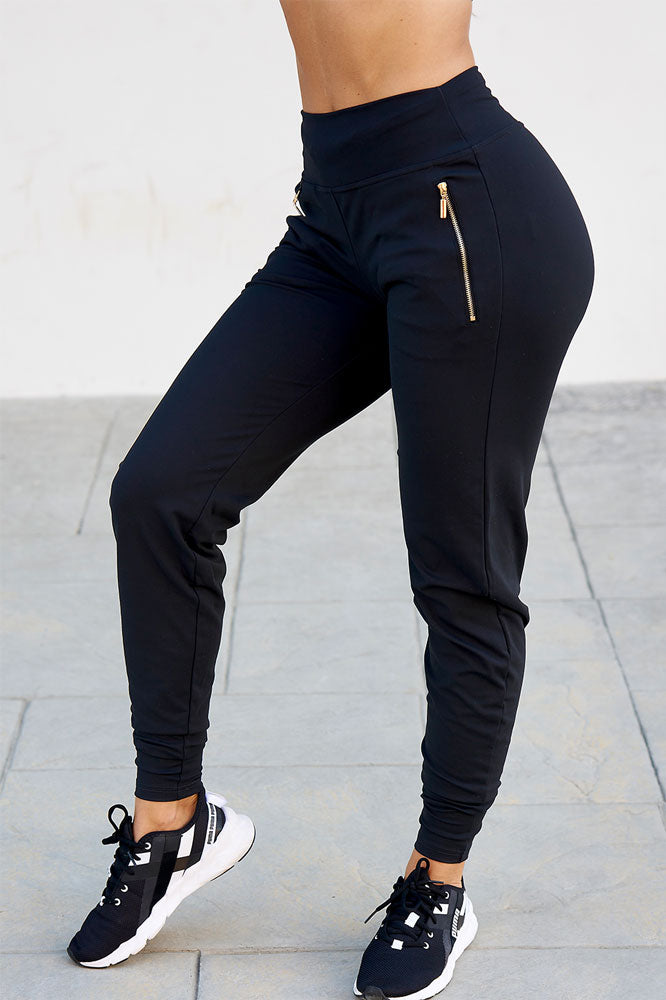
The waistband gives the most away. A high waist that is contoured holds in and stays put. A high waist that is only a wide elastic band rolls down after ten minutes. Test it in movement: bend forward, drop into a squat, stand up. Is it still there?
We have written more about that exact question in how training tights should fit. The short version: fit is measured in movement, never on the hanger.
Is squat proof a measure of quality?
Partly. Fabric that does not turn sheer in a squat says something about density and about how the fabric is knitted. But a dense fabric can still lack recovery, and a piece that passes the squat test can still slide down. Read it as one sign among several, not as the whole answer. If you want to compare several models, they are gathered under sculpting training tights.
What does a garment cost per wear?
This is where premium becomes concrete. Tights that lose their shape after one season cost more per session than a pair that carries for several years. Count the wears, not the price tag. Pieces that work at the gym, on the road and in everyday life earn more wears for the same money. A training jacket that sits as well over a vest as over a sweater simply works harder.
Over time, quality is also a question of sustainability. A garment that is worn for years does not need replacing.

Common questions
How do I recognise premium quality in a shop?
Turn the piece inside out, feel the density of the fabric and pull it to see whether it recovers. Then look at the waistband and at where the seams sit.
Is a higher price always the better garment?
No. The price can just as easily reflect marketing. The value sits in construction, material and fit.
What should I test first once it arrives?
Drop into a squat in front of a mirror. There you see density, the grip of the waistband and the placement of the seams all at once.
How do I know the material is recycled?
It should be stated on the garment. If it is not there, assume it is not.
Premium quality rarely shows at first glance. It shows after the twentieth session, when the garment still does exactly what it should.
Leave a comment
This site is protected by hCaptcha and the hCaptcha Privacy Policy and Terms of Service apply.