Skip to content

Cart

Your cart is empty

Article: Sustainable Activewear for Women: What to Look For

Sustainable Activewear for Women: What to Look For

It shows quickly when a training wardrobe does not hold up. Leggings that turn sheer in a bend, waists that roll down, seams that rub and fabric that loses shape after a few washes cost more than they first seem. For women who train regularly, sustainable activewear is not a trend question but a considered choice, where function, fit and lifespan have to work together.

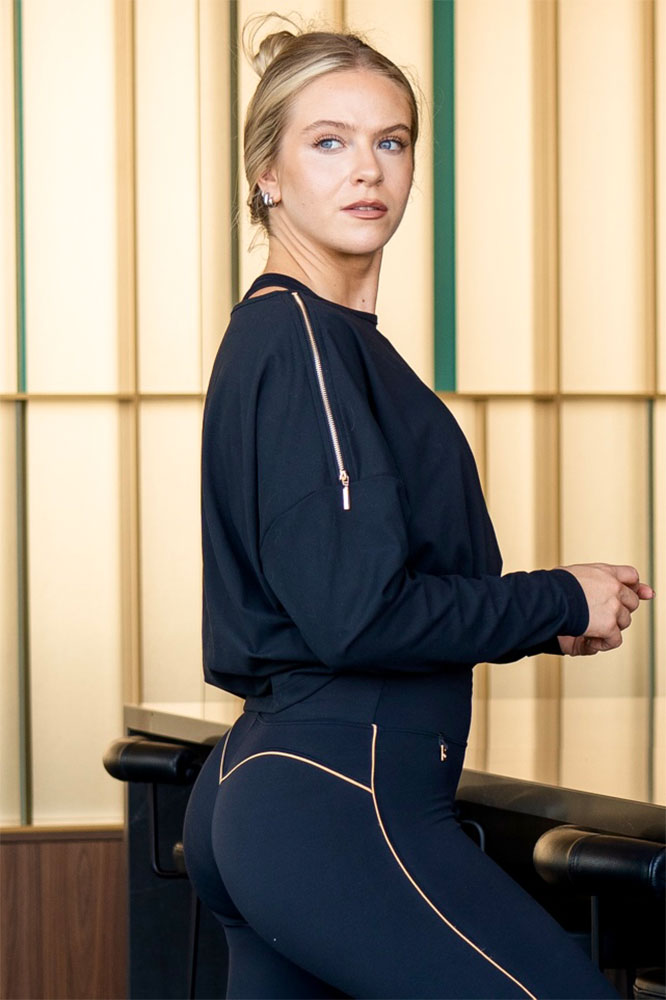
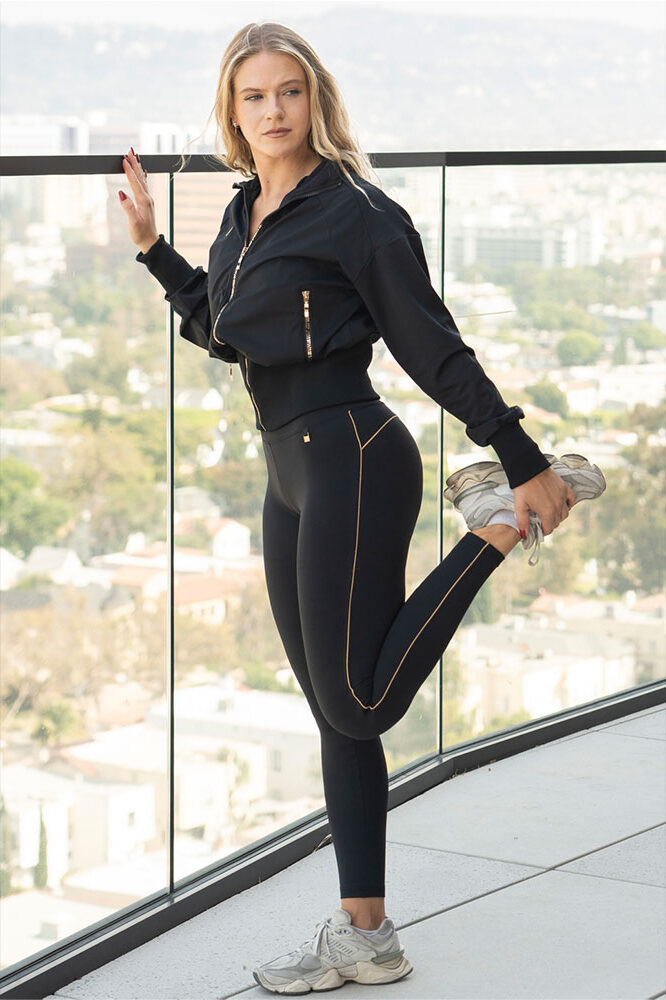
Sustainable sculpting leggings in recycled fabric, in motion, Wallderinska FlexFlow

What does sustainable activewear actually mean?

Sustainability in activewear is about more than a fabric being recycled. That is an important part, but not the whole picture. A piece made from recycled fibre that loses its fit after a season is, in practice, a short-term buy. Real sustainability is built on several levels at once, material, construction, usefulness and quality in every detail. For the wearer, it shows in how a piece behaves in everyday life: the fabric should recover after stretch, not go shiny on stressed areas and not lose compression after repeated use. Seams should be placed with precision, for comfort and for stability.

Material choices that make a difference

Recycled polyester and recycled polyamide are common in modern training pieces because they can give durability, moisture-wicking and good colour-fastness. The balance sits in a fabric that shapes, holds and moves with the body without losing its expression. More stretch is not always better, since a piece with lots of elastane can feel soft at first but needs high quality in both knit and construction to keep its shape over time.

Fit is a sustainability question

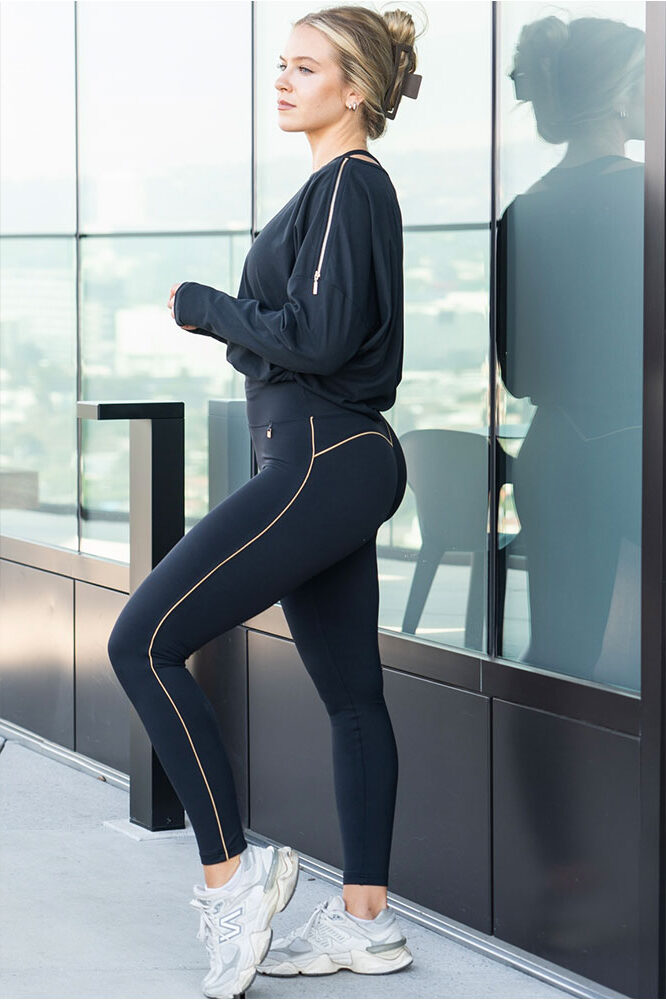
One of the most underrated factors behind sustainable activewear is the pattern. When the fit is considered, friction, load and the need to keep adjusting a piece all drop. Sculpting leggings are a clear example of design and function meeting in one piece: seams and panels placed with precision give a steadier fall, a clearer silhouette and better freedom of movement, with lines high over the hip lengthening the leg.

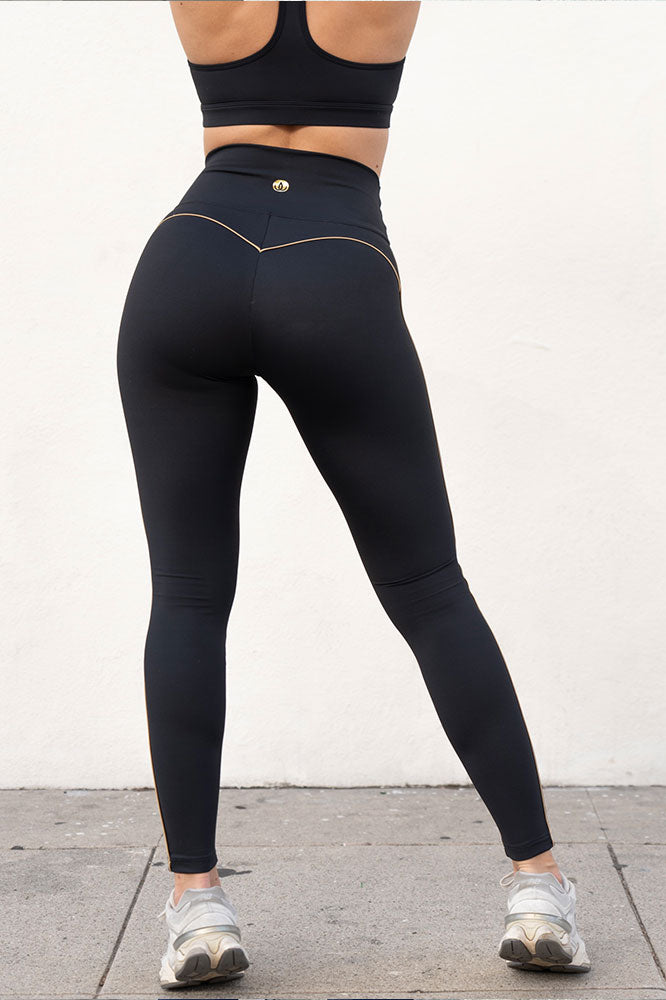
Sculpting leggings in near-fully recycled polyester with a heart-shaped seam, Wallderinska Goldline

How to recognise quality before you buy

First, look at how the piece seems built. Is there a clear idea behind the panels, waist and seams, or is the design mainly decorative? Read the material information with some focus too: is there information on support, density, a squat-proof feel or fabric recovery? Serious premium brands talk not only about feel but about how a piece performs over time. Reviews are especially useful here, repeated notes that pieces feel durable, sit steady and get worn often matter more than short-lived enthusiasm.

Why fewer, better pieces is often smarter

There is a clear point in building a smaller training wardrobe of higher quality. A considered set in the right quality can carry more than one use. The same leggings that work at the gym also work on travel days or for everyday with a knit and a jacket. A well-fitting jacket should move between warm-up, walk and the city without looking out of place.

Care decides more than many think

Activewear usually does best at lower temperatures, on gentle cycles and washed without fabric softener. Softener can reduce the fabric's technical properties and make moisture-wicking work less well. Air-drying is easier, and above all gentler. Our care guide has the details, and the sustainability page covers how we approach it. Sustainable activewear starts with higher demands: not only what a piece promises, but how it is actually built. At Wallderinska that sits at the meeting point of Scandinavian design and athletic precision.

Sustainable activewear: quick answers

What makes activewear sustainable?
Not only recycled fibre, but durable construction, a considered fit and quality that keeps the piece in use for years. Lifespan is part of sustainability.

Is recycled polyester good for leggings?
Yes, when the knit and construction are high quality. It can give durability, moisture-wicking and colour-fastness, but the build decides longevity.

How do I make activewear last longer?
Wash cool, use a gentle cycle, skip fabric softener and air-dry. Quality fabric recovers after each wear when cared for this way.

Leave a comment

This site is protected by hCaptcha and the hCaptcha Privacy Policy and Terms of Service apply.

All comments are moderated before being published.

Read more

How to Tell Quality Activewear: A Buyer's Guide

You can tell straight away when premium activewear actually lives up to the name. Not in the logo, but in how a piece sits after a long day, how the waist stays put through the whole session and ho...

Read more

Which Workout Set Is Best for You? How to Choose

You can tell straight away when a workout set works with the body rather than against it. The waist stays put, the fabric feels supple without going slack, and the silhouette is considered in motio...

Read more