


Article: Sculpting panel construction: what the seams do when you move
Sculpting panel construction: what the seams do when you move
A piece can look quiet and simple on the hanger. Only in movement does it show what it can do. Sculpting panel construction is the part of the work you rarely see: how the pattern is divided, where the seams run and which fabric carries which job. That is where the difference is decided between a piece you adjust all day and a piece you forget about.
What is a panel, really?
A panel is a separate piece of fabric in the garment's pattern. Instead of cutting front and back in two large parts, the piece is divided into several shapes. Each shape is given a direction, a job and a place. It is a division of labour in fabric.
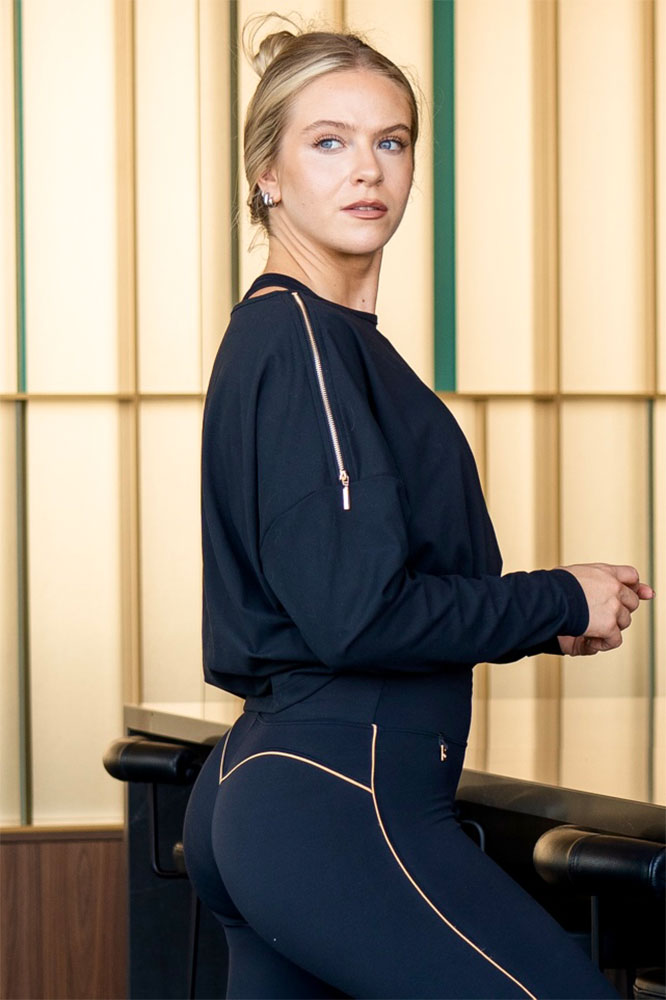
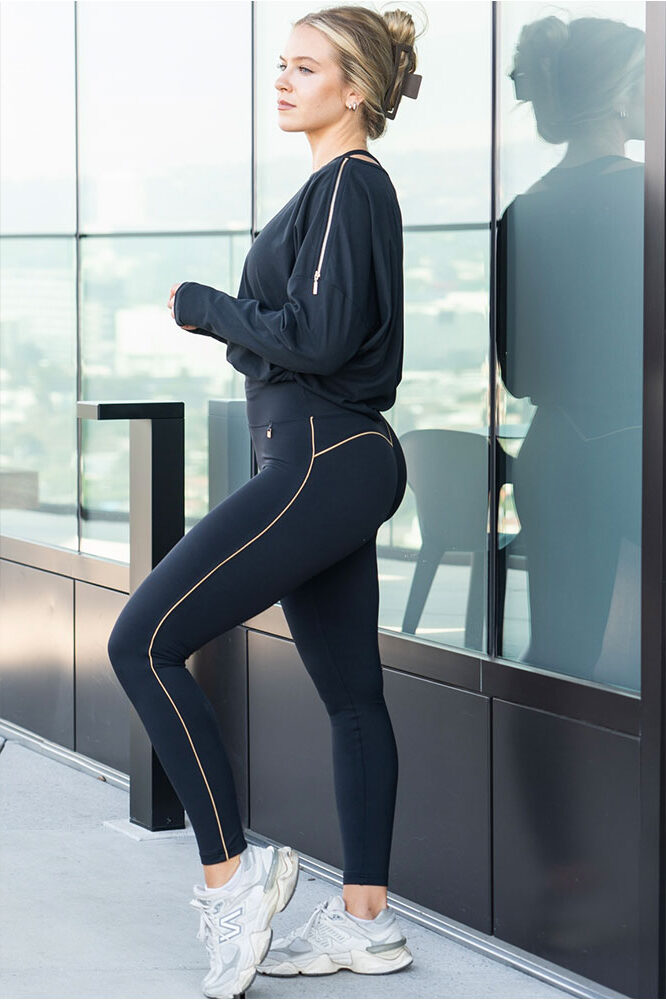
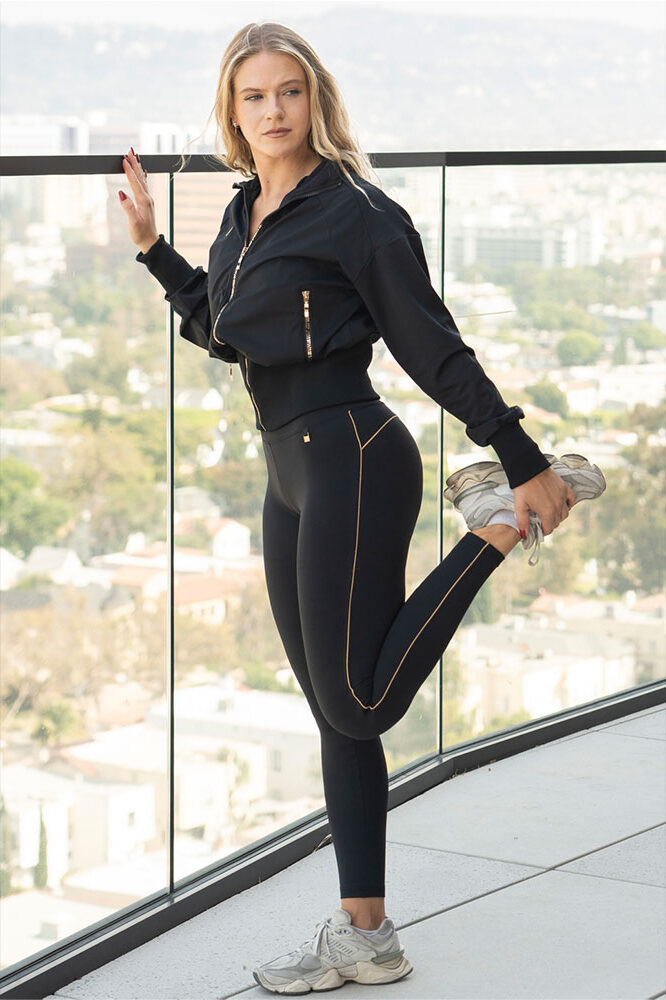
On Edge Mesh Sculpting Leggings the mesh panels sit at the sides and draw a line along the leg. On Slimline Training Jacket the black side panels do the same vertically across the torso and create a soft hourglass shape. The same principle, two different pieces.
A panel is construction, then, not decoration. A seam that sits right shapes without pulling. A seam that sits wrong shows itself most clearly when you sit down.
Where should the panels sit for it to feel right?
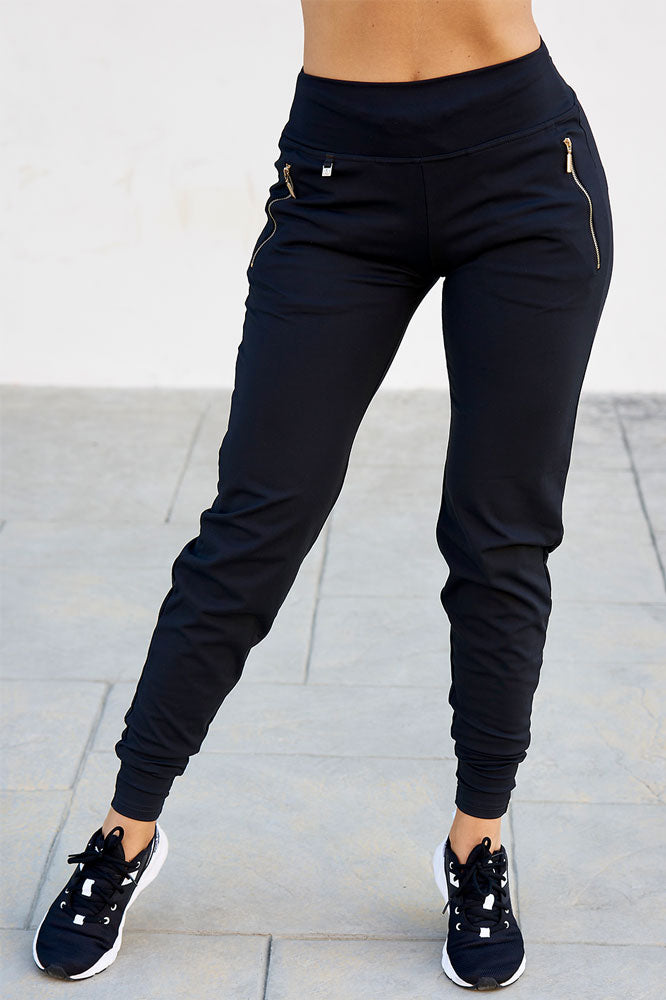
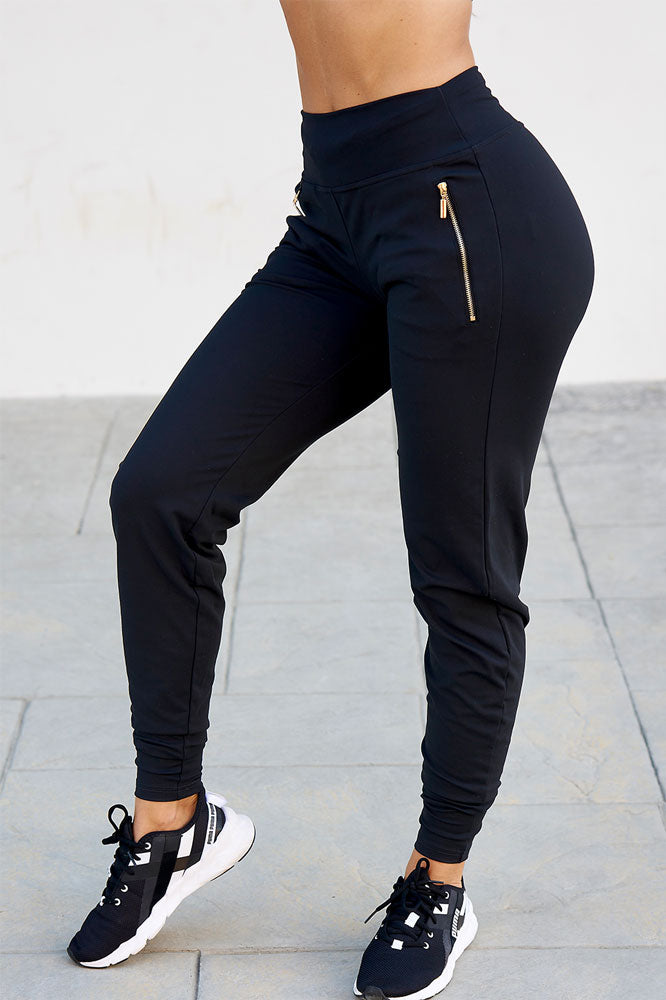
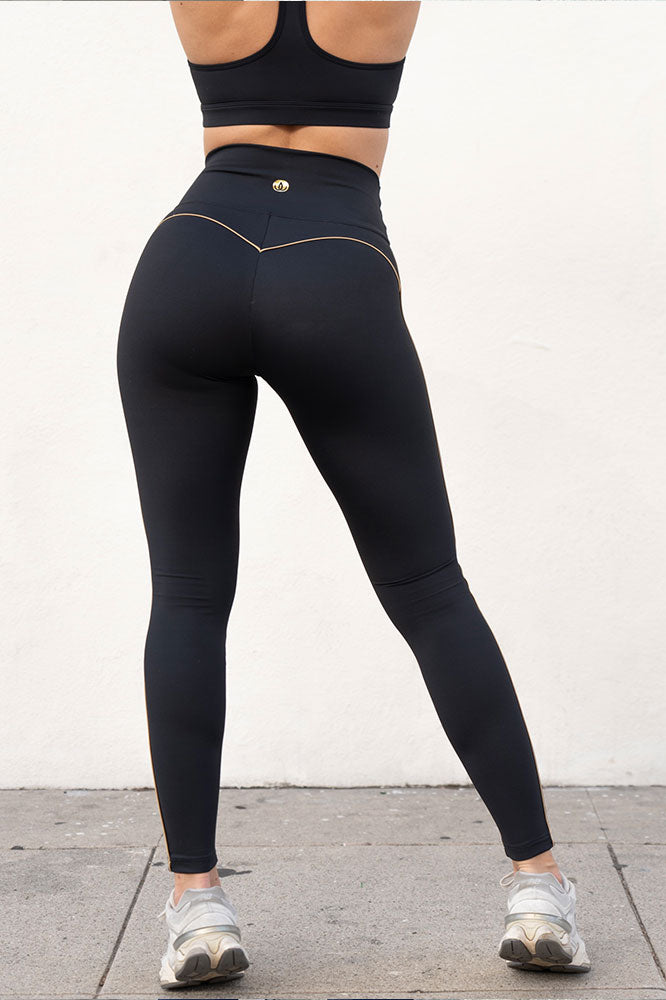
The waistband is the easiest thing to feel. Height, width and elasticity decide whether it stays put through squats, up stairs and on a long walk. Slimline Sculpting Leggings have a high shaped waist that holds you in and stays in place, and a heart-shaped cut at the back that shapes the seat. Goldline Black Sculpting Leggings work the same way, with sculpting construction for the seat, waist and thighs.
A high waist is still not the answer to everything. For calm sessions, travel and long days at home a softer waistband can be more comfortable. For heavy lifting many want something firmer. You choose by the day, not by the style.
Side panels have another job. They distribute the stretch, keep the line of the leg clean and lower the risk of the leggings twisting. If the panel continues up into the waistband, the silhouette hangs together. If it stops abruptly mid-hip, it becomes a detail instead of part of the fit.
How do you know the seams are considered?
Do not count seams. Feel where they sit. Inner thigh, waist, armhole and behind the knees are the places where friction builds, and that is where a flat seam makes the difference. A well-worked seam follows the stretch of the fabric instead of braking it.
Few seams give a clean expression but less control over the shape. Many seams give control but can turn technically busy. We work from one simple rule: every seam needs a reason to be there. Curved seams frame a shape. Straight seams carry stability. The combination makes a piece athletic without shouting about it.
More on what the seam actually does is in our text on activewear with sculpting seams.
Does the fabric matter more than the panels?
They work together. A beautifully drawn panel does nothing in a fabric that does not recover. Recovery is the fabric's ability to return to its shape after being stretched, and it decides whether a piece sits as well in November as it did in June.
A softer fabric gives a lighter feel and suits calm sessions, travel and everyday wear. A denser fabric feels steadier and brings out the lines of the panels more clearly. Neither feel is right in itself.
Slimline Sculpting Leggings are sewn in 73 per cent recycled ECO Circle polyester and 27 per cent elastane, with four-way stretch. Goldline Black Sculpting Leggings have the same composition. Edge Mesh Sculpting Leggings are made in recycled ECO Circle polyester. Slimline Training Jacket is sewn in a performance fabric with four-way stretch that sits close but moves with the body.
How do you test a sculpting construction at home?
The first minutes in front of the mirror say little. Move instead the way you move on an ordinary day. Sit down. Take the stairs. Stretch your arms above your head. Do a few calm squats. The leggings should stay put at the waist. The shoulders of the jacket should not pull back when you reach.
Then look at the panels in movement. They should follow the line without creasing or twisting. A degree of compression is welcome. A pressure you are longing to be free of is not.
Size is part of the construction. Go down a size for a firmer feel and the seams land in the wrong places. Go up and the fabric is not allowed to work as intended. Start from your measurements and the fit description for the style. Our guide to how training tights should fit goes through it step by step, and in Leggings the fit is stated for every style.
Why does a set feel more coherent?
When leggings and jacket are drawn with the same line, the panels meet instead of competing. The whole becomes calmer, and you do not have to wonder whether the parts belong together. Iconic Training Jacket G2 shows another route to the same result: a wide elastic ribbed waistband shapes the lower back and waist while the rest of the jacket falls loose.
A set is practical too. You dress quickly before a session, and the parts work separately with a knitted jumper or a longer coat. Matching Workout Sets for Women and Training Jackets are built with that use in mind.
What do you choose for your everyday?
If you train strength, you want a stable high waist and panels that hold their position through deep movement. If you walk and travel a lot, a softer construction with supple lines suits you. If you need a layer over the top, a shaped jacket with room to move across the back is more useful than a completely straight style.
The panel construction that works is rarely the first thing you see. It shows when a piece sits where it should, hour after hour, and you stop thinking about it.
Anything but ordinary.

Leave a comment
This site is protected by hCaptcha and the hCaptcha Privacy Policy and Terms of Service apply.