


Premium leggings or budget leggings: what sets them apart?
Premium leggings or budget leggings: the difference rarely shows on the hanger. It shows in the squat, after the tenth wash and on the day your workout drifts into something else. A pair of leggings can fit perfectly in the fitting room and still lose its grip after twenty minutes.
The price says something about fabric and stitching. It says nothing about how the garment works for you. That comes down to three things: the fit, how the fabric recovers and how the garment is constructed.
What you pay for
A budget pair and a premium pair can look almost identical in a photo. Black fabric, high waist, a seam along the leg. The difference lies in decisions you never see.
Pattern construction comes first. How many pieces the garment is cut from, where the seams meet, how the waistband is shaped. A simpler pair has fewer pieces and a straighter cut. That makes it cheaper to sew and more predictable in fit. A more considered pair has shaped panels that follow the direction of the body, which gives a different drape over hip and thigh.
The fabric comes second. Density, fibre blend and elasticity decide how the garment behaves when stretched. A thin fabric can feel soft from the first touch and still lack the stability it takes to hold its shape through a full workout.
Quality control comes third. How many garments are tried on real bodies, how seams are reinforced, how often something is rejected before it reaches the store. That part never shows in the product photo and only becomes apparent after six months.
Colour belongs here too. Black is harder to get right than it sounds. A deep, even black requires a denser fabric and a more controlled dyeing process. Cheaper black tends to fade towards grey in the wash, especially over knees and seat where the fabric stretches most. It is often the first thing you notice when a pair is nearing the end of its life.
Fit decides everything else
A garment with the right fabric and the wrong fit ends up hanging in the wardrobe. So start there.
A high waist is a clear example. A high waistband is not stable just because it is high. Width, elasticity and how the fabric returns after stretching decide whether the waist stays put or rolls down during the first warm-up. Our high-waisted leggings are shaped at the waist for exactly that reason.
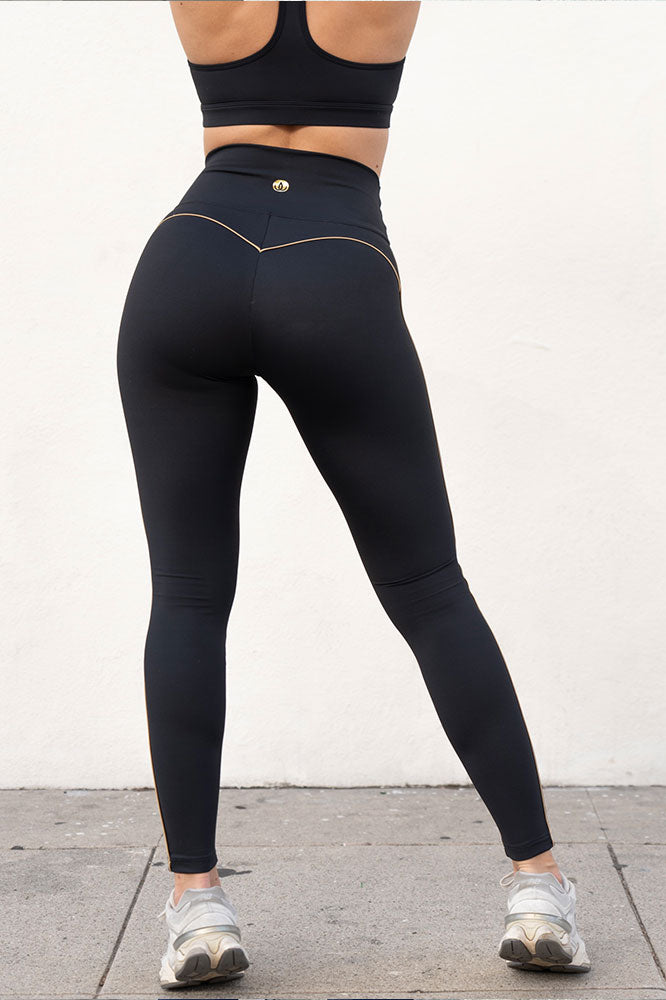
Sculpting seams work the same way. Panels and deliberately placed lines frame the silhouette and hold the garment in place through movement. It is a design choice in the pattern construction, not a promise about what your body will become. You will find that approach in our Sculpting leggings.
Try them in motion
Do not stand still in front of the mirror. Do three squats. Sit down. Reach upwards. Take a few steps.
Then check four things: that the waist stays put without you pulling at it, that the fabric stays opaque when stretched, that the gusset sits where it should and that no seam rubs against your skin.
If any of these fails, the size or the style is wrong, whatever the price tag. We have gathered more on this in our guide to how leggings should fit.
The fabric reveals itself after the wash
Two pairs of black leggings can look identical when new. After ten washes they rarely are.
A fabric with good recovery follows the body through the workout and then returns to its shape. A fabric without that quality stretches out at knees and seat, pills on the surface or grows thinner where it is stretched most. That does not apply to every simpler pair, but the spread in quality is far wider at the lower end of the price range.
The seam is the other half of the same question. Flat seams reduce the risk of chafing during long sessions. Reinforced sections make the difference where the load is greatest: inner thigh, waistband and the areas stretched with every movement.
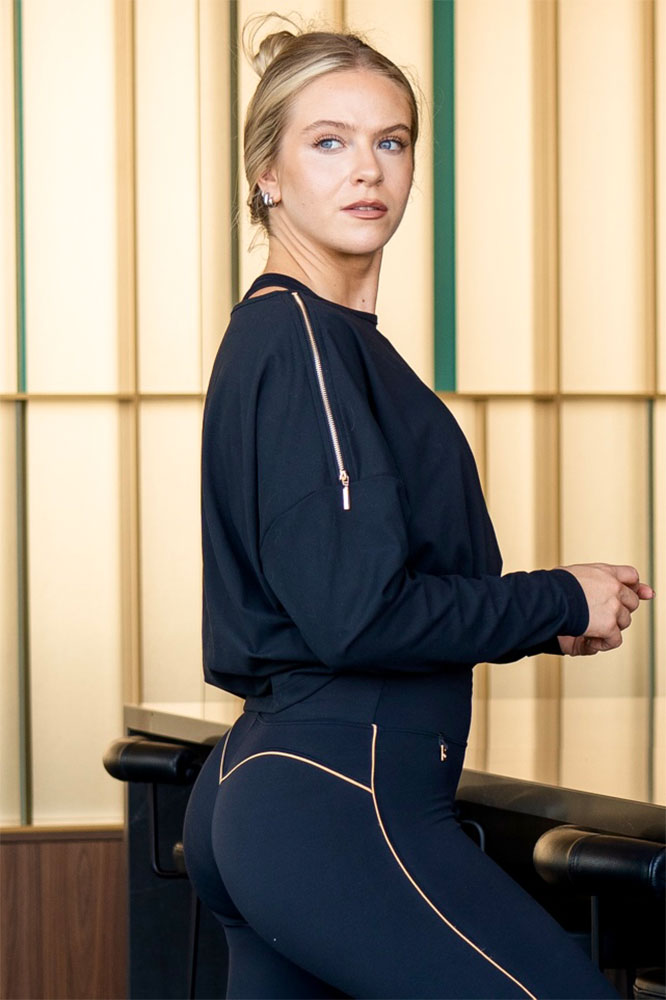
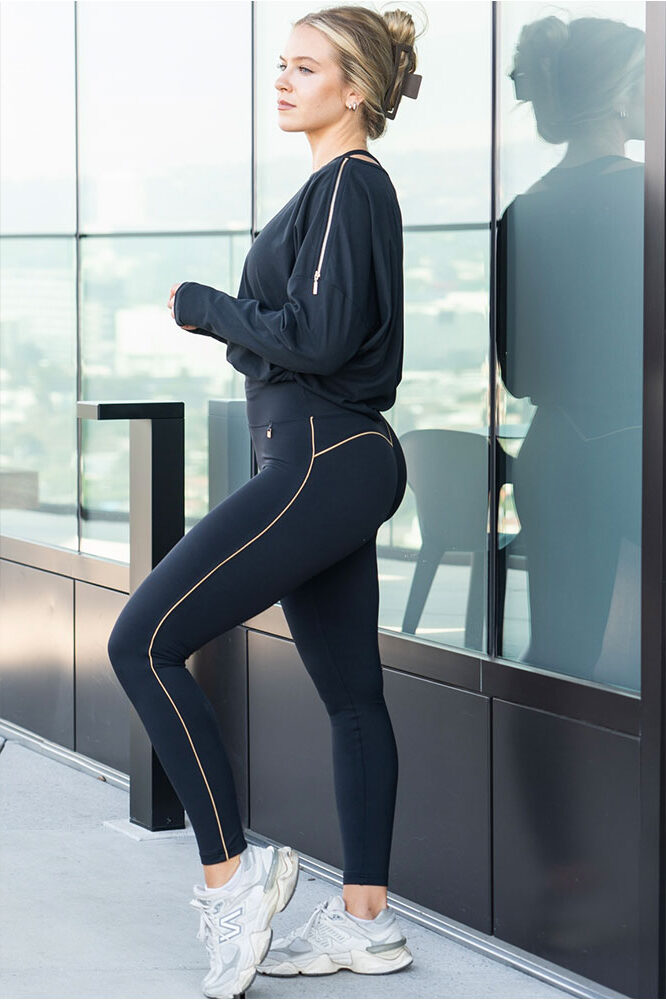
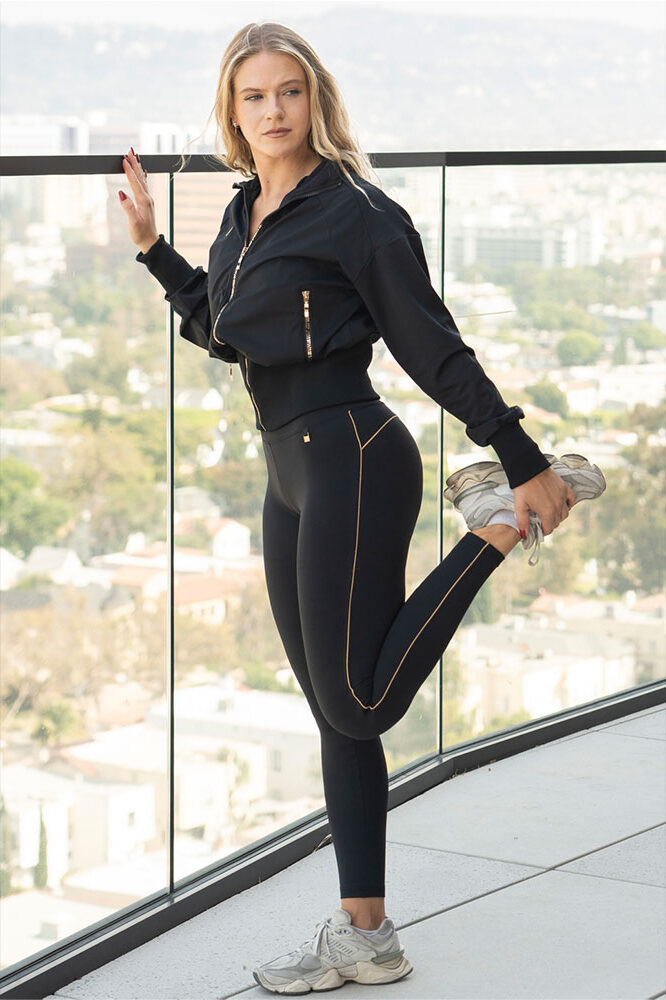
Edge Stripe Leggings are sewn in 78 per cent recycled polyester and 22 per cent elastane, with a heart-shaped back seam and a hidden pocket in the waistband. Slimline FlexFlow Black/Gold shares the same fabric composition, with gold piping along the leg. Both have a high shaped waist, are squat proof, moisture-wicking and quick-drying.
When budget leggings are enough
There is no rule that says the most expensive is always right.
A simpler pair works well when you are trying a new form of training, need a spare pair between washes or move at low intensity. Walks, yoga at home, a trip where the garment has to survive being rolled up in a bag. There, the demands on stability and durability are lower, and a cheaper pair does its job.
Some also prefer a softer, less shaping feel against the body. That is a preference, not a lesser choice. Ask yourself how often the garment will actually be worn before you compare price tags.
Be honest about what bothers you today. If you pull the waist up between sets, fold the waistband down because it presses or avoid bright floors at the gym, it is the fit and the fabric density that fall short. None of that is solved by a higher price tag in itself. It is solved by the right construction in the right size.
When a more expensive pair pays off
Count use instead of purchase price. A pair at 500 kronor that loses its shape after ten workouts costs 50 kronor per wear. A pair at 1,300 kronor that lasts a hundred workouts costs 13 kronor.
The numbers vary from wardrobe to wardrobe. The perspective does not.
A more expensive pair pays off above all when the garment has to work in more than one setting. You go from the morning workout to coffee, pick-up or a working day at home. Then the silhouette needs to last as long as the fabric, and the colour needs to look as clean in daylight as it did in the changing room. To compare styles, the full range is under women's leggings.
Extend the life of the pair you choose. Wash at 30 degrees, inside out, without fabric softener. Let the leggings air dry instead of tumble drying. The elasticity lasts noticeably longer.
Common questions
Are expensive leggings always better?
No. Price follows fabric, construction and quality control, but an expensive pair in the wrong size fits worse than a cheap pair in the right one. Fit comes first, price second.
How do I know if leggings are squat proof?
Stretch the fabric between your hands in daylight. If skin shows clearly through, the fabric is too thin. Then do a deep squat in front of the mirror and check from behind before you cut off the tag.
How long should a pair of leggings last?
With two to three workouts a week and the right washing, a well-sewn pair often lasts two to three years before the elasticity starts to fade. Fabric softener and tumble drying shorten that time considerably.
Anything but ordinary.

Leave a comment
This site is protected by hCaptcha and the hCaptcha Privacy Policy and Terms of Service apply.