


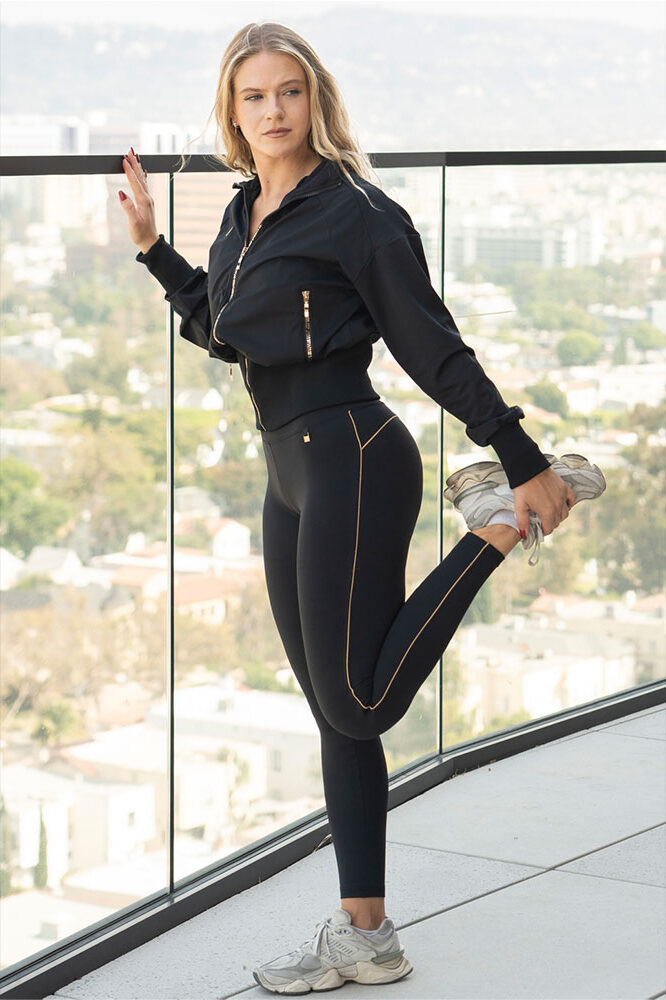
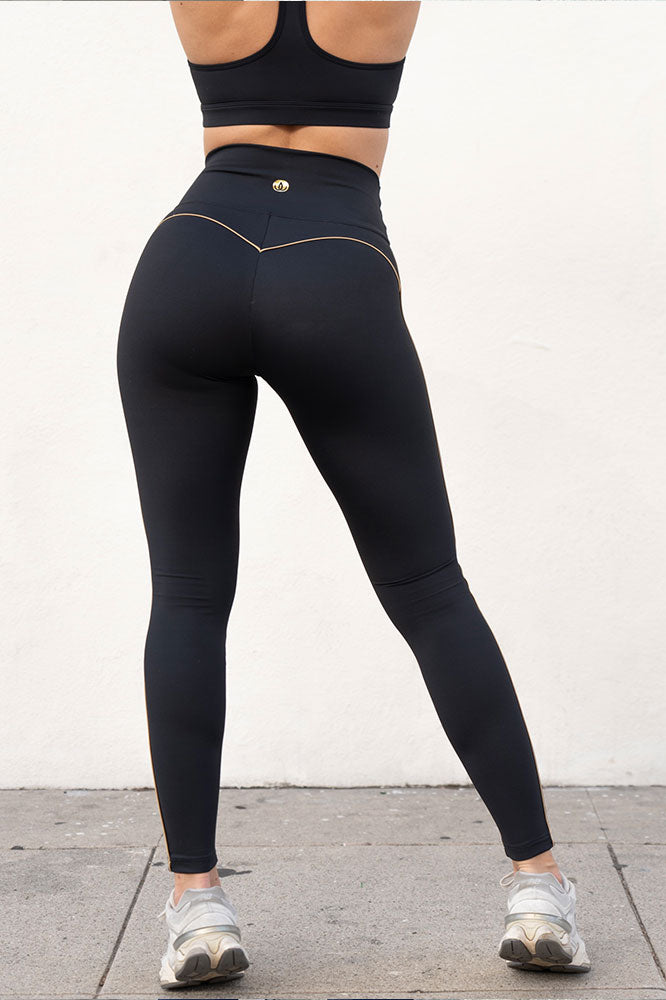
Women's leggings with a fit that lasts
A considered fit in women's leggings shows before the first squat. The waist sits where it should, the fabric follows the movement without slipping and the silhouette feels composed without restricting. It is the difference between a garment you adjust during the workout and one you put on without giving it another thought.
For women who move between the gym, walks, work and travel, leggings are not an occasional training garment. They need to hold their shape, work with the rest of the wardrobe and feel as natural after several hours as they do during an intense session. The right construction does its work quietly.
The fit of women's leggings begins in the construction
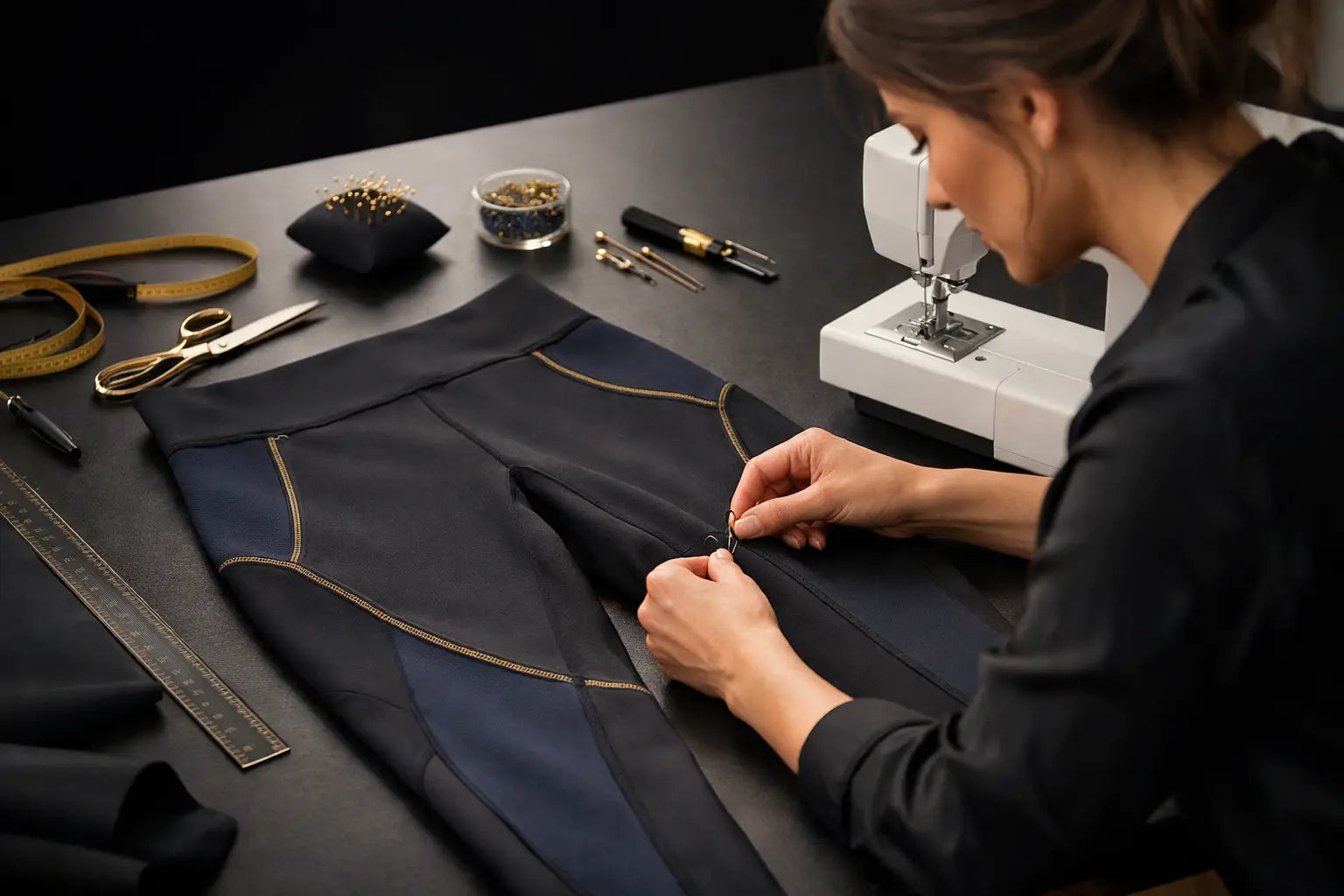
Two pairs of leggings can share the same size on the label and feel completely different on the body. That comes down to pattern construction. How the waist is cut, where the seams meet and how the panels follow hips, thighs and knees decide whether the garment sits firmly or starts to wander as you move.
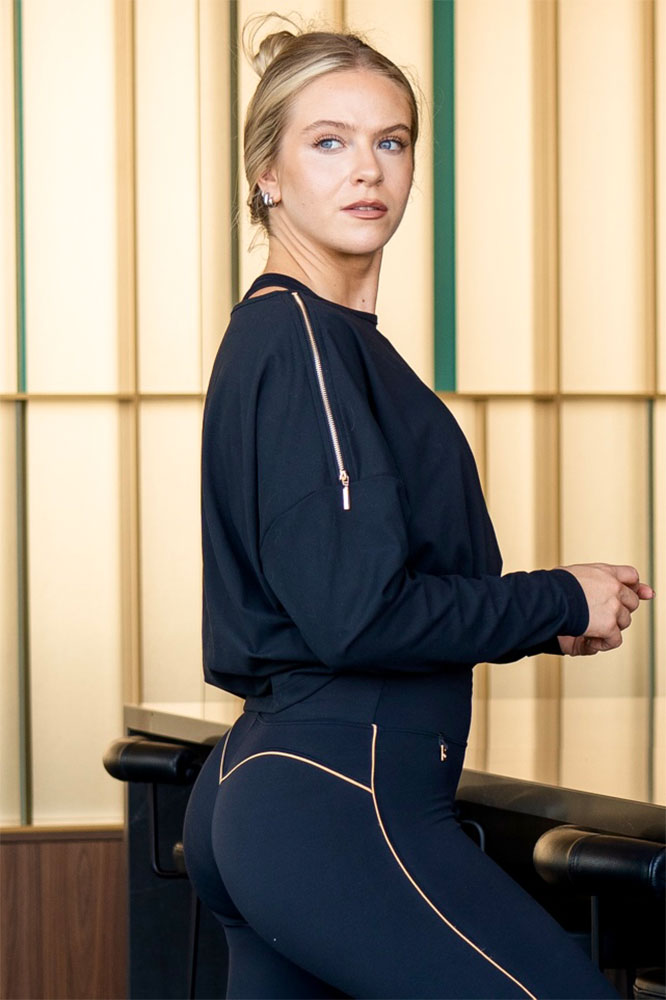
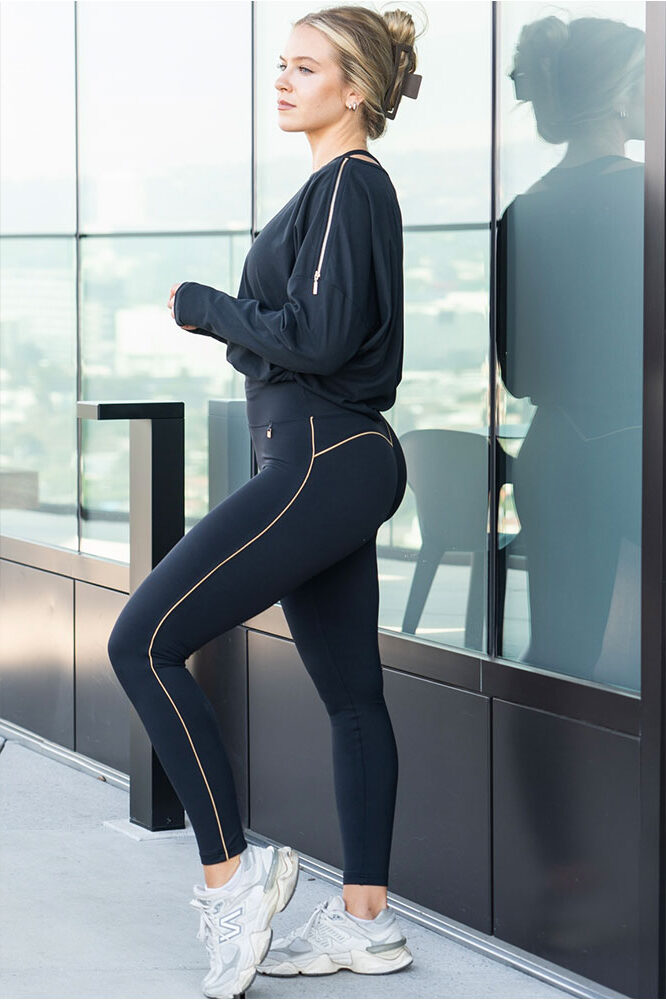
Sculpting tights rest on a deliberate placement of seams, panels and lines. Seams placed to lift the silhouette create a more defined expression, while shaped side panels give the garment direction along the legs. It is not about changing the body, but about design that follows a woman's body in motion and gives a refined shape.
A good fit should feel close, but never pressed. The fabric needs enough recovery to return to its original shape after movement, washing and wear. If the leggings bag at the knees or waist after a few hours, the fabric's resilience and the construction are often part of the explanation.
A high waist that holds its position
The high waist is appreciated for a simple reason: it gives a clean, composed line and reduces the need to pull the leggings up during the workout. But a high waist is not automatically the right fit. A waistband that is too firm can dig in when you sit, bend or breathe deeply. One that is too soft can roll or slide down.
Look for a waist that wraps evenly without clear pressure over the stomach. It should follow the body as you shift between standing exercises, floor work and the movements of everyday life. Test the fit by sitting down, doing a few squats and stretching your arms overhead. If you never need to adjust the garment, you have come close to the right feeling.
Choose the fabric for how you actually use the leggings
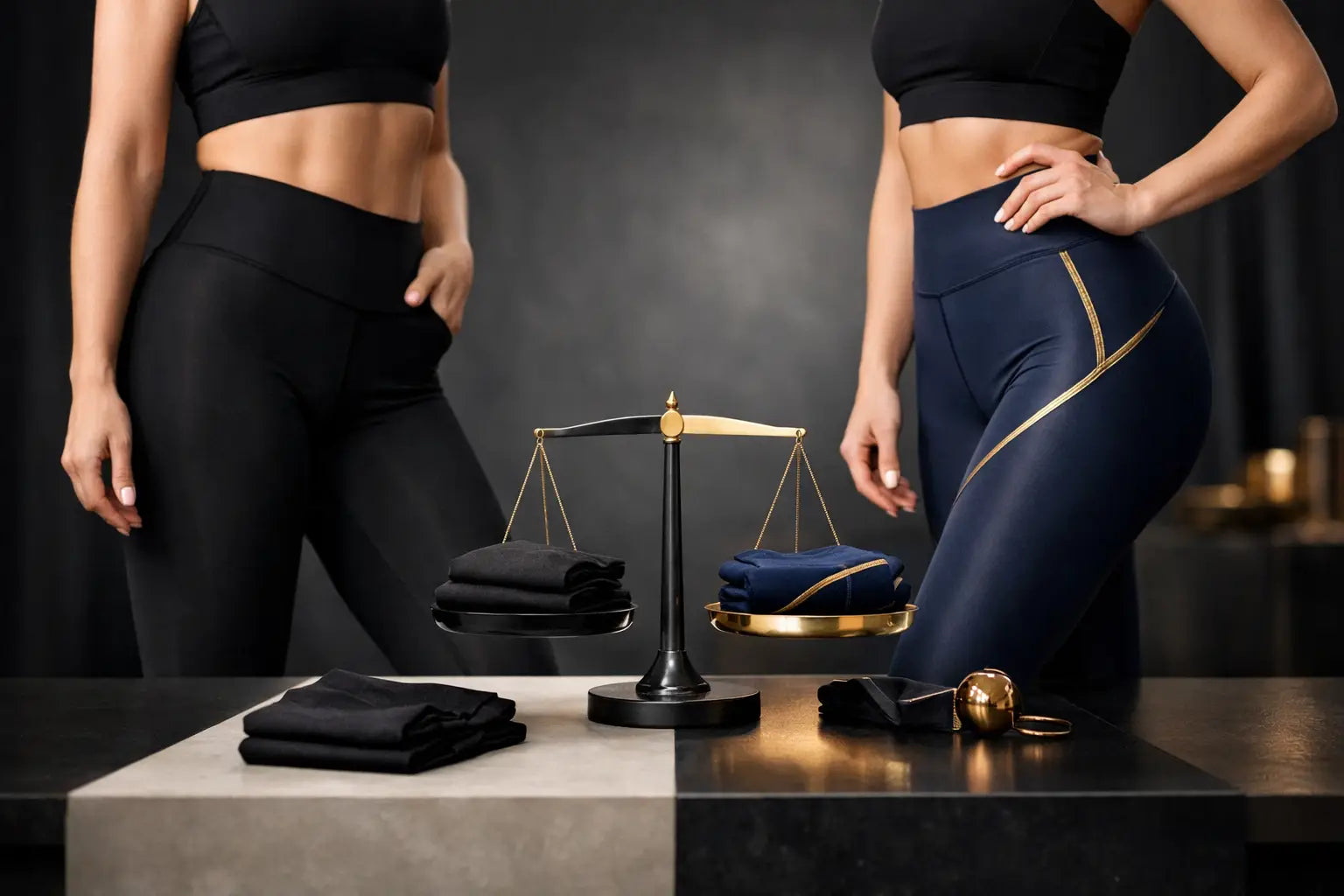
The fabric affects more than the feel against the skin. It governs how the leggings breathe, how opaque they stay in motion and how well they keep their shape. For strength training, pilates and walks, many appreciate a denser, more sculpting fabric with a steady grip. For running or high intensity, a slightly lighter quality with effective moisture management can be the right choice.
Recycled fabric is a relevant choice when it is combined with durable construction. What matters is not only the raw material, but that the garment is made to be used for a long time. A fabric that keeps its resilience, resists sheerness and stands up to repeated washing becomes a more considered addition to the wardrobe than a pair that quickly loses its shape.
Coverage is a question of fit as well. When you bend or lunge, the fabric should keep feeling opaque and stable. A fabric that is too thin can feel cool in the fitting room but less secure during training. A very heavy fabric can instead run warm at a high pulse. There is no universal answer here, choose from your most frequent training and how you want the leggings to feel across a whole day.
The right size is not always the tightest
Premium leggings are often designed to sit close to the body. It is easy to assume that a smaller size always gives more support. In practice, leggings that are too small can work against the fit. The seams are pulled too hard, the waist can roll and the fabric is loaded beyond what it was made for.
Start from the size guide and from how you intend to wear the garment. If you sit between two sizes, your height, hip shape and activity can play a part. For a softer feel in everyday use, the larger size may be right. For a more composed expression in strength training, the smaller can work, provided the waist lies flat and you keep full freedom of movement.
Look closely at the length. Leggings that are too long can crease behind the knees, while a style that is too short can pull upwards during activity. A well-judged ankle length gives a clean silhouette and makes the garment easy to wear with sneakers, socks and a longer training jacket.
Leggings that work beyond the gym
The most useful leggings do not stay in the gym bag. A sculpting style in a considered colour works with a matching training top or jacket on the way to a session, but also with an oversized shirt, knitwear or a coat in everyday life. That is where Scandinavian minimalism meets athletic precision.
Matching training sets give a coherent expression without feeling overworked. When leggings and jacket share the same tone, fabric feel or line, the transition from studio to street becomes natural. A training jacket with strategically placed seams and a clean zip can also frame the silhouette and give a more finished impression than a traditional hoodie.
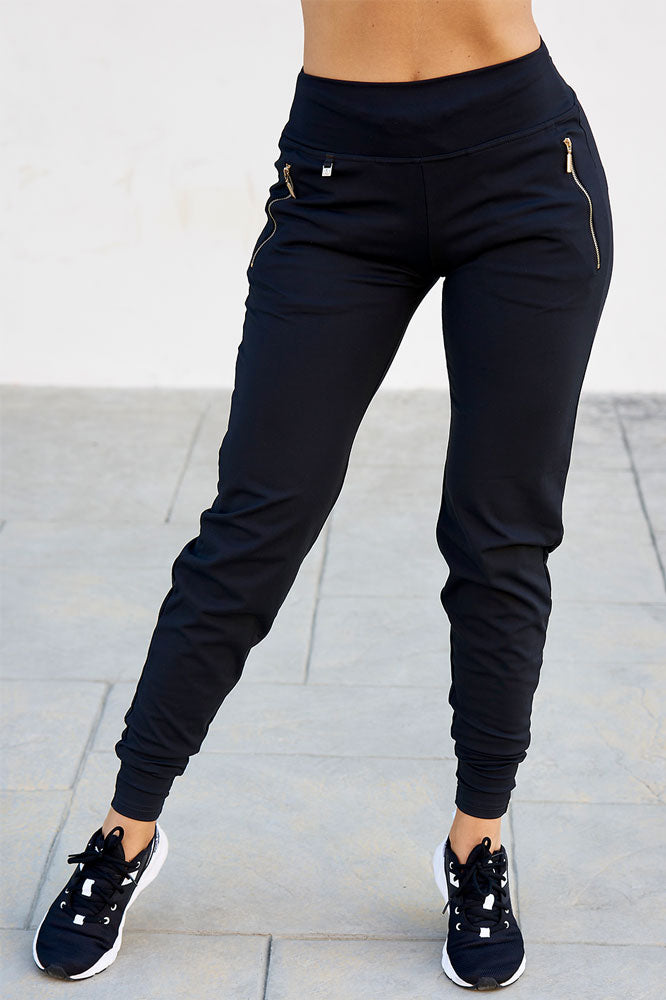
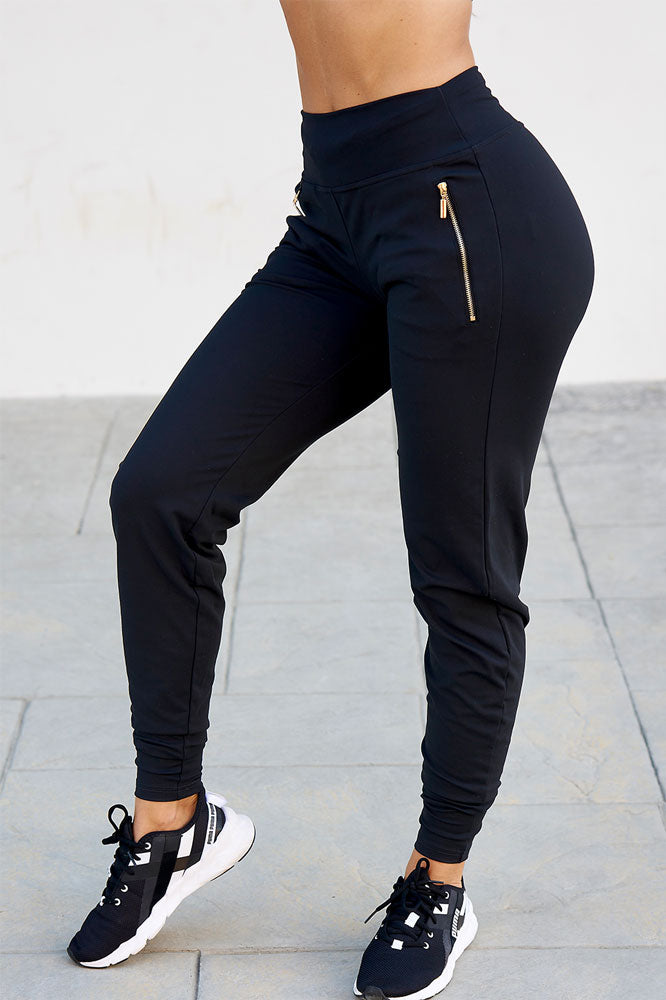
Casualwear with the same focus on fit serves another purpose. Soft trousers, shaped tops and layers that work on a flight, on holiday or during a day at home do not need to compromise on expression. The wardrobe becomes simpler when the pieces combine in more ways and still feel precise.
The details that decide after ten wears
In the fitting room it is easy to be caught by colour and first impressions. After several wears, it is the details that decide whether the leggings remain a first choice. Flatlock seams or well-placed smooth seams reduce the risk of chafing. A carefully worked gusset gives freedom of movement without the fabric gathering, and a stable waistband holds the fit through the day.
The washing routine matters too. Wash the leggings inside out, at a low temperature and without fabric softener when the care label recommends it. Fabric softener can affect the function and resilience of the fibres over time. Air drying is often gentler than tumble drying and helps the fabric keep its recovery.
Customer reviews often return to what is hard to see in a product photo: whether the waist stays put through a session, whether the fabric feels comfortable through a long day and whether the garment holds its shape after washing. That kind of experience is valuable when you compare styles, especially if you are looking for leggings that need to work in several settings.
Wallderinska starts from exactly that balance between sculpting construction, durable design and an expression that works from training to everyday life. Anything but ordinary often lies in what seems small at first: a side panel that follows the leg, a high waist with the right stability or a jacket that completes the set with the same precision.
When you choose your next pair, think less about what looks good when you stand still and more about how the leggings follow you through the day. The right pair should give you room to move, hold its shape and feel like a natural part of your own rhythm.

Leave a comment
This site is protected by hCaptcha and the hCaptcha Privacy Policy and Terms of Service apply.