


How to choose a training jacket: seven details that decide
You notice a training jacket first when it does not work. When the zip chafes during the warm-up, the sleeves ride up mid strength session or the shape feels wrong the moment you leave the gym. How do you choose a training jacket that holds movement, silhouette and everyday life together? Do not start with the colour. Start with how the garment should feel and be used.
A well-considered training jacket should give a clean expression without restricting the body. It should stay in place as you move, work over your training set and feel just as natural on the way to a meeting, during a walk or when travelling. The difference lies in the fit, the construction and the recovery of the material.
How do you choose a training jacket for the way you move?
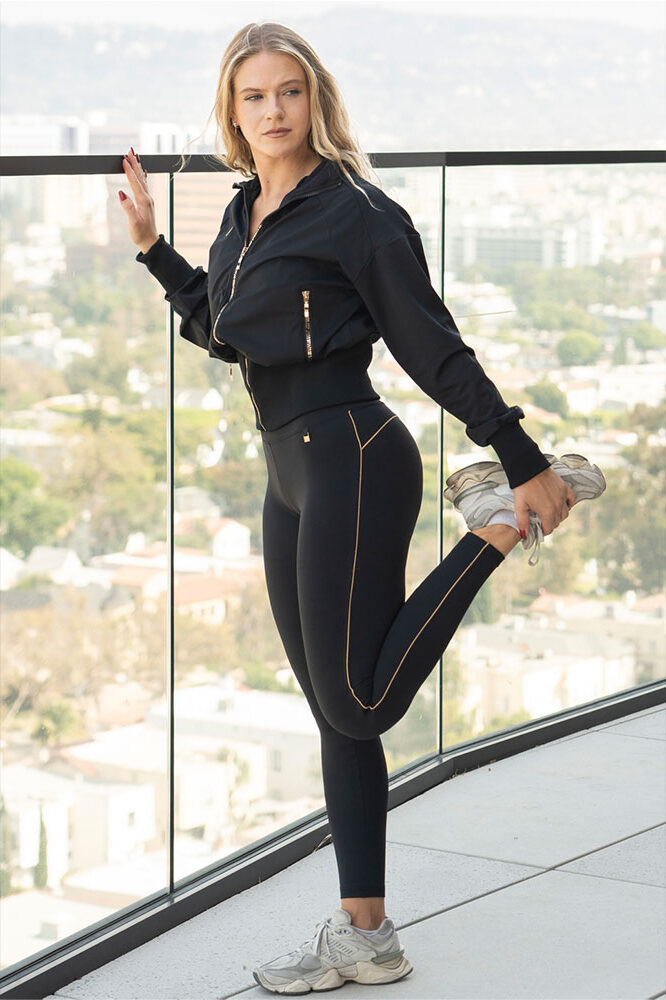
Consider when the jacket will do most of its work. For the gym, you need a style that follows the movement of shoulders, back and arms without creasing during pulls, presses or stretches. For walks and outdoor sessions, you may want a slightly more protective feel, with a collar that closes around you and a material that works as a smooth layer over your training tank.
If the jacket is coming along for the whole day, the silhouette becomes as relevant as the function. A close-fitting style with clean lines can be worn with leggings, but also with wide trousers or denim. That gives the garment a longer life than a traditional outer layer meant only for training.
There is no single fit that suits every occasion. A tighter jacket often feels more precise during gym sessions and as a layer under an outer coat. A straighter style leaves more room for layering and can work better before and after training. Choose based on the movement you actually do, not just the activity shown on the product image.
A fit that holds its shape
A good training jacket should sit close to the body without feeling strained. Test the feel by reaching your arms forward, lifting them overhead and rotating your shoulders. If the jacket rides up over your stomach, pulls across your back or restricts your ribcage, the pattern construction is probably not right for you.
The shoulder seam is a detail that often decides the whole. It should land close to your natural shoulder point, or be deliberately placed to allow freedom of movement. Too far in and the shoulder can feel locked. Too far out and the jacket can lose its sharp shape.
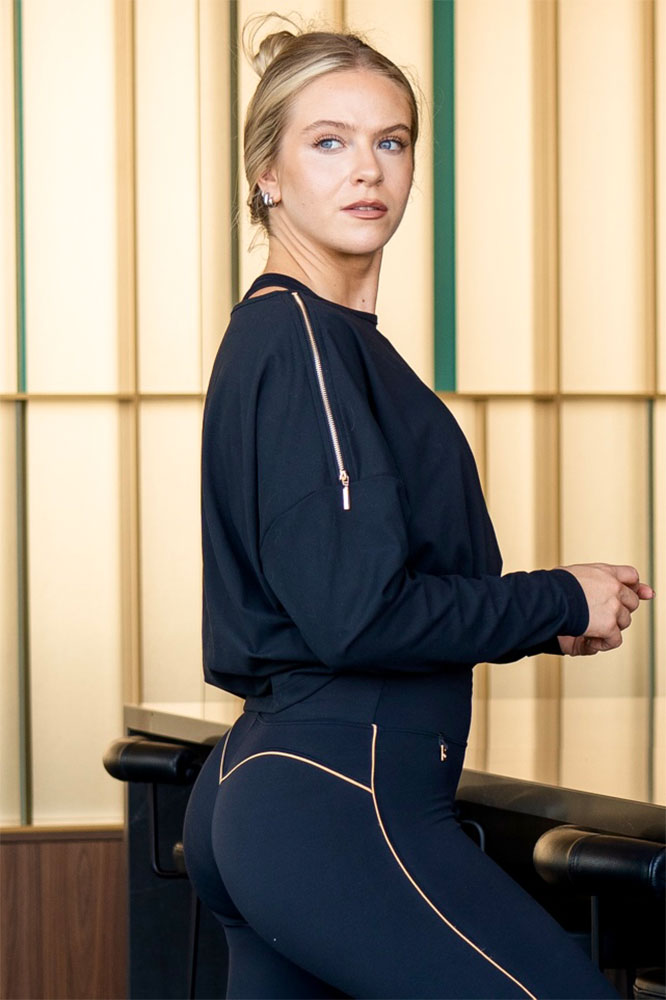
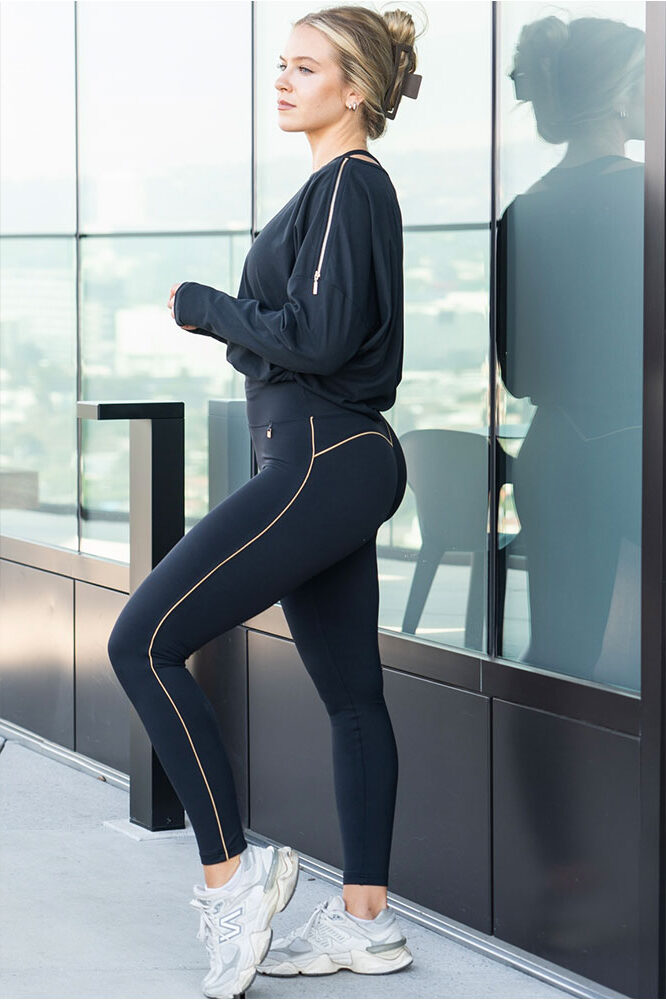
Look at the length of the jacket as well. A shorter style often highlights a high waist and creates a clear proportion with leggings. A longer style gives more coverage and can feel practical over a longer tank or on a walk. It is not about right or wrong, but about the balance you want in your wardrobe.
Sculpting in a training jacket is about design choices, not promises. Seams placed to lift the silhouette, shaped side panels and considered lines can create a fluid, defined shape. It is the construction that makes the difference, not decorative details without function.
Check the size in motion
A jacket can fit well when you stand still and still be wrong in activity. Close the zip all the way, sit down and reach your arms forward. Notice the feel across the chest, underarms and wrists. The material should give, but also return to its shape without feeling slack.
If you fall between two sizes, the choice depends on how you want to wear it. Often, the smaller size is the one to choose for a more body-hugging feel if the material has good stretch. Choose the larger if you regularly want a layer underneath or prefer a less defined silhouette. The size chart is a starting point, but your movement and your layers decide most.
A material that works beyond a single session
The material needs to handle friction, repeated washes and the shift between activity and rest. For a training jacket worn close to the body, a smooth, stretchy quality is often a strong choice. It follows the body without feeling heavy and keeps a clean surface that works well outside the training environment too.
Fabric with recycled fibres can be a considered option, but always read the material information as a whole. Recycled content says something about the raw material, while construction, fibre blend and care affect how the jacket holds its fit over time. Sustainable design is both a material choice and a matter of a garment you keep wearing.
For high-intensity sessions, a quality that wicks moisture and dries relatively quickly is often appreciated. For travel, recovery and everyday life, a softer, slightly denser feel can be more relevant. One jacket can do a lot, but it does not have to be ideal for running in the rain, a sweaty interval session and a winter walk all at once. Be clear about your main need.
Avoid judging quality by thickness alone. A thick fabric is not automatically more durable, and a thin material is not fragile by definition. Notice whether the fabric has an even density, whether it recovers when you stretch it and whether the inside feels pleasant against the skin.
Zips, collar and sleeves make a difference
Small functions affect how often a training jacket is actually worn. A zip should run smoothly and lie flat against the body. A high collar can give a more composed feel before and after your session, but should not sit so close that it bothers you once you warm up. Try it both open and fully closed.
Sleeve length is especially relevant if you wear a watch, use gloves or want a layer that protects your wrists on a walk. Thumbholes can be practical in cooler weather and give the sleeve a stable position, but some prefer a clean finish that works better in everyday life. This is a detail where personal habit should decide.
Pockets should also have a clear purpose. Discreet side pockets can hold a card, a key or a phone on the way to and from training. During running or more intense movement, heavy items in the pockets can disturb the drape of the jacket. The more close-fitting the style, the more the placement of the pockets matters.
Build a wardrobe with sets and layers
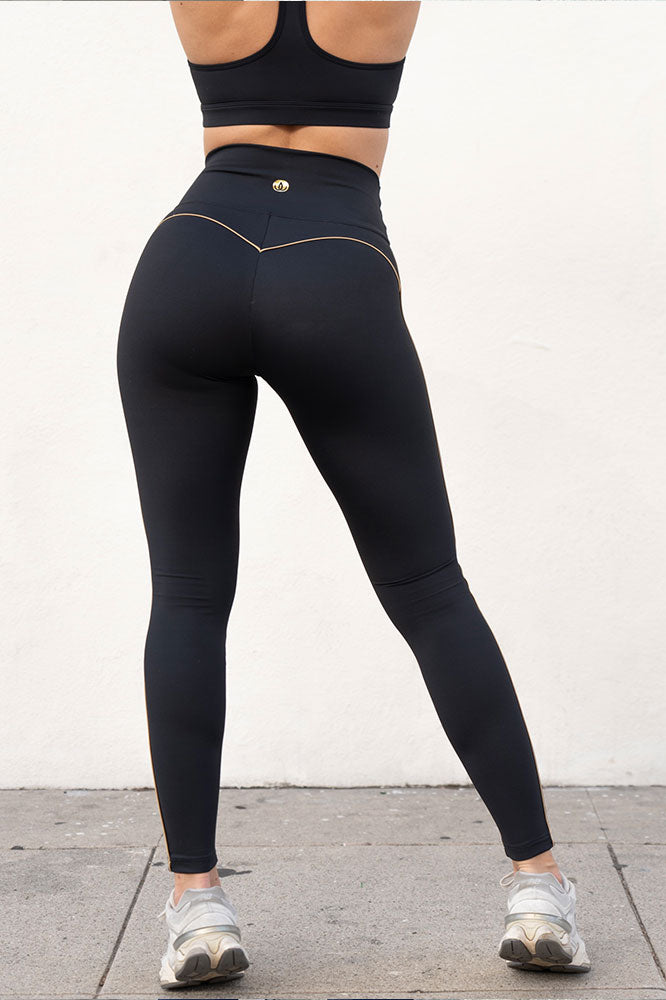
A training jacket is often most useful when it is part of a context. Match it with sculpting leggings with a high waist for a cohesive silhouette, or break it up with a simple tank and straight trousers when the training day moves on to other things. A matching set gives a clear expression, while neutral colours make it easier to combine garments across seasons.
This is where the Scandinavian sense of form becomes valuable. A few well-chosen details make the jacket feel precise both with sneakers and with a more everyday look. Wallderinska works with exactly that balance between athletic precision and garments created for movement, the city and travel days.
Think in layers rather than individual garments too. A thin training jacket works close to the body at the gym and under a gilet when the temperature drops. A style with a little more structure can be the outer layer to and from the studio. When every garment can be combined in several ways, the wardrobe becomes more considered without having to grow.
Care that preserves the feel
Even a well-constructed jacket needs the right care to keep its elasticity and surface. Wash when needed rather than by routine, especially if the jacket has mostly been worn as an outer layer. Turn it inside out, close the zip and follow the care label closely.
Avoid fabric softener if the material is made for training, as it can affect the function of the fibres and leave a coating on the fabric. Air drying is often gentler than high heat and helps the garment keep its shape. These are simple habits, but they show after many wears.
Choose the jacket you want to reach for both before training and as the day continues. When the fit feels precise, the seams follow your movement and the design works beyond the gym, you have found a garment that keeps its place in your wardrobe.

Leave a comment
This site is protected by hCaptcha and the hCaptcha Privacy Policy and Terms of Service apply.