


Jacket size guide: the measurements that decide
A jacket can be right on paper and still feel wrong the moment you lift your arms. That is why a jacket size guide is more than a table of centimetres. It is about how the jacket behaves in movement.
A training jacket should stay put when you reach, feel free across the shoulders and close without the fabric pulling across the chest. The right size is the one you stop thinking about.
Do you start with the chart or with the fit?
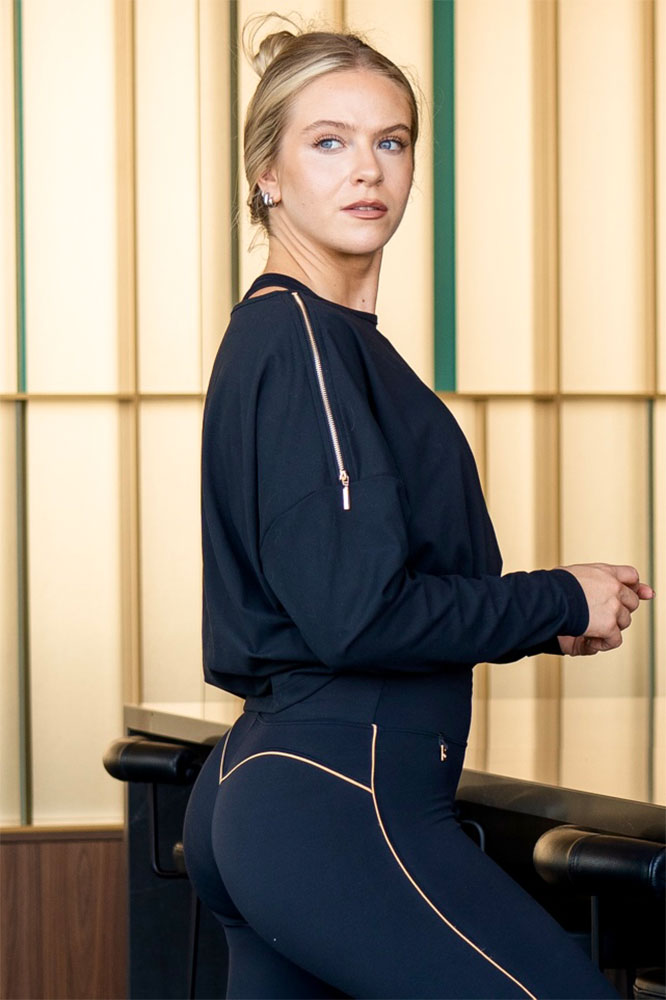
The chart gives you direction. The fit decides. Two jackets in the same size can sit completely differently depending on the cut, the panels and how close to the body the model is drawn. A close-fitting jacket follows the lines of the body. A looser model leaves room for layers underneath.
So start with how you will use it. For strength training and running you usually want a close fit that stays steady through the whole movement. For walks, travel and days in the city, a little more room across shoulders and back can be right, especially if you wear a top or a thin knit underneath.
How do you take your measurements?
You need a soft tape measure and a thin garment next to the skin. Stand relaxed, breathe normally and keep the tape level. A tape pulled tight gives you a number you cannot use.
Bust width is the decisive measurement for a jacket. Measure around the fullest part with your arms relaxed at your sides. If you have broad shoulders or train your upper body a lot: pay extra attention to the shoulder area, because that is where freedom of movement is decided.
The waist measurement shows how a shaped model will sit on the body. Measure where the waist is narrowest, without holding your stomach in. If the jacket ends above the hip, the hip measurement matters too, above all if you want to close the zip all the way without the hem pulling.
Then compare your measurements with the chart for that particular model. Start from the part of the body that needs the most room. If bust and shoulders land in a larger size while the waist sits in a smaller one, give the upper body priority. Seams and panels often hold the silhouette at the waist anyway.
Can you measure a jacket you already own?
Yes, and it is often the fastest route. Lay the jacket flat and measure chest width, length and sleeve length. Compare with the garment measurements given for the product. Sizes differ between brands and models. Garment measurements do not differ in the same way.
Remember that a garment measurement is not a body measurement. It shows how much width and length you like, nothing more.
How should the jacket feel when you move?
The fitting room says one thing, movement says another. Close the zip. Lift your arms above your head, reach forward and rotate your shoulders. The jacket should follow without the whole garment riding up and without the zip pulling askew across the chest.
Check the sleeve length with your arms bent. The sleeve does not need to cover your hand, but your wrist should not sit bare at every movement. In a close-fitting model the garment is meant to hold the body. The difference from a size too small is that you still breathe deeply and move your shoulders freely.
Look at the zip in the mirror. If it bows, or if horizontal folds settle across chest and back, the jacket is too small or too short for your body shape. If the shoulder seam sits far down the upper arm and fabric gathers at the back, it is too large for the cut it was drawn for.
Does the fabric affect your size choice?
Stretch changes the feel, but it is no reason to go down a size. A supple performance fabric shapes to the body in the first minutes and should then stay where it is. Edge Black Training Jacket is made in recycled ECO Circle polyester with 4-way stretch, and that kind of fabric gives a close cut without locking the movement.
Firmer, more structured materials give clearer lines but less room across shoulders and elbows. There, accurate measuring matters more. A garment should be built to work for a long time, not only to feel right for the first minutes in the fitting room.
What do you do between two sizes?
Choose by how you will wear the jacket. If it should sit close over a sports bra or a thin top, the smaller size can be right, provided shoulders, bust and zip feel free. If it should work to and from training, on a flight and over several layers, the larger one is usually more useful.
Length plays a part. If you have a long torso or long arms, a larger size can give better proportions even when the bust width points to the smaller one. If you are shorter and want a defined silhouette, the smaller size works, as long as the movement test feels free.
Do not choose larger simply for a loose feel in a model drawn to sit close. The side panels, seams and zip then land in the wrong place. Precision comes from the pattern construction, not from how far the fabric will stretch.
Do the top and the bottom need the same size?
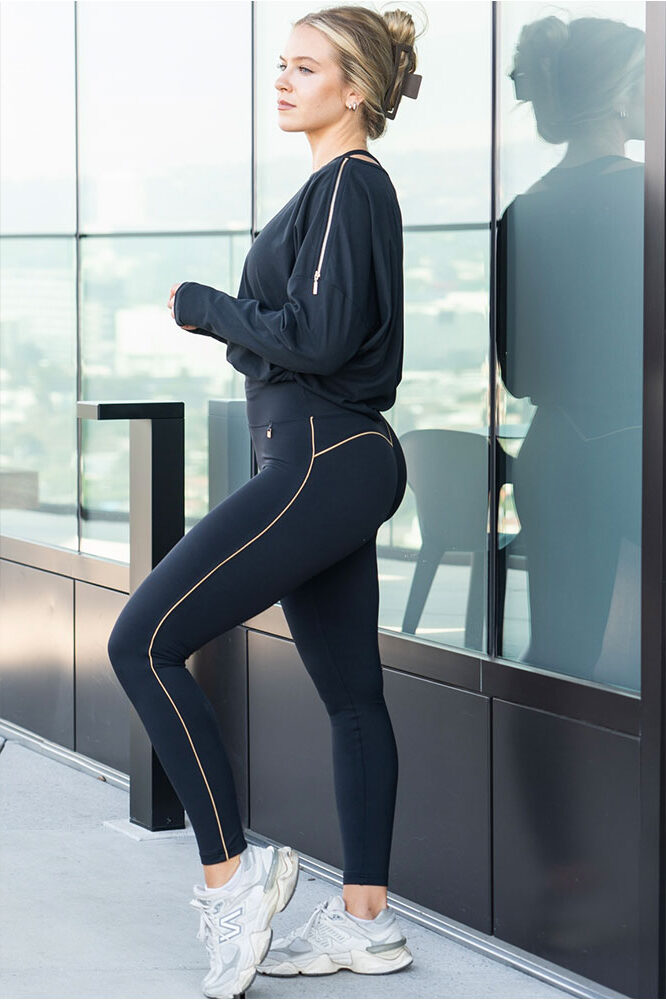
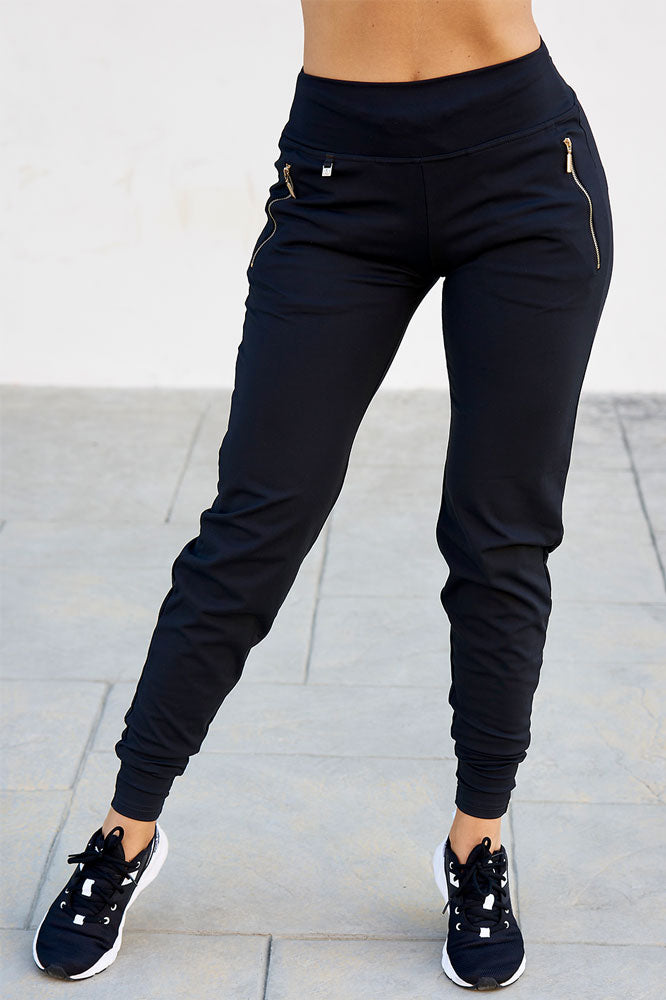
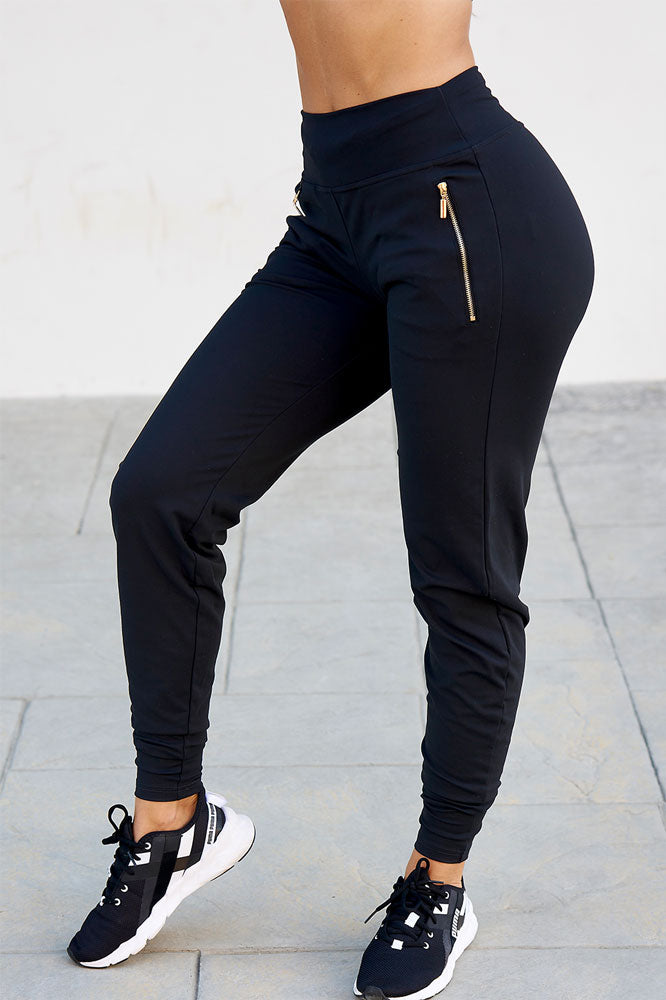
No. The body is rarely proportioned to a single label. You can be happy in a smaller size in high waist tights and a larger one in the jacket, for the sake of shoulders and bust. That is a considered choice, not a break with the look of the set.
Tights and jacket do different jobs. Tights should sit steady around waist, seat and legs. The jacket should follow the movement of the upper body and work with a zip, sleeves and any layers underneath. A matching set becomes more balanced when each piece gets its own size.
Which jacket suits what you need?
Iconic Training Jacket G2 has a wide elastic ribbed waistband that shapes the lower back and waist, while the rest of the jacket falls loose. The loose fit through the torso means the size choice is usually governed by shoulders and bust rather than by the waist. The fabric is recycled ECO Circle polyester, moisture-repellent and quick-drying.
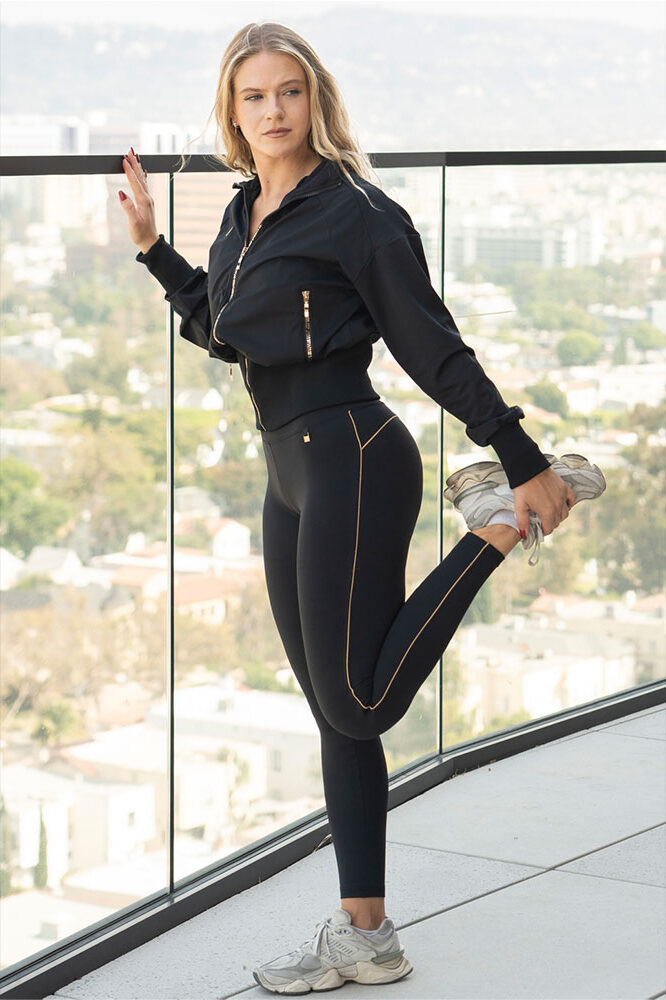
Edge Training Jacket Gold Zip has a fitted cut and a gold-coloured zip centred at the front. A fitted cut is more sensitive to the measurements, so measure bust and shoulders before you decide.
More models are in Training Jackets. If you want to read on about what separates a considered jacket from a standard one, here are seven details that decide the choice of training jacket.
Give the size choice a few extra minutes. A jacket that fits holds its line, gives you freedom of movement and becomes a piece you reach for far beyond training.

Leave a comment
This site is protected by hCaptcha and the hCaptcha Privacy Policy and Terms of Service apply.