




Artikkeli: How to pack workout clothes: a bag that lasts the whole trip
How to pack workout clothes: a bag that lasts the whole trip
A bag for three days rarely gets better with more clothes. It gets better with clothes that work together. How to pack workout clothes starts with the rhythm of the trip rather than the bottom of the bag: how many sessions you will actually do, how long the travel day is, what you want to be wearing when you step off the train.
We build clothes to hold their shape in movement. The same quality decides how they look after a few hours packed tight in a cabin bag.
How to pack workout clothes for three days
Count occasions, not days. Two morning sessions, one walk and one travel day home is four occasions. Those are what you pack for, and they need fewer pieces than the calendar suggests.
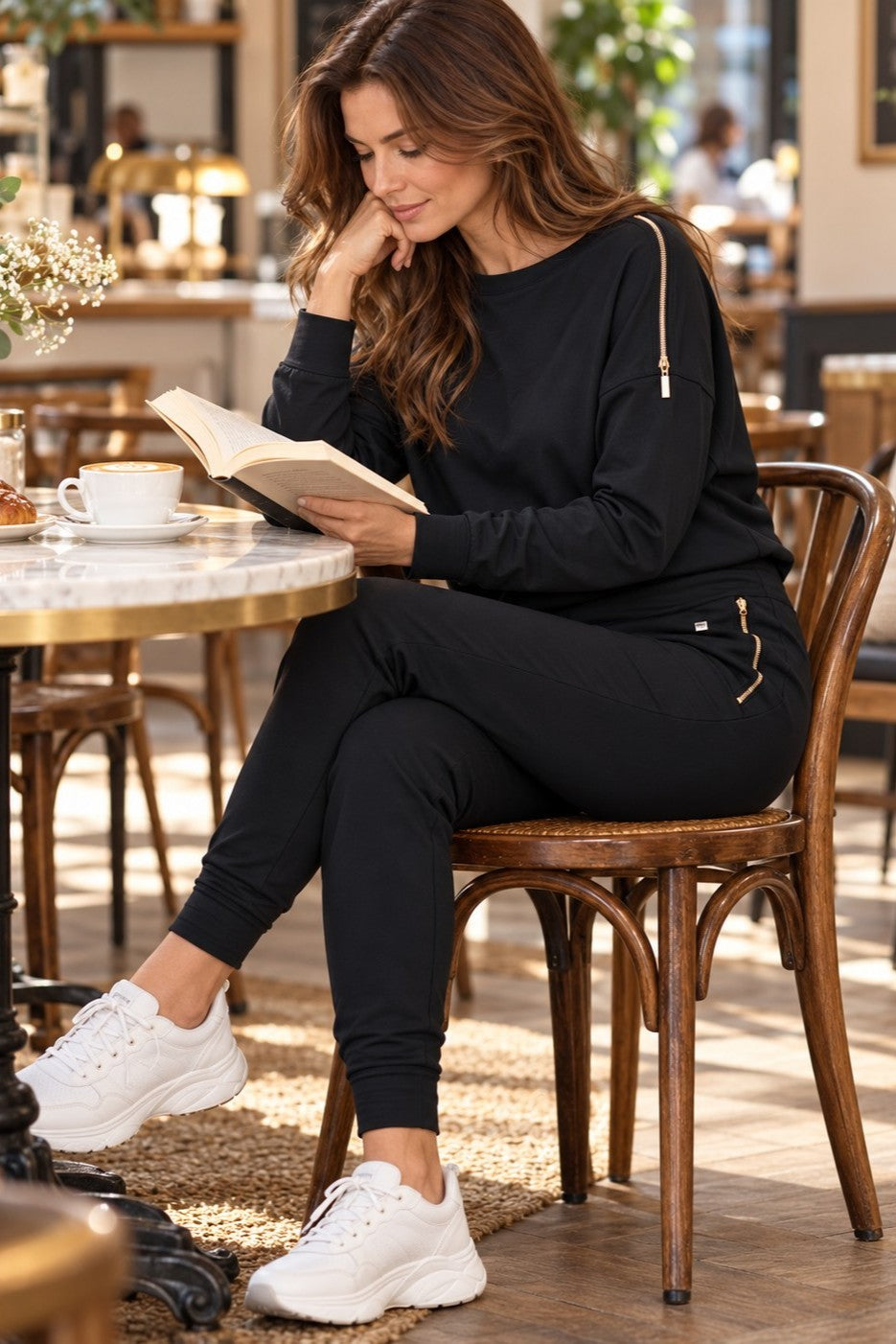
For a weekend, two sets, one jacket and a soft layer for rest and transit are usually enough. Keep the colours in one family. Black, deep brown, grey and muted neutrals go together without you having to think about it, and then every top works with every bottom. A matching training set is the shortcut. It looks finished straight out of the bag and can still be split up and worn with a shirt or a knitted jumper.
What do you wear during the journey itself?
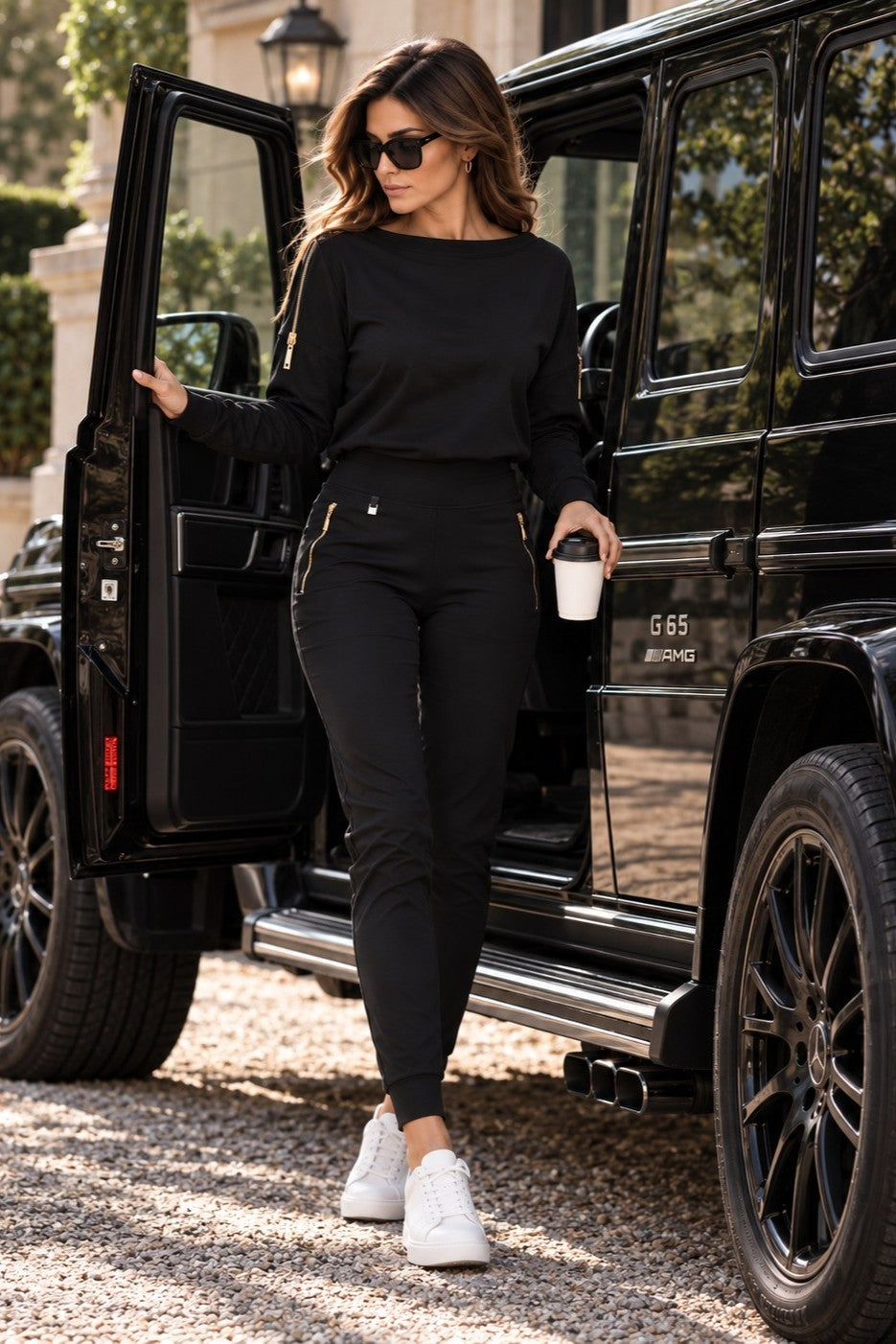
The most used piece is usually the one you have on. The travel outfit should therefore work hardest: tights with a steady high waist, a soft top, a jacket you can take off without hunting for somewhere to put it.
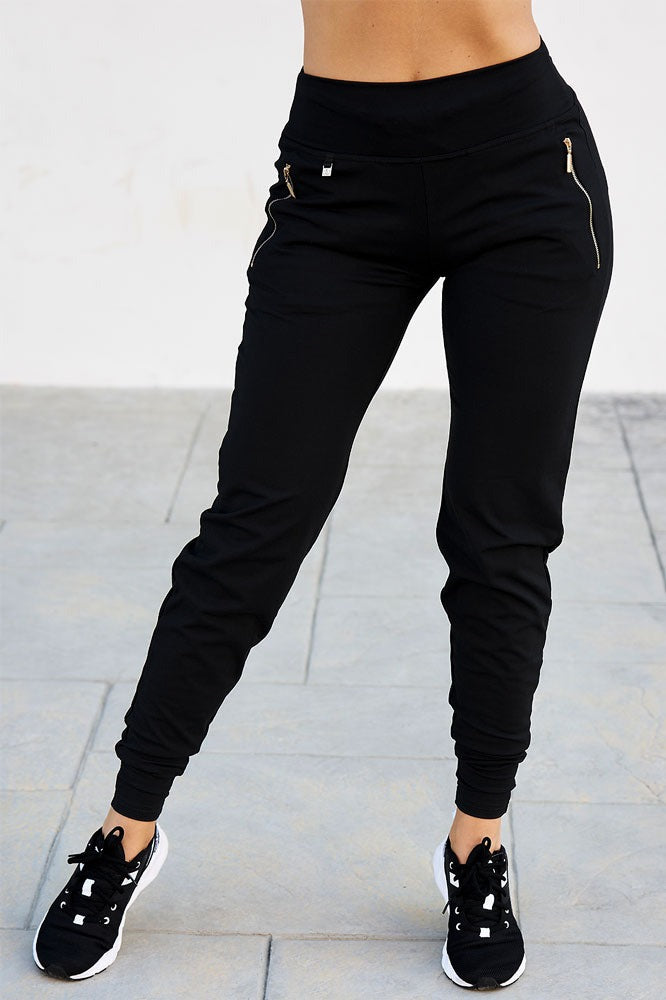
Iconic Black Leggings with Pocket solves what otherwise takes up attention on a travel day. The pocket on the left leg holds a large phone without the tights sliding down, and the key loop at the front takes care of the rest. High contoured waist, squat proof, recycled polyester. You go from platform to session with nothing in between.
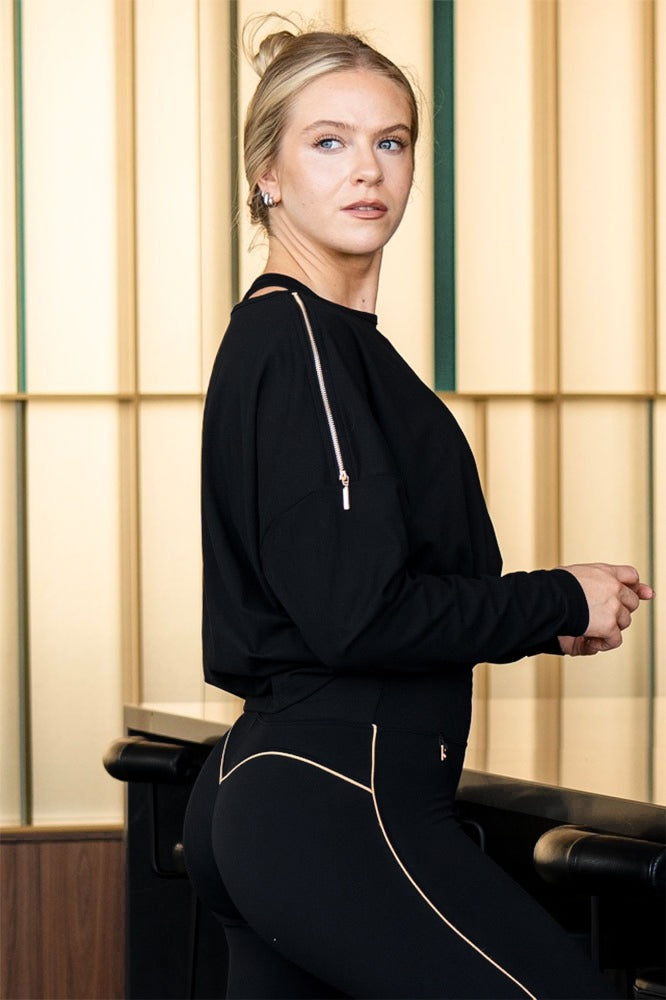
Goldline Training Jacket does the same work up top. The fabric is soft and moisture-repellent, in recycled ECO Circle polyester with 4-way stretch, and the hidden inner pocket beneath the chest logo takes cards and keys. Quick-drying means something practical here: a jacket that has picked up moisture in the warm-up can hang for a while and then be packed again.
What does the fabric do in a tightly packed bag?
A training piece has to perform in movement. It also has to take being folded tight, lying for a few hours and coming out again without looking tired. Fabric with good recovery holds its fit better after a cabin bag. The difference shows most in tights and in contoured jackets, where the construction has to sit where it should the next time you put the piece on.
Sculpting tights are practical on a trip for one simple reason. They carry a whole look. The seams are placed to lift the line, the side panels are contoured and the waist is high. That gives a composed result with trainers and a jacket, and an equally natural one with training shoes on the gym floor.
Do you roll or fold?
Soft pieces roll, contoured pieces fold. Tights, tops and t-shirts become even rolls that save space and avoid hard creases. Put a whole set in the same roll, so you are not looking for the matching top at six in the morning.
Jackets and pieces with zips sit better folded along their own seams. Close the zip first, but never crease it sharply. Lay the jacket on top of the bag or along the side, where it can lie flat.
Shoes do not belong with the clean clothes. Use a bag or a separate compartment, soles facing out. Fill the shoes with socks. The space gets used and the shape stays.
What does a packing order look like that works?
What you need first goes on top. If you are heading to the hotel gym on arrival, pack the set, the shoes and the bottle in the same layer of the bag. Then you are not turning everything out for a single session.
For three to four days this distribution goes a long way:
- two training sets that can be mixed across each other
- one jacket for warm-ups, walks and travel days
- two or three tops, depending on how hard the sessions are
- a soft layer for rest and transit
Tops take less space than bottoms and dry faster, so they are easier to rinse out in a basin. If you are travelling to a cooler climate, an extra long-sleeved layer is often more useful than a third set. Read the climate before the calendar.
A thin laundry bag earns its place. Never put damp pieces loose among clean ones. Turn them inside out after the session, let them air for as long as you can, then pack them. That protects both the fabric and the rest of what is in the bag.
How do you keep the shape of your clothes all trip?
Give the contoured pieces a flat surface and the soft pieces the role of filling. A jacket lying flat on top keeps its line. Tights rolled evenly get no creases across the knee.
Hang up the day's pieces as soon as you arrive. Fabric with recovery only needs a while in the air to let the creases go, and you avoid ironing what should not be ironed. The hotel bathroom will do. Steam from the shower does the rest.
What do you take out before you close the bag?
One piece. Lay everything out on the bed and take out what only feels useful in theory. What stays is what shapes the whole, holds up to the trip and works when the day moves between the session, the city and rest.
If you are flying, it is worth thinking the layers through in advance. We have gathered that thought in four pieces for the flight. If the trip gets longer, the same logic holds at a larger scale, which we go through in do training sets work for longer trips.
Precision beats volume. Fewer pieces, better fit, fabric that takes both the bag and the session. Then there is room left for what you had not planned.


Jätä kommentti
Tämä sivu on suojattu hCaptcha-tunnistuksella, ja hCaptchan tietosuojakäytäntöjä ja käyttöehtoja sovelletaan.