


Which Leggings Suit Curves Best?
Which leggings suit curves best? The answer sits in the construction. The size label says less than you think, and a pair can be the right size and still roll at the waist, strain across the thigh and lose coverage in a squat.
A curvy silhouette makes higher demands on three things: how the waistband is built, how dense the fabric is and where the seams are placed. Get those three right and the garment follows the body. Get one of them wrong and you notice within a quarter of an hour.
Which leggings suit curves: start with the construction
The most common mistake is to start with the size and end up with the fit. For a curvy body the order is the other way round. The difference between hip and waist is bigger, and that difference is what decides whether the waistband stays put or travels.
Look first at how the leggings are built. Is the waistband wide or narrow? Is it contoured, cut to follow the shape of the body, or is it a straight strip? Do the seams run along the leg or across it? A contoured high waist together with worked side panels almost always gives a cleaner line than a straight model in the same size.
Room matters too. Hip and thigh need space without the fabric losing its shape. When the fit is right, the garment works with the movement instead of against it.
The waist decides whether the leggings stay
A high waist is usually the right direction, but height on its own solves nothing. What matters is how the waistband holds. It should lie flat against the body, give even pressure the whole way round and stay put without being pulled up halfway through a session.
A narrow waistband concentrates the pressure into a few centimetres and digs in easily. A wide, contoured waistband spreads the same support over a larger area and feels both steadier and more comfortable for it. It is also the one that handles the move from floor to standing without folding over.
To compare models on that principle, you will find them gathered under high waisted workout leggings.
The fabric has to hold coverage when it stretches
If you have tried leggings that felt good in the fitting room and less good during the session, the fabric is often the explanation. Across hip and seat the material stretches more on a curvy body than on a straighter one, and that is where a thin fabric gives itself away.
A densely knitted material keeps its coverage in a deep position and gives a more even surface. At the same time it needs enough elastane not to feel rigid. The right feeling is fabric that holds without straining.
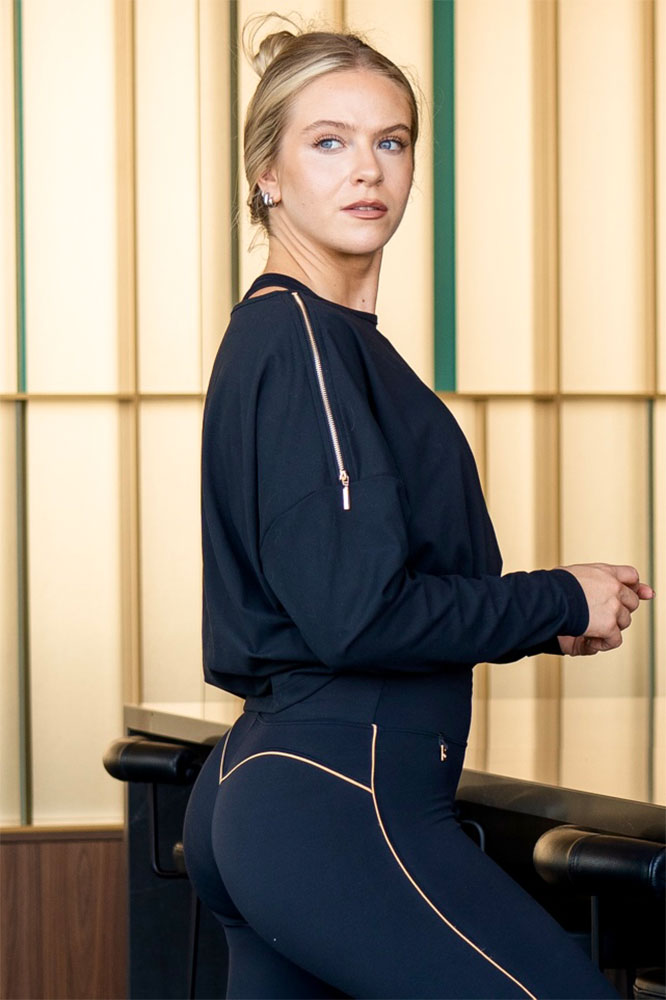
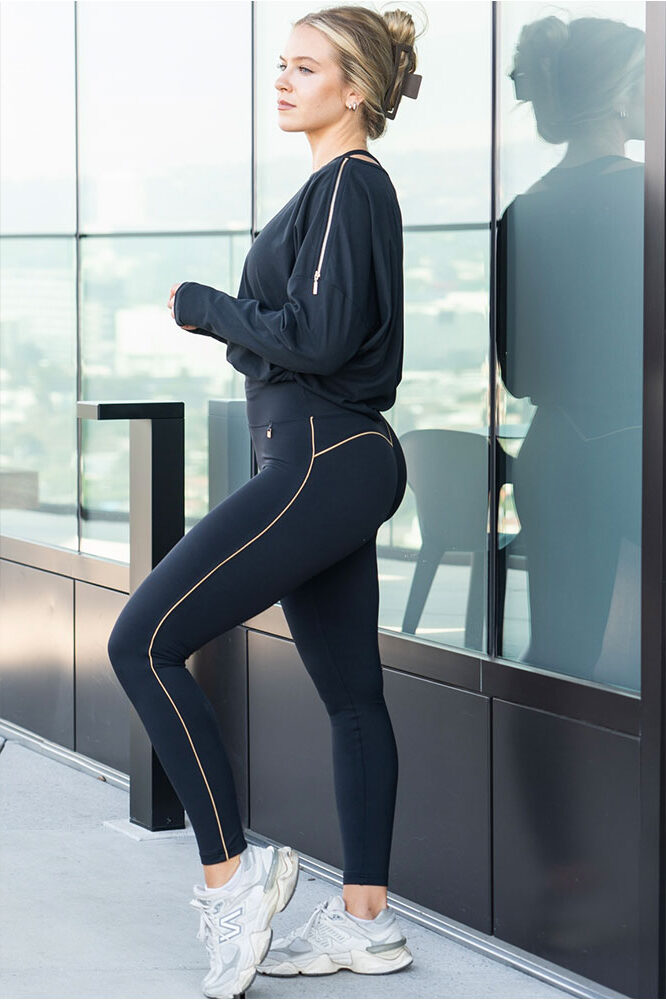
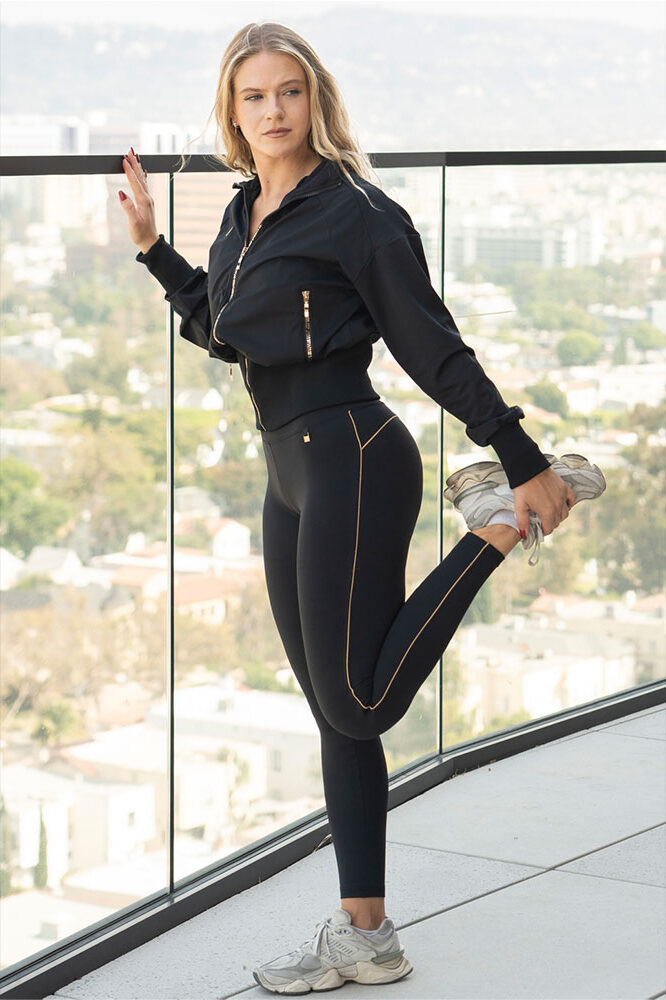
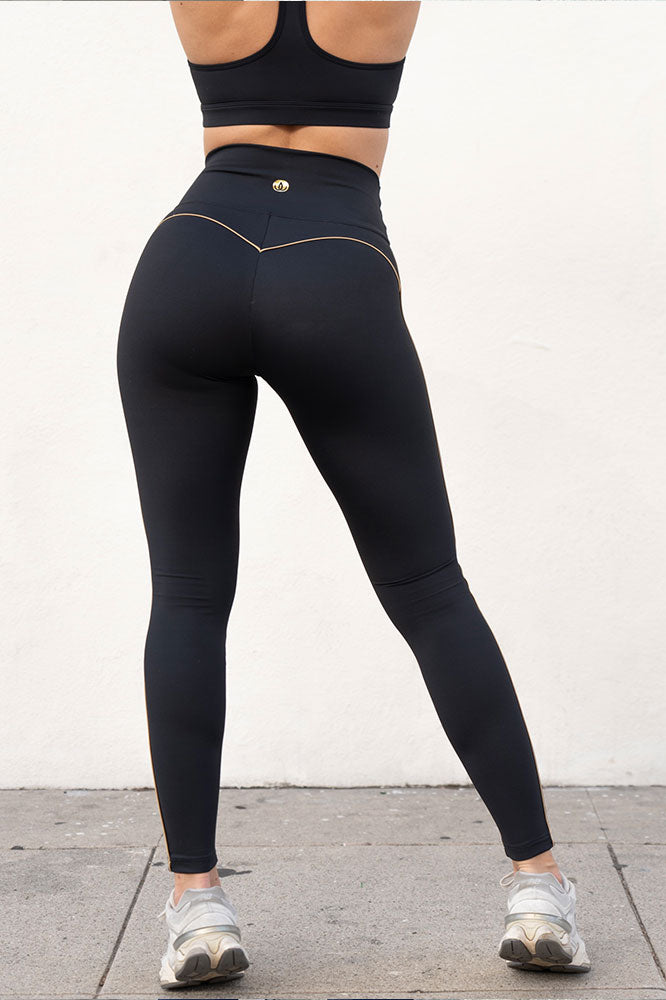
Edge Stripe Workout Leggings are one example of that balance. They are sewn in 78 percent recycled polyester of the ECO Circle type and 22 percent elastane, with measured compression that supports without pressing. The high contoured waist shapes waist and stomach and does not slide down. At the back they are cut in a heart shape that shapes the seat cleanly. There is a hidden pocket in the waistband, and the fabric has four way stretch, is moisture wicking and quick drying. They are squat proof.
Seams and panels steer the line
For a curvy body the pattern construction is what separates a good garment from one you actually want to wear often. Sculpting seams are design choices, not promises. Shaped side panels, clean lines and seams placed to lift the silhouette make the leggings sit more deliberately over hip, thigh and waist.
A well placed seam gives a calmer expression. A less considered construction makes the garment twist or crease instead. Compare the placement of the panels between models under sculpting workout leggings.
The whole plays the same part. A workout set where top and leggings share a line gives a cleaner impression than each piece pulling its own way. A jacket with a shaped waist strengthens the line from shoulder down to hip, which often does more for the silhouette than the leggings alone. The selection sits under workout jackets for women.
Size: the right size, not a smaller size
Going down a size to get more support is rarely the way. A well constructed garment gives its support through waistband and panels, not by overworking the fabric. A size too small stretches the material beyond what it was made for, and then both coverage and shape lose their precision faster.
A size too large gives the opposite problem: less grip, more slide and a line that never quite settles. If you are between two sizes, it is wiser to choose by the hip measurement and let the waistband do the work at the waist. We have gone through the measurements step by step in our guide to leggings sizes.
Then test in movement, not standing still. Take a few steps, sit down, bend forward and lift your knees. The waist should stay put. The fabric should feel dense but yielding. No seam should pull askew.
Bring time into the assessment as well. A pair of leggings can feel good for the first few minutes and still become tiring after an hour. What shows then is the pressure from the waistband, the seam at the crotch and the length at the ankle. Try them at home before you decide, and walk a lap around the flat rather than settling for the mirror.
The best pair is felt in the absence of distractions. You are not adjusting, you are not pulling up and you are not thinking about the garment in the middle of an exercise. That feeling comes from construction, and construction rarely shows in the photograph. It shows in movement.
Common questions
Which leggings suit curves best for strength training?
A model with a wide contoured high waist, densely knitted fabric and worked side panels. The combination holds coverage in a deep position and the waistband in place through the whole session.
Do leggings turn sheer because they are too small?
Often, yes. Fabric stretched beyond its intended limit loses coverage. But even the right size can turn sheer if the knit is too open to begin with.
Should I choose by the waist measurement or the hip measurement?
Go by the hip measurement when the difference between waist and hip is large. A contoured high waistband adapts at the waist, while the hip sets the limit for how much the fabric needs to give.
Anything but ordinary.

Leave a comment
This site is protected by hCaptcha and the hCaptcha Privacy Policy and Terms of Service apply.