


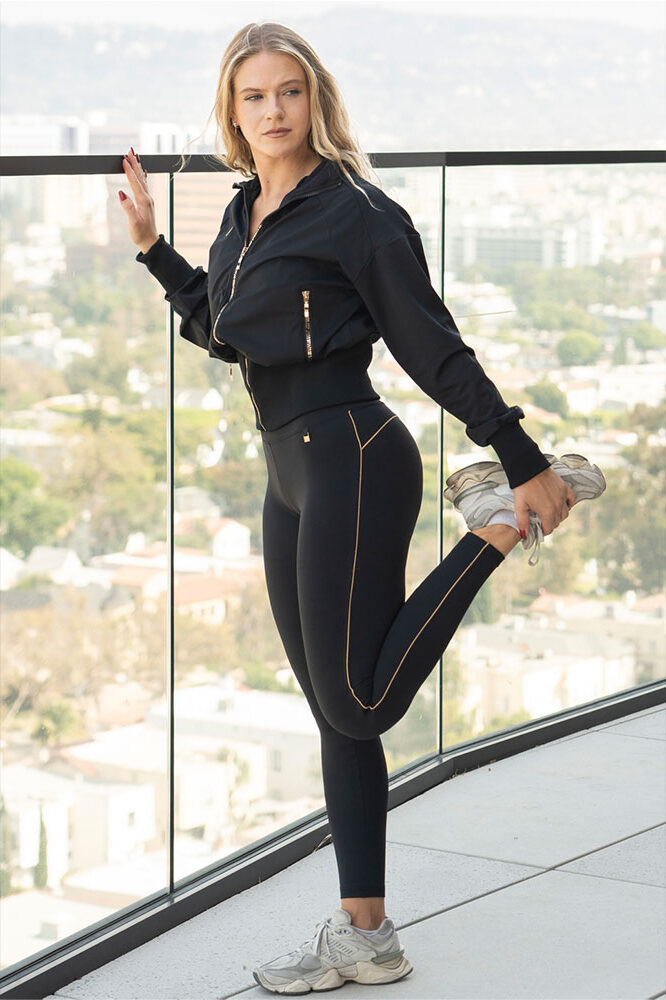
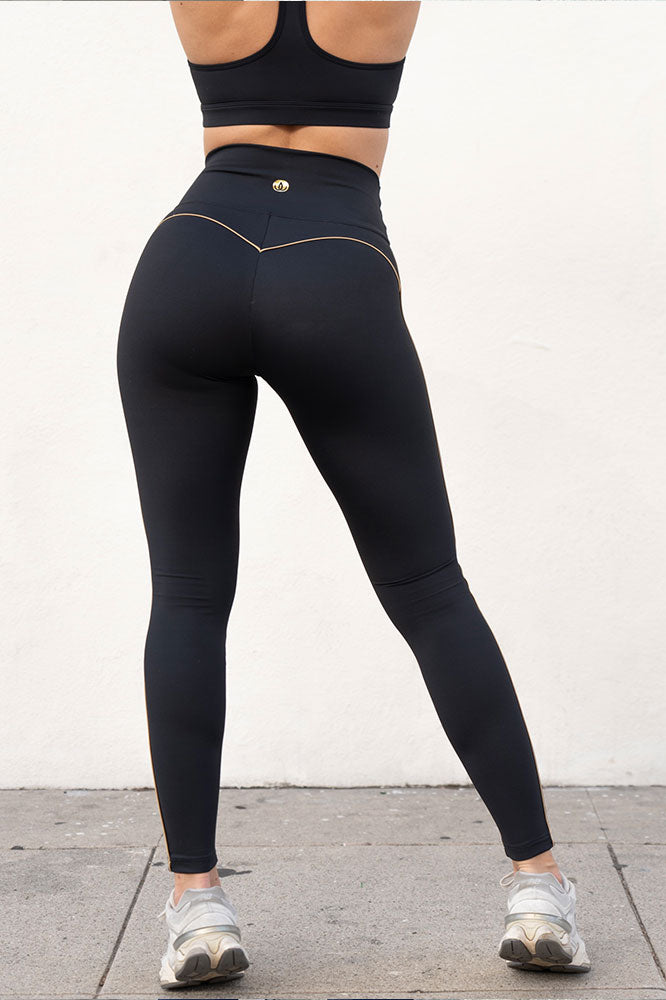
Women's training jacket with a fit that holds
A training jacket with a proper fit shows itself immediately. It does not ride up when you raise your arms, does not pull across the shoulders and keeps its line after washing. Everything else in a jacket allows for compromise. The fit does not.
For many women the jacket is the piece that decides whether a set looks finished. It frames the whole and is seen the most, at the gym and on the street. A jacket that sits wrong drags down two pieces that are good in themselves.
What fit actually means in a jacket
Fit is created in the pattern, not on the size label. Where the seams sit, how the side panels are shaped and how much room there is across the torso decide how the jacket behaves when you move.
A jacket can hang perfectly while you stand still and still be wrong. The test is movement. Bring your arms forward and the back should follow without pulling across the shoulder blades. Lift them overhead and the hem should stay where it belongs. If the jacket passes both, the construction is properly worked through.
Room is not the same as comfort. A jacket with too much fabric across the torso creases, slides and loses its line as soon as the pace rises. A jacket that sits too tight restricts breathing and movement instead. The right fit sits between the two and feels controlled rather than tight.
The waist is the point that decides the silhouette
Most jackets are decided at the waist. A straight hem with no tension falls straight down and takes the shape out. An elastic rib holds back and creates a clear line.
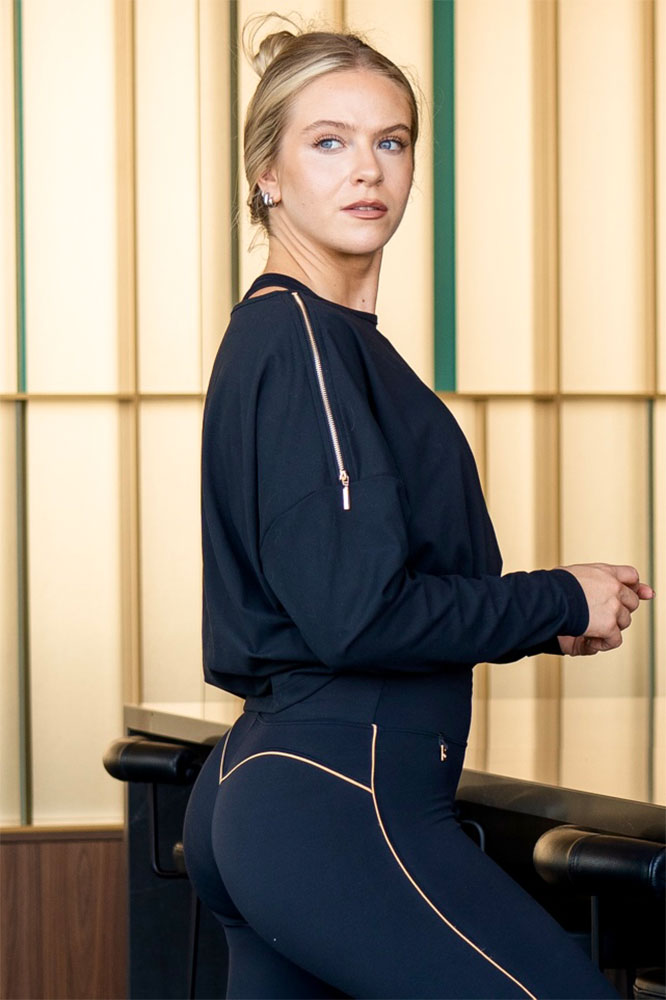
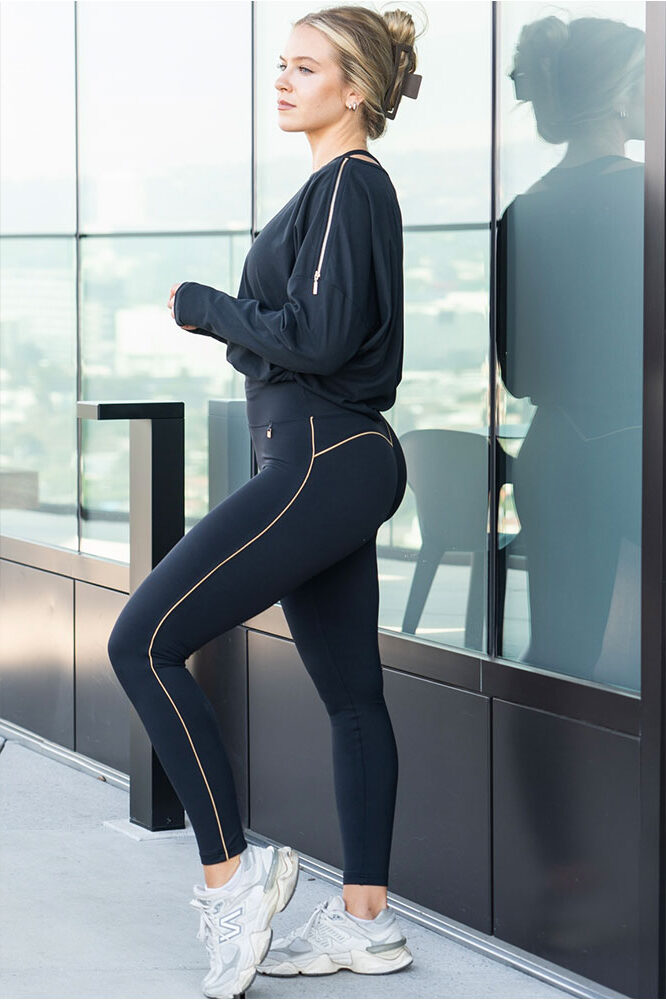
The Iconic Training Jacket G2 is built around exactly that contrast. The wide elastic ribbed waist shapes the small of the back and the waist and stays in place whatever the activity, while the rest of the jacket falls loosely over the torso. You get silhouette without locking the movement. The zips are custom made and carry the Iconic line's pattern at the sides, the pockets close with zips, and the fabric is ECO Circle in recycled polyester, moisture-repellent and quick-drying.
More models wait among women's training jackets. What separates them usually comes down to that hem and to how much room they leave across the chest.
Fabric, surface and how long the jacket lasts
A fabric with good elasticity and steady recovery keeps the jacket in shape over time. If the material goes slack after a few washes, the whole sense of precision disappears, however good the cut was to begin with.
The surface shapes the look as much as the fit does. A smooth, dense quality gives a cleaner line and moves more easily from training into everyday wear. A softer, brushed fabric feels warmer but supports the silhouette less. If you train outdoors for much of the year, warmth weighs more. If the jacket is worn in town as often as at the gym, the denser quality is usually the stronger choice.
The zip deserves a check of its own. It should run cleanly along its whole length and lie flat against the body when the jacket is closed. A zip that buckles shows in every photograph and becomes harder to ignore the longer you own the garment.
This is also where a higher price has to earn itself. A jacket in the upper segment should hold after fifty wears, not only in the first week. The zip still runs cleanly, the fabric has kept its density and the seams sit where they sat when it was new.
So count wears rather than purchase price. A jacket you put on four times a week for two years costs very little each time. A jacket that stays in the wardrobe costs its full price, whatever you paid.
How to try a training jacket
Start with the shoulders. The seam should land where the shoulder ends. Set further in, the jacket will pull as soon as you bring your arms forward.
Then go to the sleeves. Sleeves that are too long crease at the wrist. Too short and the whole garment reads as too small, even when the rest sits well. Bend the elbow and see whether the fabric follows without riding up.
Finally check the length against the tights you actually wear. The proportion between the jacket hem and the waistband decides how the whole is read. The same jacket can look obvious over a high rise and unbalanced over a lower one. We have written more about that difference in high rise or regular rise.
The jacket together with tights
A jacket is rarely judged alone. It is judged as part of a set. When fabric, tone and lines in the top and the bottom speak the same language, the whole looks more considered, and it shows without any single detail having to take up space.
With high waisted tights, a shorter jacket does the most work. The waist is allowed to show, the silhouette stays coherent and the proportions stay clean. A longer jacket settles over the waist instead and gives a calmer, more understated look.
Ready-made combinations are gathered on training sets, where the pieces are put together to be worn together. If you would like to read about how tights should sit before choosing a jacket, see how training tights should sit.
Finding the right model rarely announces itself. It simply sits where it should, all day, and you stop thinking about it. That is the surest sign the fit is right.
Common questions about a women's training jacket with fit
Should you choose your usual size?
Start there, but always try it in movement. Construction differs between models, and a jacket with shaped side panels sits closer than a straight model in the same size.
Can the same jacket work for both training and everyday wear?
Yes, if the surface is clean enough and the fit close to the body. The Iconic Training Jacket G2 is made for it, with technical fabric and a ribbed waist that holds its shape through the day.
How should you wash the jacket so the fit lasts?
Wash cool, close the zip before washing and avoid the tumble dryer. The elasticity in the rib is what holds the silhouette, and heat wears it down fastest.
Anything but ordinary.

Leave a comment
This site is protected by hCaptcha and the hCaptcha Privacy Policy and Terms of Service apply.