


Article: Tights seam quality review: what the seams reveal
Tights seam quality review: what the seams reveal
A tights seam quality review is, at bottom, an examination of construction. The fabric feels soft at the first try-on. The seams decide whether the garment keeps its shape after twenty washes, whether it follows you through a hard session and whether you stop thinking about it after ten minutes.
Seam quality lies in placement, elasticity, reinforcement and in how the panels work with the fabric. The number of stitches says less. When those four line up, you get a fit that sits steady without restricting.
What does the seam say that the fabric does not?
A product image shows colour and silhouette. It rarely shows how the seam lies against the skin. A flatlock seam, or another seam with a low profile, builds very little and so reduces the risk of chafing. In tights with a high waist it shows most clearly in squats, lunges and longer walks.
Look at the stitching. Even stitches with the same spacing all the way through suggest precision. Loose thread ends, uneven topstitching or seams that already look overstretched in the fitting room are small signals that grow after a few washes.
How should the seams lie when you move?
The seams should follow the movement without twisting, pulling at the groin or folding behind the knees. Try them standing, bend forward, take a few steps sideways.
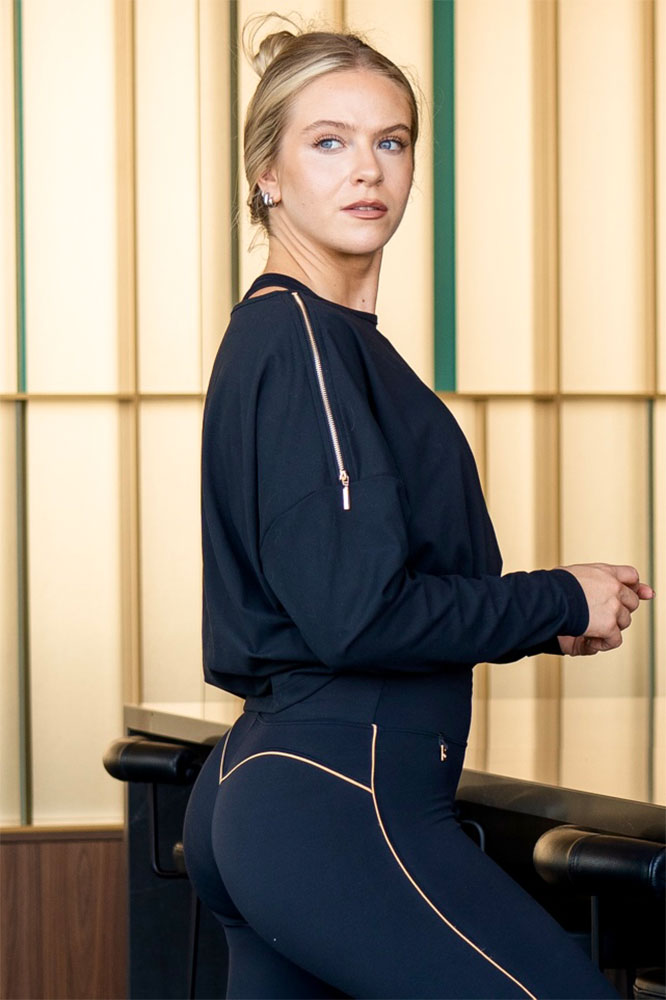
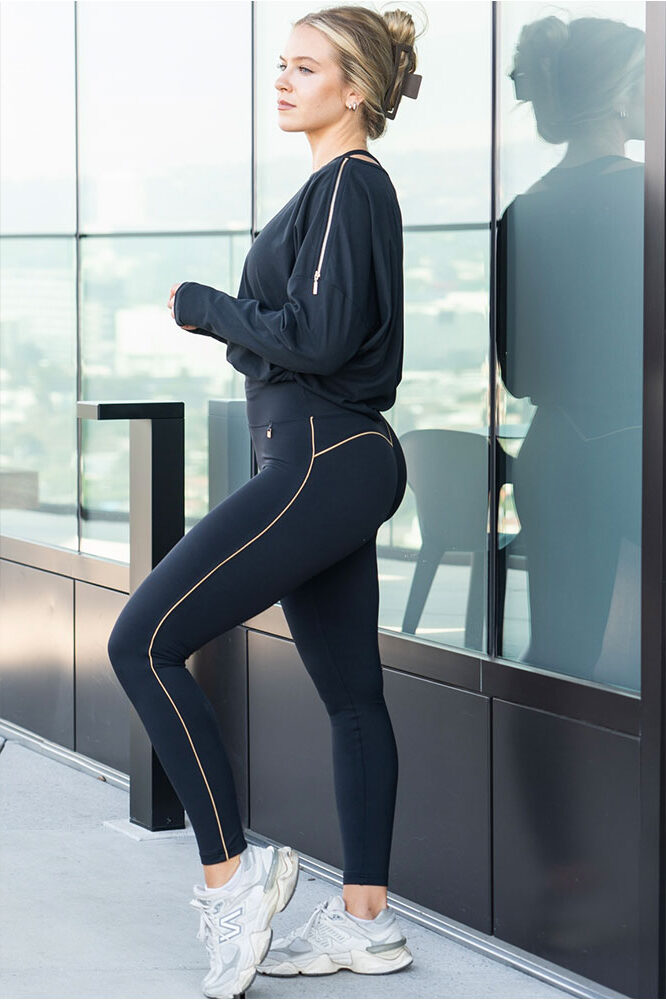
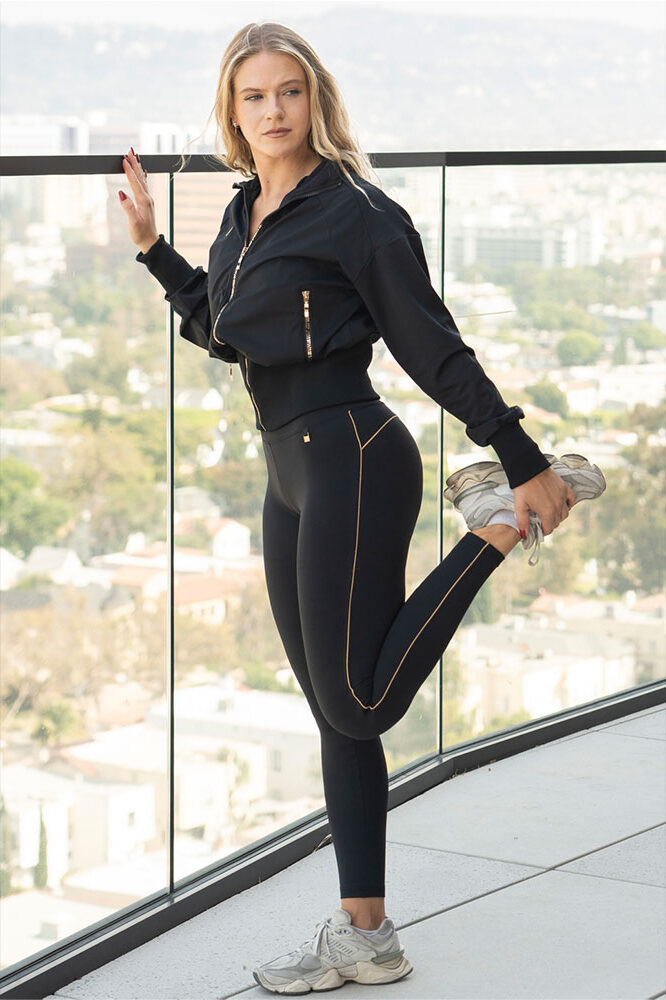
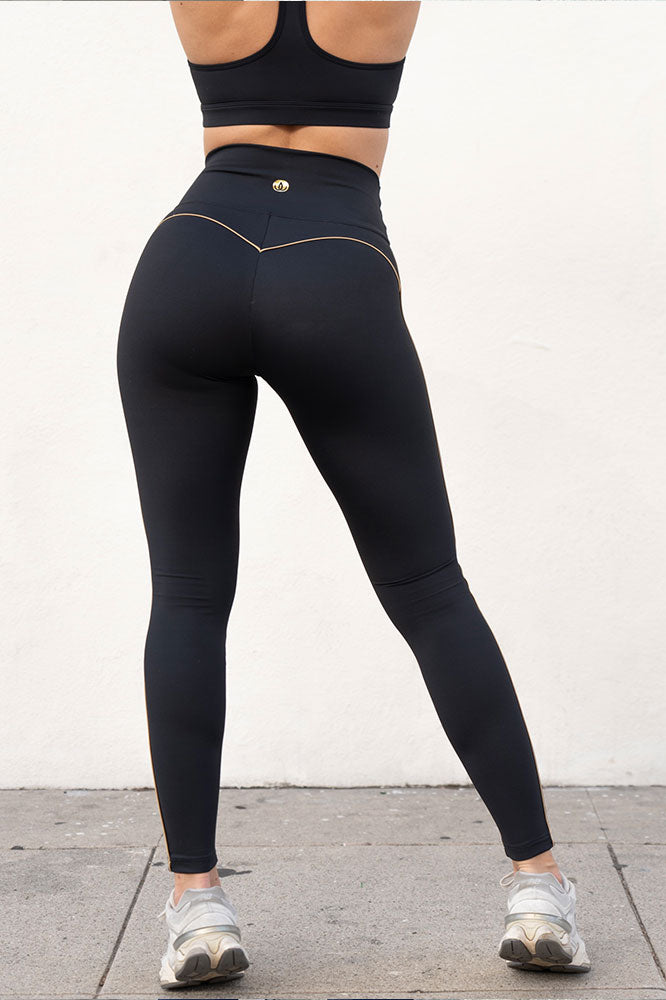
In a well-worked pair of sculpting leggings the seam is part of the pattern construction, not a decoration. Shaped side panels and lifting seams give a cleaner line from hip to ankle. On the Slimline Sculpting Leggings the seams are engineered to actively lift and shape the seat and thighs, an effect you notice the moment you put them on. The heart-shaped cut at the back follows the same thinking.
The placement also has to take real load. A seam along the inside of the thigh meets friction and needs to be both flexible and strong. A back yoke seam should sit steady without sliding or parting when you bend.
What do you see on the inside?
Turn the garment inside out before you decide. The inside shows how the work is actually done. The seam allowances should lie flat, the threads should not pull, and the transitions between panels should be even.
The crotch seam deserves extra attention. A gusset, or a well-considered crotch panel, spreads the load and gives more freedom of movement. Without it the garment can feel tight in deep squats, even when the fabric has good stretch.
Why does the thread need to be as elastic as the fabric?
An elastic fabric makes demands of the thread. If the thread lacks elasticity the seam splits or starts to pull when the garment is stretched. If the thread is too soft in relation to the fabric, the garment loses its clean shape over time. Seam quality can never be separated from the choice of material.
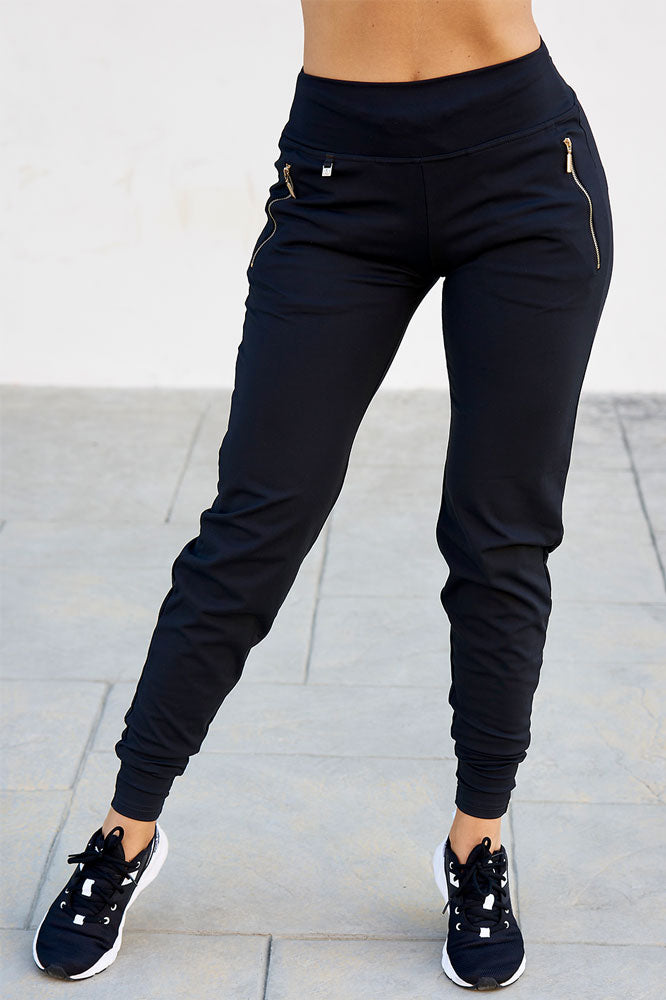
Goldline Black Sculpting Leggings and the Slimline are sewn in recycled ECO Circle polyester, 73 per cent polyester and 27 per cent elastane. A denser, more sculpting fabric needs seams that hold the panels together without turning hard. Iconic Black Leggings with Pocket are sewn in a softer performance fabric of recycled polyester, 78 per cent polyester and 22 per cent elastane. There the pocket on the left leg holds a large phone without the tights sliding down.
The wash is an honest test. After a few rounds the seams should still lie flat, the colour should look even and the waistband should return to its shape. Follow the care label, skip the softener and air dry when you can. We go through the routine in how to wash workout leggings without wearing them out.
How do you know the high waist will hold?
A high waist is chosen for the steady feel and the clean silhouette. It only works when the elastic, the fabric's recovery and the seams are in balance. A waistband seam that is too firm restricts. One that is too soft folds over or slides down in movement.
Try it in several positions. Sit down, walk a few steps, bend forward, do a couple of controlled squats. The waist should stay where it belongs without you adjusting it, and the pressure should not feel heavier after an hour. More on the waistband in training tights that stay put.
A wide waistband with few seams works for many. Others prefer a more defined construction that frames the waist. Body shape, activity and habit all play a part here, and the choice is yours. What matters is that the fit holds even when the pace changes.
What is worth reading in other people's reviews?
A product description tells you how a garment is meant to work. Reviews show how it works after washing, on trips and in repeated sessions. Look for what recurs: that the shape stays, that the seams feel smooth, that the waist stays put.
A single review can be coloured by one very specific body or expectation. When several customers describe the same quality, the information becomes useful. Comments about sizing are especially worth reading. Does the fabric feel compressive, pliable or firmer than expected?
When does seam quality matter most?
For low-intensity training a softer, more simply constructed pair goes a long way. If you train strength, walk long distances, wear tights often or want them to work in several settings, the seam becomes decisive. The load returns to the same points and small faults grow.
The same holds for close-fitting garments. The closer the tights sit, the more clearly every join and panel shows. Price says something about material and manufacture, but guarantees nothing.
Next time you try a pair: do a couple of squats and turn the garment inside out. It is in movement that a well-placed seam shows its worth.
Anything but ordinary.

Leave a comment
This site is protected by hCaptcha and the hCaptcha Privacy Policy and Terms of Service apply.