
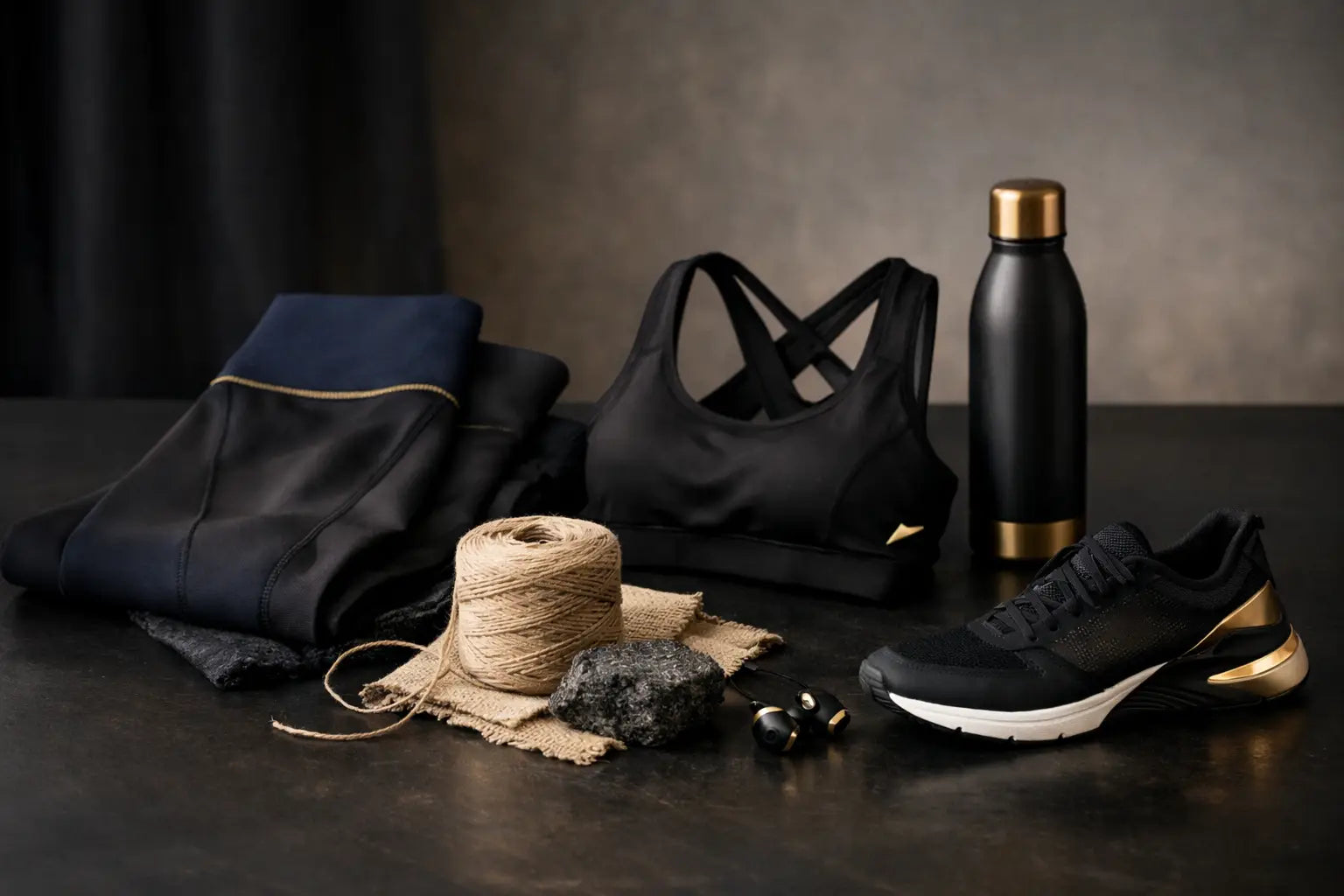
Sustainable fabrics in activewear that hold their shape
Training pieces reveal themselves over time. The waistband that starts to roll, the fabric that turns sheer in a squat, the surface that pills after a few weeks. Sustainable fabrics in activewear are therefore about more than the fibre content on the label. They are about how material, construction and fit work together, wash after wash.
The piece that holds its shape is also the piece you reach for most. The link between sustainability and use is that simple.
Sustainable fabrics in activewear start with function
A durable training fabric is not the softest or the most natural. It is the one that withstands stretch, friction, sweat and movement without losing its recovery. The demands are different from a shirt or a knit.
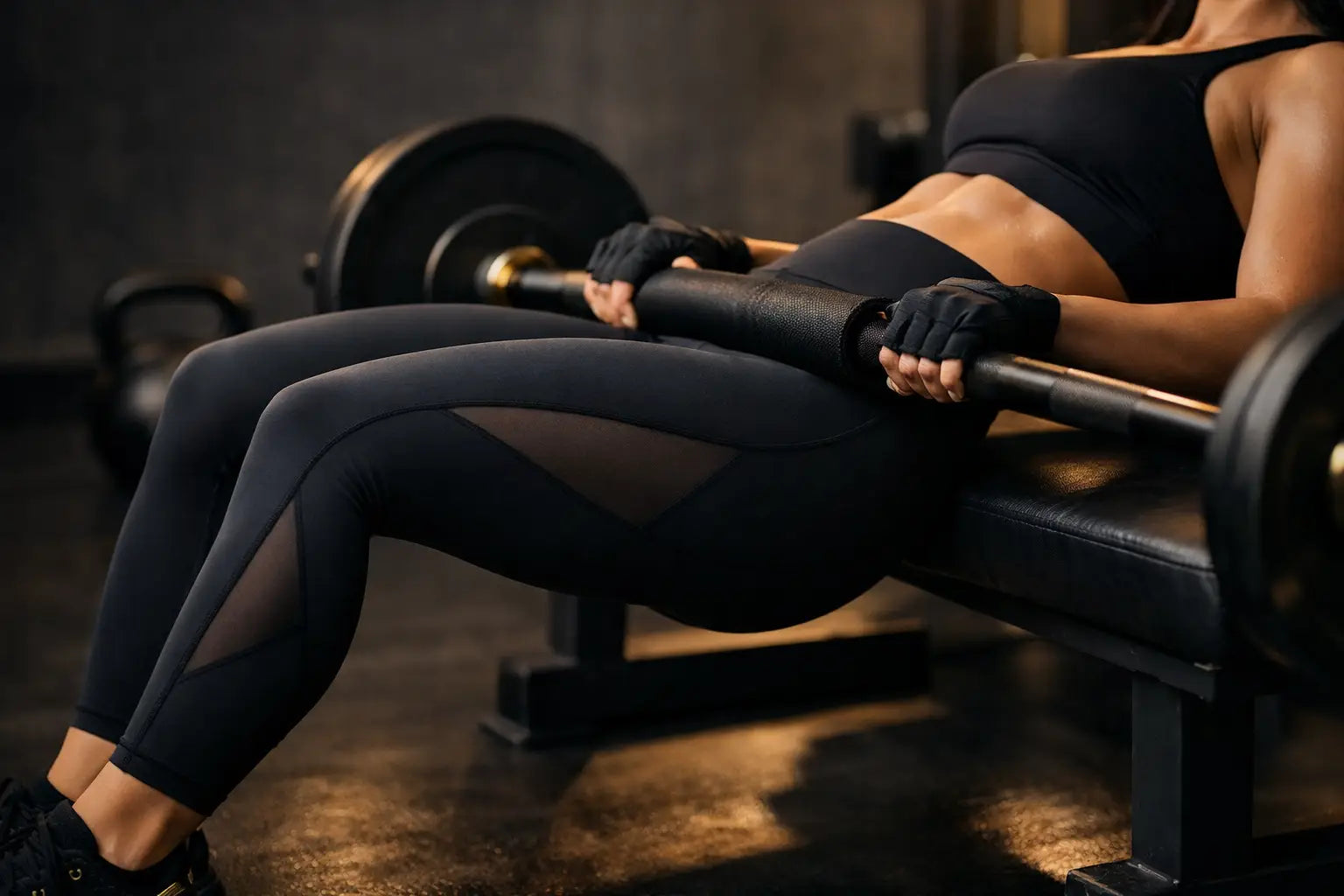
In sculpting leggings, elasticity is decisive. The fabric should follow the body without slipping or digging in, and return to its shape after squats, runs and many washes. When it does, fit becomes part of the garment's lifespan.
Recycled polyester and polyamide are common fibres in modern activewear. They give existing materials a new purpose and deliver the durability and moisture transport that training demands. But recycled content is no guarantee of quality on its own. Yarn quality, knit density and the amount of stretch fibre matter at least as much.
Every fibre should have a purpose
Polyester is light, shape-stable and quick-drying. Polyamide is softer, more supple and highly abrasion-resistant, which makes it strong in leggings where thighs and seams work hardest. Elastane is used in small amounts but does the heavy lifting: it provides stretch and recovery.
There is a real trade-off here. Without elastane, a sculpting piece loses its stability. With too much, it loses its spring sooner and becomes harder to recycle. The considered choice is not the shortest fibre list, but a piece where every fibre has a job.
Construction decides how long a garment lasts
Two pairs of leggings with identical fibre content can age completely differently. The difference is in the details: seam placement, panel direction, fabric weight and how the waistband is built.
A high waistband with double-layered fabric gives stability without stiffness. Shaped side panels let the piece follow your movement. Seams that lift the silhouette must also carry load without chafing. That precision is what lets the same leggings work through deadlifts and a long day in the city.
Wallderinska works with a Scandinavian sense of form, where sculpting seams and panels are part of both function and silhouette. A piece with a clean expression is worn in more settings and stays in the wardrobe longer.
Fabric weight, opacity and surface
A lighter fabric is not worse. For calm sessions and warm days it can be exactly right. For the gym and strength training, the material needs enough density to feel opaque even when stretched. Opacity is not only about thickness: a dense knit, the right yarn and considered colours do more than millimetres.
The surface affects how long a piece looks cared for. A smooth finish stands up to everyday friction and stays easy to clean. A brushed surface is comfortable but asks for gentler handling.
The most sustainable piece is the one you wear most
A set that works for pilates and for coffee afterwards earns more hours than a piece with a single use. Choose by where the wear appears for you. Strength training calls for a stable waistband and an opaque feel. Long days in motion favour leggings with a pocket and a softer surface. When travelling, a shape-stable set does the most work, keeping its expression hour after hour.
Our full range of training leggings is made with that everyday life in mind.
Care is part of the design
Wash inside out, cool and without fabric softener. Softener coats synthetic fibres and dulls both moisture transport and the spring of the elastane. Air dry instead of tumble drying. And wash as needed: after a calm day, airing is often enough.
Keep your pieces away from velcro, rough benches and bags with sharp edges. Small habits, a big difference for the surface.
Look beyond the label
Perfect materials do not exist. Recycled fibres need quality and a long lifespan to do real good. The question is simple: does the piece hold its shape, can it carry your movement, and will you want to wear it next week, next season, next year?
Where recycled materials, athletic precision and a silhouette you feel at home in come together, sustainability becomes concrete. Not a word on a label, but a piece that keeps its place in your everyday.
Anything but ordinary.

Leave a comment
This site is protected by hCaptcha and the hCaptcha Privacy Policy and Terms of Service apply.