
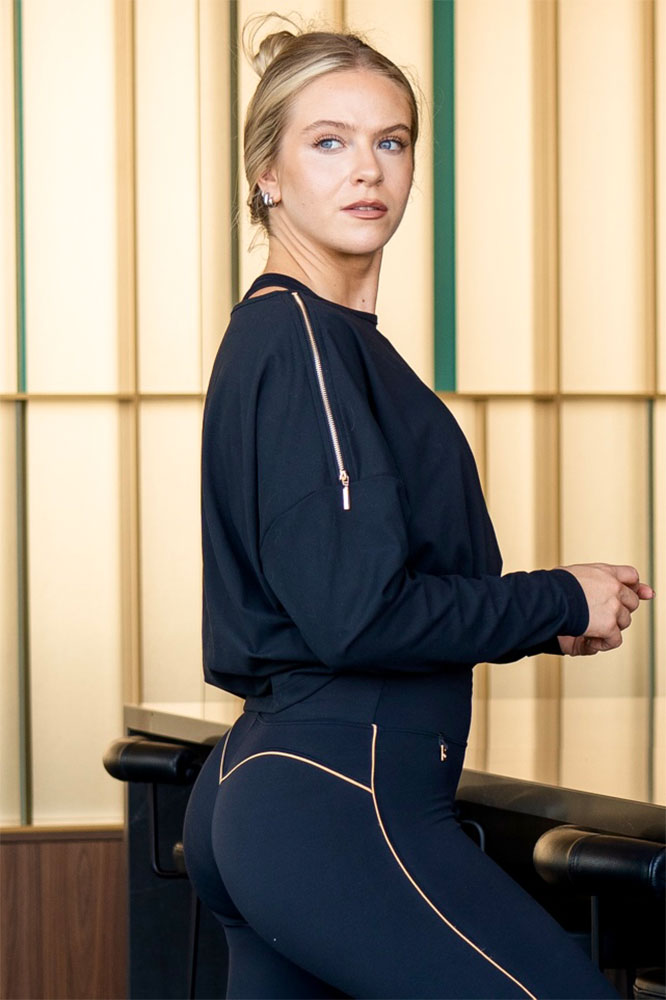
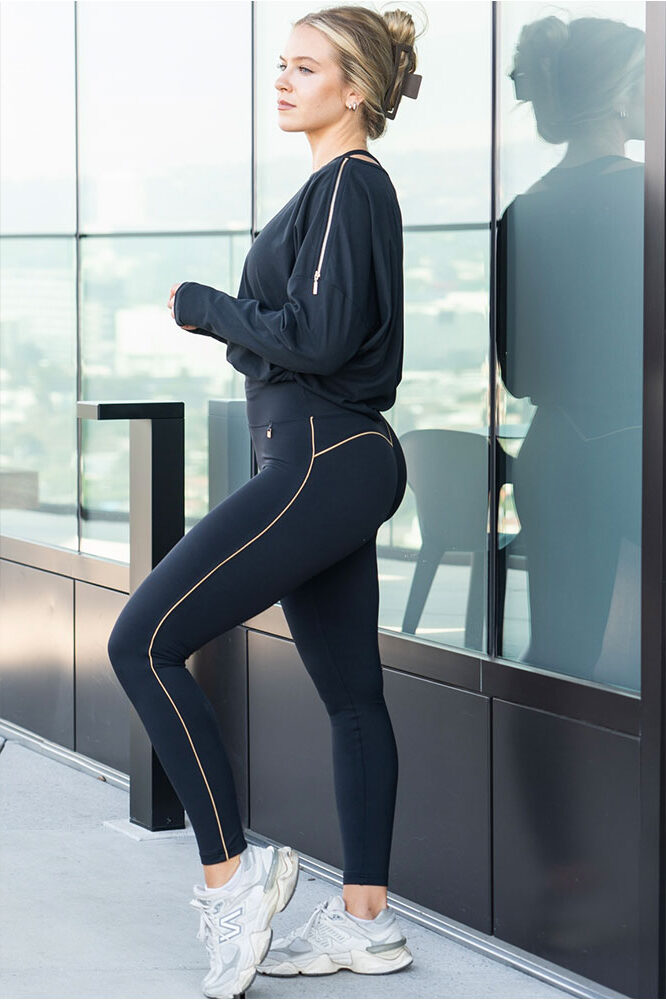
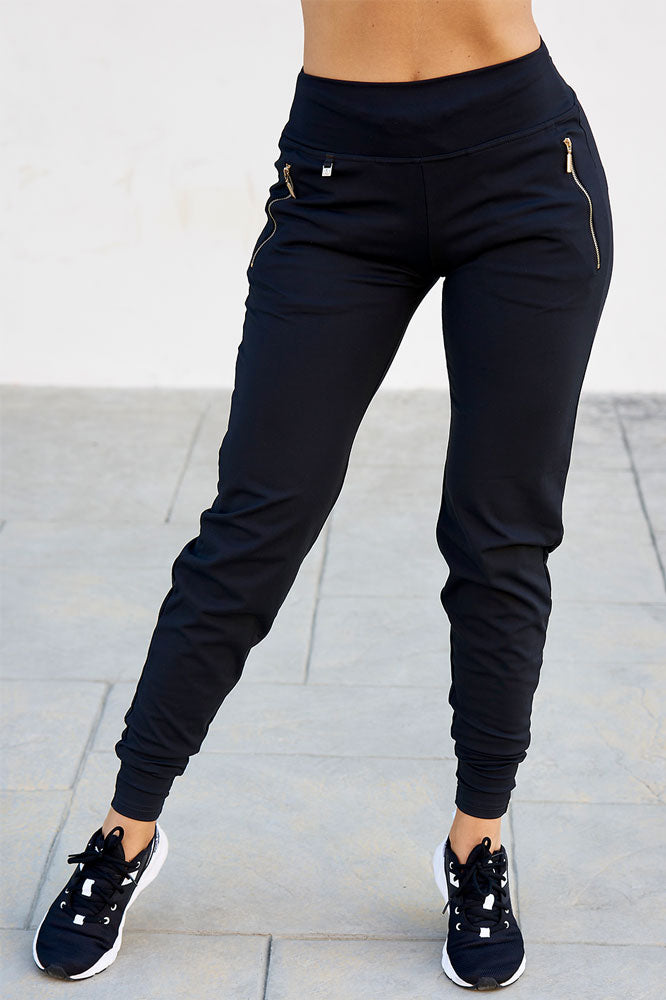
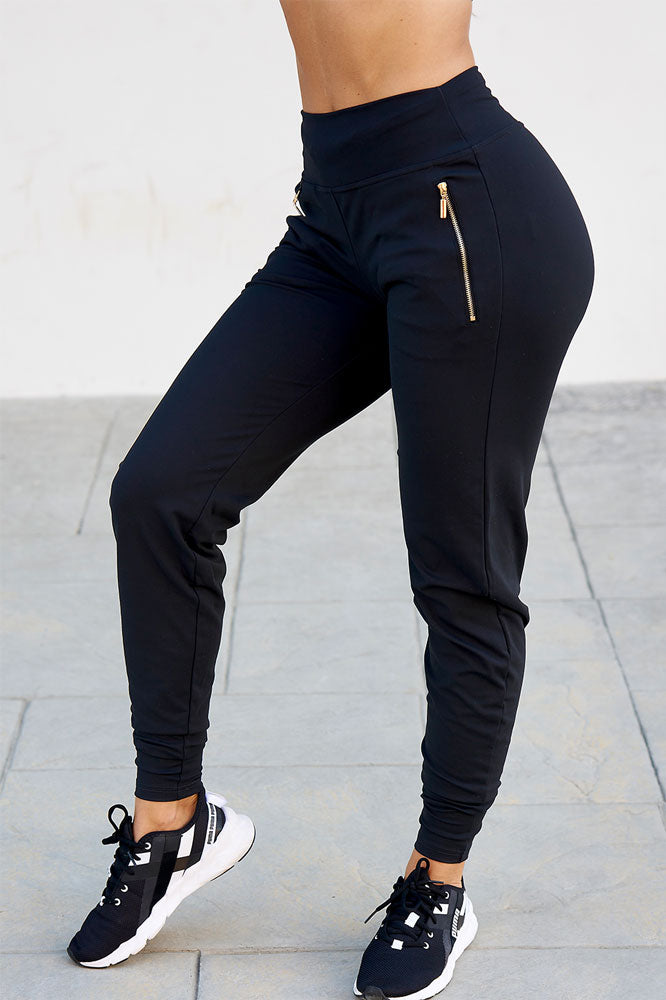


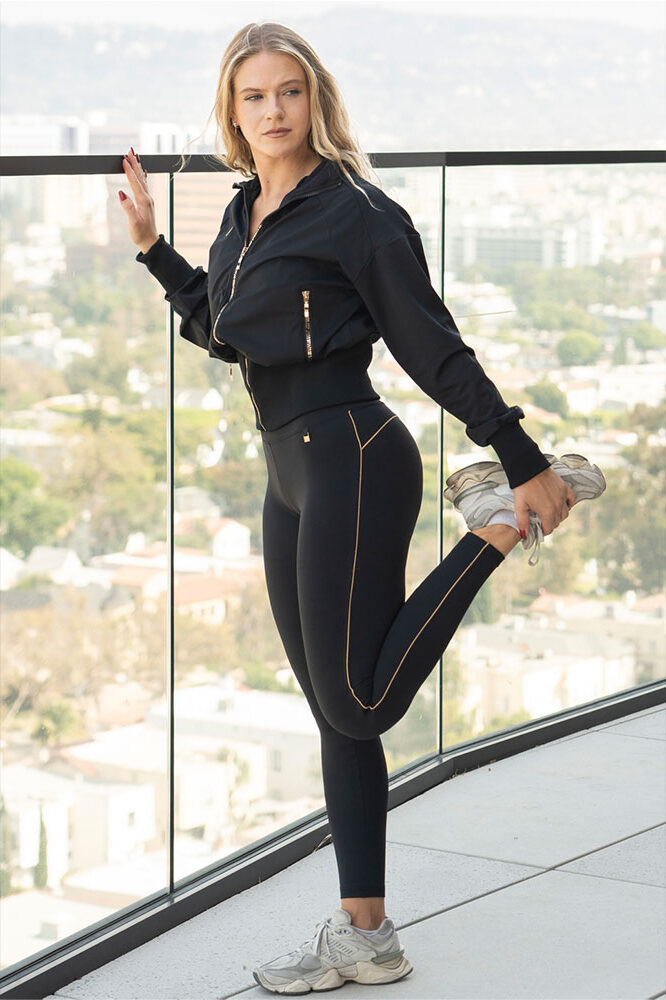
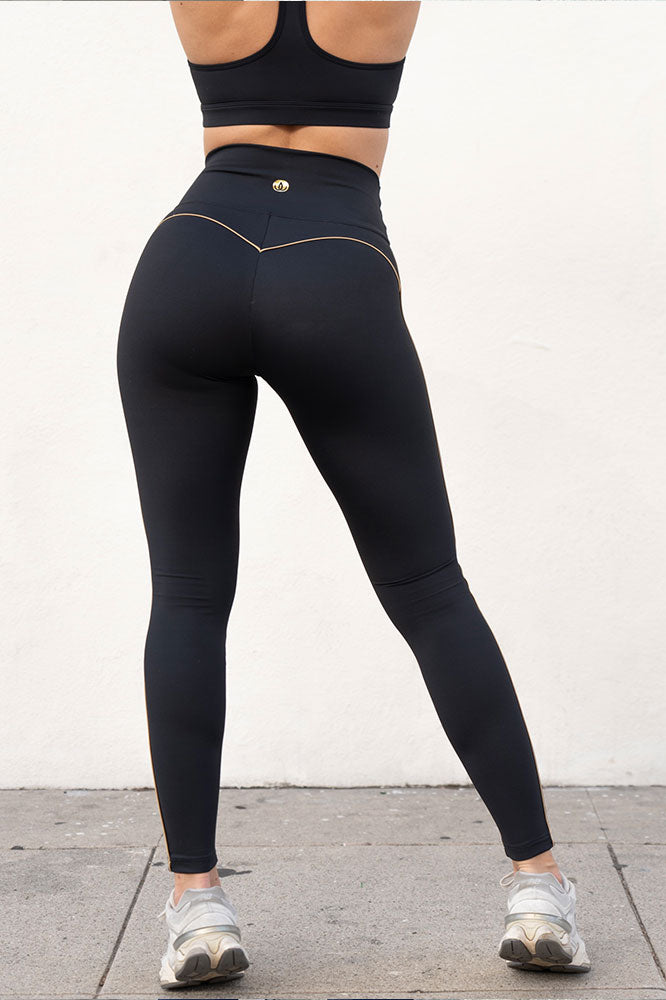
Examples of thoughtfully placed sculpting seams
A seam is never just a seam when a garment needs to follow the body in motion. Examples of thoughtfully placed sculpting seams show how placement, curves and panels can create a more defined silhouette without compromising on comfort. It is not about changing the body, but about pattern construction with precision, garments made to hold, follow and highlight the body's natural lines.
For activewear with a close body fit, the details become decisive. A high waist, a shaped side panel or a seam that follows the curve of the seat can change both how the garment feels during a session and how it works for the rest of the day. When the design is considered, it shows beyond the mirror. You notice it when the leggings stay put in a squat, when the jacket falls cleanly over the shoulders and when a set feels as natural on the way into town as at the gym.
Examples of thoughtfully placed sculpting seams in leggings
Sculpting leggings often get their sense of shape from several elements working together, rather than a single detail. The direction of the seams matters. Vertical or slightly angled lines along the legs can create a longer, cleaner expression, while panels that follow the hip and thigh build structure around the silhouette.
A common and well-balanced solution is a high waist with a seam or inset panel that stabilises the waistband. It should hold its position without digging in or needing to be pulled up between exercises. Balance is central here: too much compression can feel restrictive during longer sessions or through a working day, while too little support risks a less secure feel. The right construction lets the material work with the body, not against it.
The back piece is another area where sculpting seams make a clear difference. A gently curved seam, placed to lift the silhouette visually, can create a more shaped transition between waist and seat. It is a design line, not a promise about your body. The effect feels most refined when the seam follows the rest of the garment's architecture and does not read as decoration alone.
The absence of seams can also be a deliberate choice. A smooth front without a centre seam gives a clean, pared-back expression and reduces the risk of the seam interfering with movement. For many, it is a detail that makes a real difference, especially in leggings worn for yoga, strength training, walks and travel. In other styles, a strategically placed front panel can add more structure. The choice depends on activity, material and the fit you are after.
Shaped side panels that follow the movement
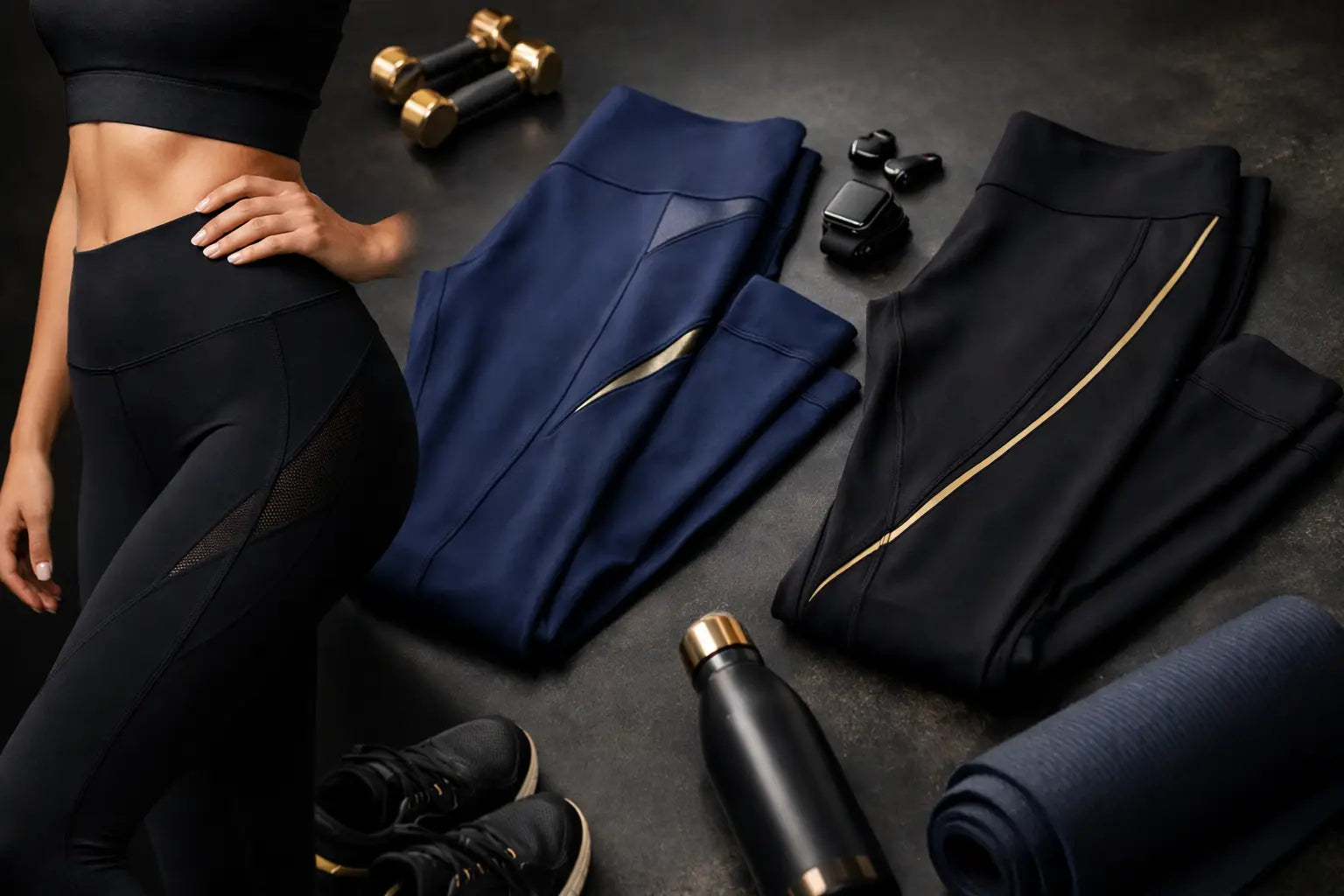
Side panels are one of the clearest examples of function and design meeting. Instead of a straight side seam, the panel can be angled from the waist towards the thigh, knee or calf. It gives more than a visual line. The panel can also distribute tension in the garment and help the leggings hold their position as you move between exercises.
For anyone who wears activewear well beyond the workout, the aesthetics matter just as much. A well-placed side panel creates a more considered impression with few details. It suits the Scandinavian idea of letting the construction speak: clean surfaces, clear lines and function that shows in the fit.
Sculpting seams in jackets and matching sets
Sculpting is not limited to leggings. In a training jacket, shaped seams along the waist can give the garment a supple, close fit without making it stiff. Panels across the back and shoulders can at the same time allow more room to move where the body needs it most. The result is a jacket that feels athletic yet clean enough for coffee after training, a flight or a day on the move.
The zip also plays a part in the silhouette. A zip that lies flat, framed by clean seam lines, gives a more precise overall impression. Combined with shaped sleeves and a collar that holds its form, the jacket becomes a layer that works both open and closed. This is especially relevant in sets, where each piece should stand on its own yet create a cohesive whole together.
A matching set of sculpting leggings and a jacket or top makes it easier to dress with intent. When panels and seams share the same visual language, the outfit feels considered without being overworked. Black, brown, deep greens or muted neutrals give the construction room, while a bolder colour can amplify the effect of the lines.
There is a practical side too. A set needs to work across temperatures and situations. A jacket with an overly firm, compressive construction can limit layering, while one that is too loose loses the shape that makes the set useful in everyday life. That is why the placement of every panel, seam and zip is a question of the whole, not an isolated design detail.
When seam placement makes the difference
A considered construction takes into account how the body bends, stretches and rests. Seams should not sit where they chafe during repetitive movements or create unnecessary pressure when you sit down. Flat seams and soft, well-chosen threads contribute to an even feel against the skin, but fit always decides the end result.
The material also affects how seams are experienced. A recycled stretch fabric with good recovery can help the garment return to its shape after wear. But the quality of the material has to be met by the right pattern pieces. A very elastic fabric, for example, needs a construction that distributes the pull, otherwise seams can twist or the garment can lose its line over time.
That is why it pays to look at a garment from several angles. Look at how the waistband transitions into the side panels, how the back piece is constructed and whether the seams have a clear direction. Move in the garment if you can: sit down, stretch your arms overhead, take a few steps and do a squat. A garment with good sculpting should feel natural even when the body is not standing still.
Design that lasts from workout to everyday
Activewear with a sculpting construction often becomes a favourite precisely because it is not tied to one activity. High-waisted leggings with clean panels can be worn with an oversized shirt, a knitted jumper or a shorter jacket. A close-fitting training jacket works as a well-dressed outer layer on the way to the studio, the office or a relaxed dinner.
For that flexibility to work, the design needs to be restrained. Too many contrast seams, hard cuts or placed details can tie the garment clearly to a single training environment. When the lines are well balanced instead, the garment gains a longer life, both in style and in practice.
At Wallderinska, this precision is part of the expression: sculpting seams, panels and lines are used to give the fit direction and hold the silhouette together. It is design for the female body in motion, where a well-made garment should feel as relevant during strength training as on a quiet day at home.
Details to assess before you choose
When comparing leggings, jackets or sets, it is wise to look beyond colour and first impressions. Consider how high the waist is in relation to your everyday, whether you prefer a completely smooth front and whether the lines of the panels match the feeling you are after. A close-fitting style should give support and freedom of movement, but it also needs to stay comfortable for hours.
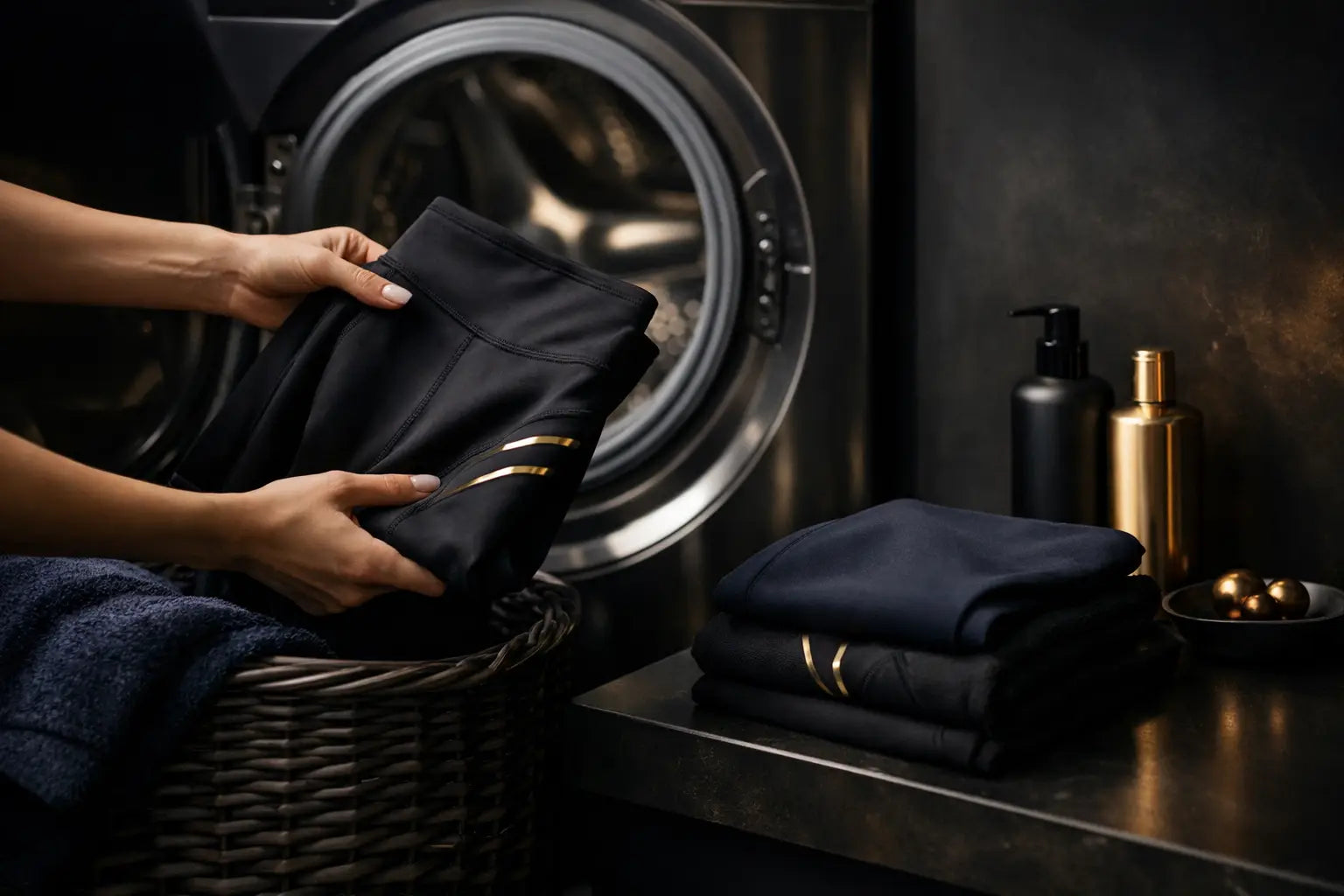
Also look at how the garment is made to last. Seams at the inner thigh, waist and under the arms often take the most strain. A durable design requires care in both construction and use: follow the care instructions, avoid unnecessary heat and let the garment keep its elasticity between sessions.
The best choice is rarely the one with the most visible details. It is the garment where every seam feels justified, where the panels follow the movement and where the silhouette holds together as the day changes pace. Then the fit is not something you have to think about, just a natural part of how you move.

Leave a comment
This site is protected by hCaptcha and the hCaptcha Privacy Policy and Terms of Service apply.