
Article: Compression leggings vs leggings: what actually differs
Compression leggings vs leggings: what actually differs
A pair of leggings can look right in the mirror and still slide down on the third squat. The difference shows up in movement. Setting compression leggings vs leggings side by side means comparing two answers to the same question: how to stay put on a body that moves.
Leggings are among the most worn pieces in a wardrobe. For the session, for the walk, under a training jacket on the way into town. That is exactly why construction shows. A soft pair of leggings and a well-made pair of compression leggings feel the same on the hanger. They rarely feel the same forty minutes in.
What is the difference, really?
Leggings is a wide word. It covers soft everyday trousers and technical training tights. What they share is the close silhouette and a supple feel.
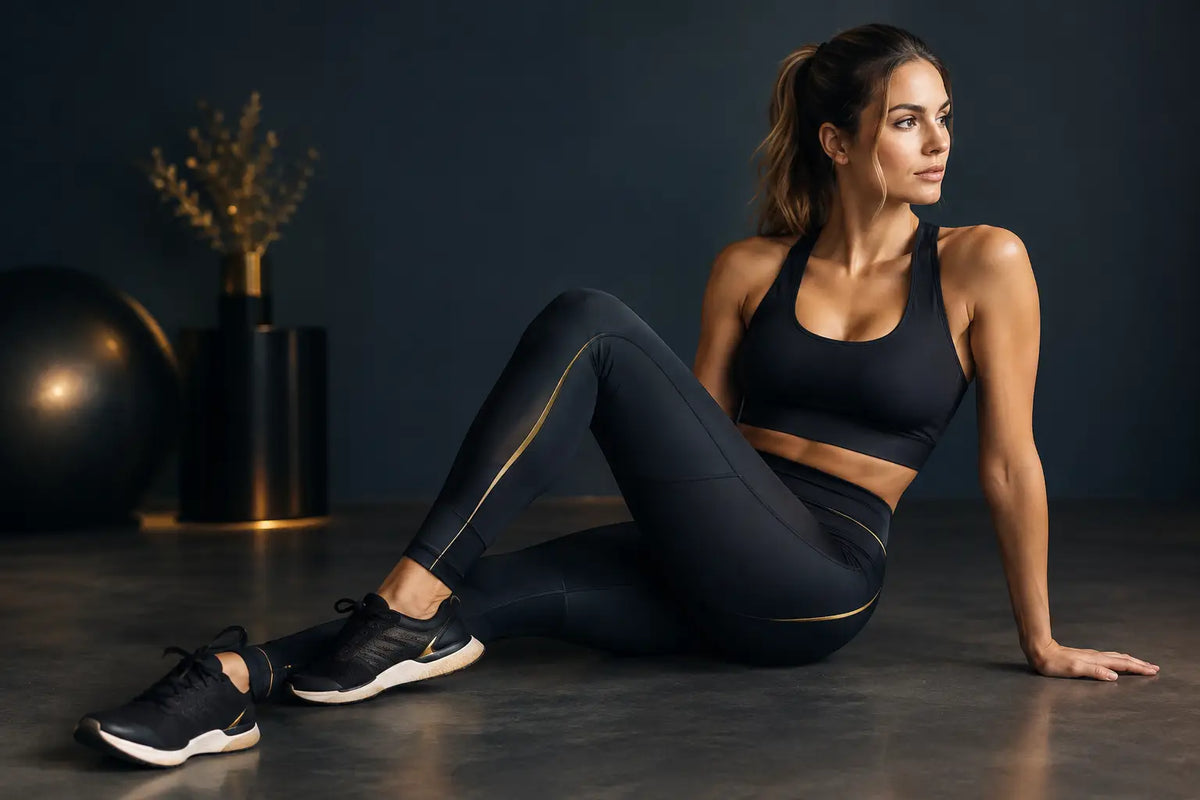
Compression leggings are made to hold. The fabric is denser, the elastane content higher and the recovery firmer. The material shapes to the body and then returns, instead of going slack at the knee, the seat and the waist. Our Slimline Sculpting Leggings carry 27 per cent elastane alongside recycled ECO Circle polyester, with a compression that supports without pressing.
The word compression gets used loosely. In activewear it means a dense, stable feel in the garment, not a health claim. The right pair gives control in movement without cutting in or shortening your stride.
When are leggings the right choice?
When softness is the whole point. Yoga, recovery, a long flight, a day made mostly of errands. A thinner, less structured piece stays comfortable for hours and styles easily with a longer shirt or a roomy jacket. Our Edge Casual Zip Pants belong in that part of the wardrobe: brushed fabric, a high waist with a removable drawcord and straight-cut hems with no cuffs.
The trade-off is honest. A very soft material does not always hold up through intervals and heavy lifts. The waist can roll, the fabric can slip. That does not make leggings lesser. They are made for a different kind of day.
What gives compression leggings their stable feel?
Rarely a single detail. The yarn, the fabric weight, the stretch and the placement of the seams do the work together. Four-way stretch follows movement in every direction. A high share of recycled synthetic fibres can add durability and shape retention. Elastane adds elasticity, but the balance across the whole fabric decides how it feels against the skin.
A high waist is more than a look. A wide, contoured waistband spreads the support more evenly than a thin elastic and leaves a cleaner silhouette under tops and jackets. If you want to compare waist heights, we have written about it in high-rise or mid-rise leggings.
The seams do the rest. In sculpting leggings they are placed to lift the silhouette and follow the body's own lines. Contoured side panels give a clearer line, and a considered cut across seat and thigh keeps the fabric from pulling or folding as you move. Design with a job, not decoration.
How should they fit?
Firm is not the same as too small. Going down a size for more compression usually gives the opposite result: the waistband cuts, the seams take strain and the garment becomes dull to move in. Compression leggings should sit close and still allow a deep squat, a long stride and a full breath.
Start at the waist. It should stay as you walk, sit and train, without you pulling it up. Then check across hip and thigh. Creases at the knee, or fabric gathering at the crotch, point to the wrong size or the wrong fit for your body.
Length counts too. Ankle length reads as one line with sneakers. Shorter feels cooler when the session is hard. There is no ideal fit for everyone. Your height, your proportions and your training decide.
Try them in movement
The fitting room tells half the truth. Bend your knees, reach your arms overhead, take a few steps. Heading to the gym, think lunges, deadlifts and squats. Heading on a flight, sit down for a while and feel what the waistband does.
A dense fabric should still be opaque when stretched. At the same time it has to feel supple, not stiff. That balance separates the piece you wore three times from the pair you return to every week. More markers in shape-retaining gym leggings: five qualities that decide.
Do they last?
A pair with good recovery keeps its fit longer. When the fabric springs back after movement and washing, you avoid stretched knees and a waist that has lost its grip. It shows most on the pieces you wear often.
Lasting design is also about use. One well-made pair of compression leggings that works for the gym, the walk, the trip and the everyday takes less room than four models with one purpose each. Recycled material is a deliberate choice. The lifespan of the construction matters just as much.
Wash them inside out at a low temperature and skip the fabric softener. Softener settles on technical fibres and weakens both moisture transport and recovery. Air drying is gentler on elastane than heat.
What should you choose?
If softness for quiet days is what you are after, leggings are an easy answer. If you move between strength training, walks, work and dinner, compression leggings usually land closer, precisely for the stability and the shape. With us, sculpting seams, a high waist and contoured panels are part of the design, drawn for a woman's body in movement.
The most useful choice is rarely the most advanced. Choose the pair you reach for when the calendar is full and the training is demanding, and that you still want on when the day goes on.
Anything but ordinary.

Leave a comment
This site is protected by hCaptcha and the hCaptcha Privacy Policy and Terms of Service apply.