


Shape-retaining tights: five qualities that decide
Shape-retaining tights show what they are after the twentieth wash, not the first time you pull them on. The fabric should return to its shape. The waistband should stay where you put it. The seams should hold their line. Five qualities decide that, and you can judge all five before you commit.
Shape-retaining does not mean rigid. A garment that constricts rarely gives more support, only less movement. What you are looking for is a fabric with spring and a construction that keeps the garment in place through the session and the rest of the day.
What makes a pair of tights shape-retaining?
1. Does the fabric return to its shape?
Stretch and recovery are two different things. A thin fabric can stretch a long way without finding its way back. You notice it behind the knees after an hour and across the seat after a few washes. A fabric with good recovery returns to its starting point every time you move.
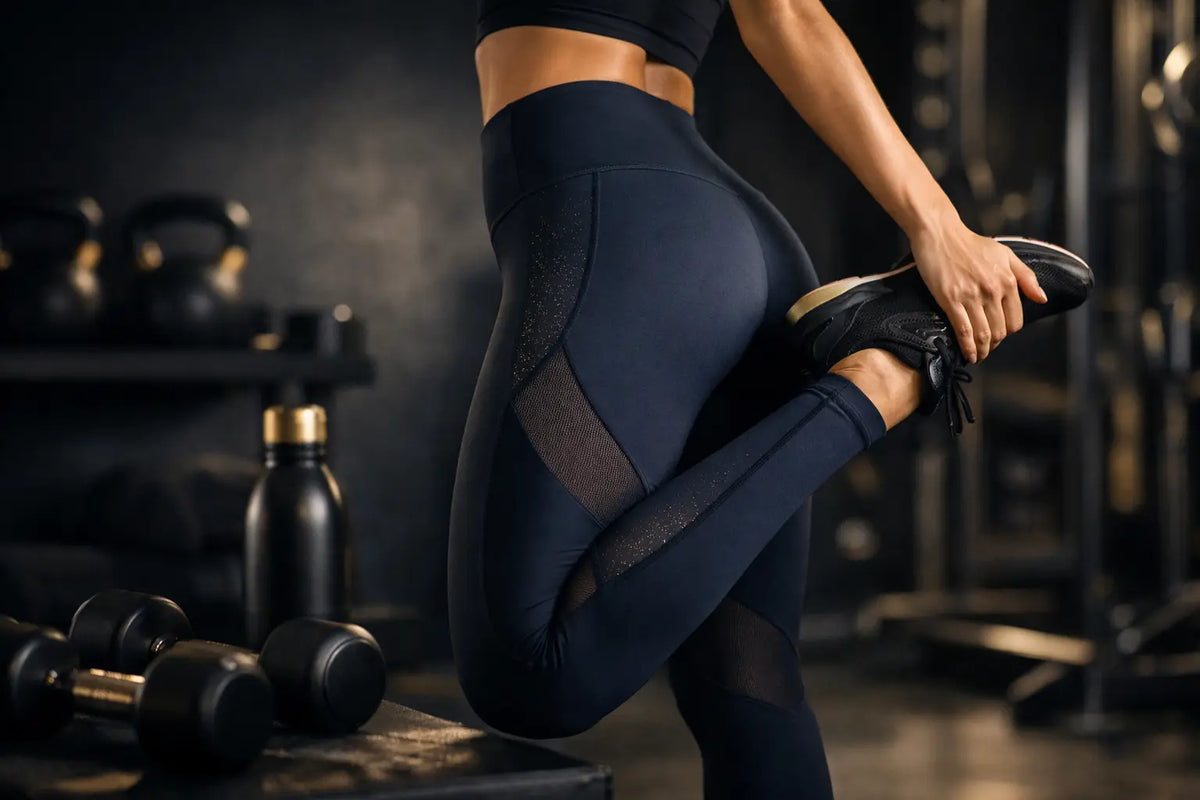
The elastane content tells you a lot. Slimline Sculpting Träningstights are made from 73 percent recycled ECO Circle polyester and 27 percent elastane. The high elastane content is what gives them their spring. The fabric is also moisture-wicking and quick-drying, so it stays light against the skin rather than wet and heavy between sets.
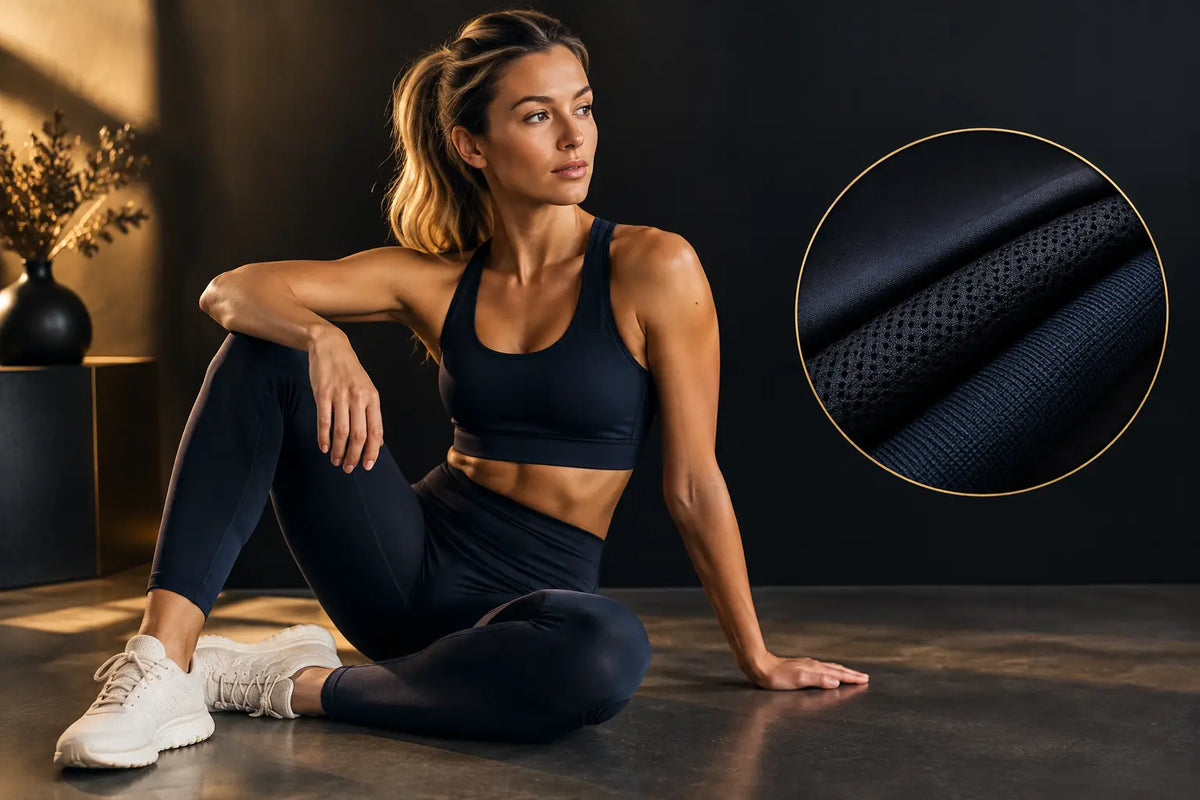
Look at the density too. A denser fabric feels more contained and takes stretching well. A lighter fabric can be right for yoga, travel and warm days, as long as the recovery is there.
2. Does the high waist stay where it should?
The waistband decides more than anything else whether a pair of tights works in real life. A band that rolls down asks for an adjustment between every exercise, and that attention costs you something. A shaped high waist spreads the pressure across hip and stomach instead of gathering it at one edge.
Width alone is not enough. The height, the elasticity and the placement of the seams have to work together. The full selection sits in training tights with a high waist. Test the band seated, in a squat and with your arms above your head. Movement is where it shows what it can do.
Fit is personal. With a short torso a very high waist can feel like a lot of coverage, while a long torso often gains from the extra height. Both answers are right, as long as the band lies still.
3. What do the seams do to the silhouette?
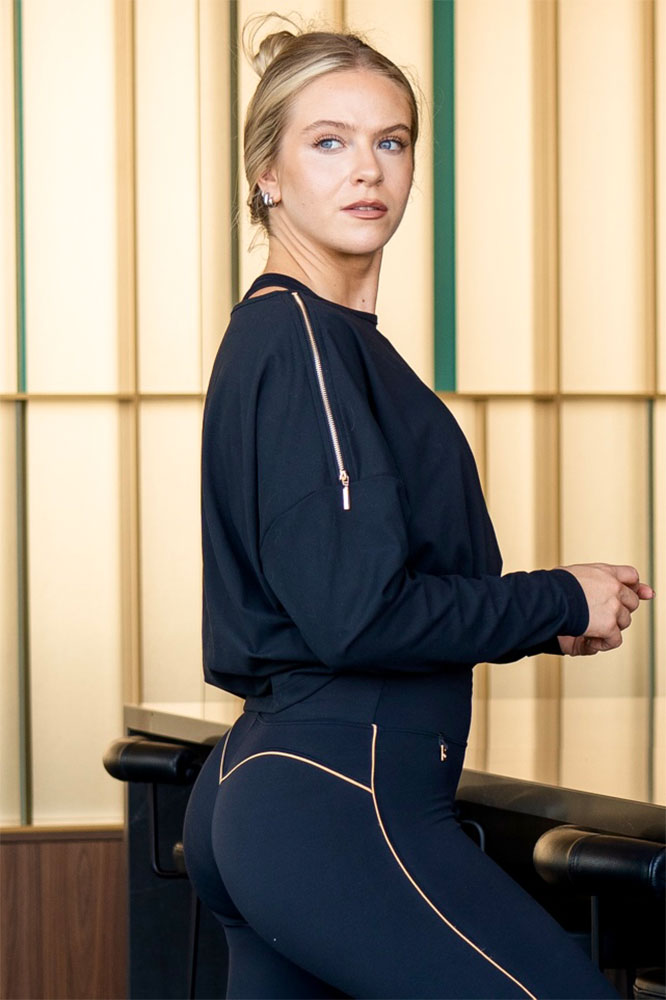
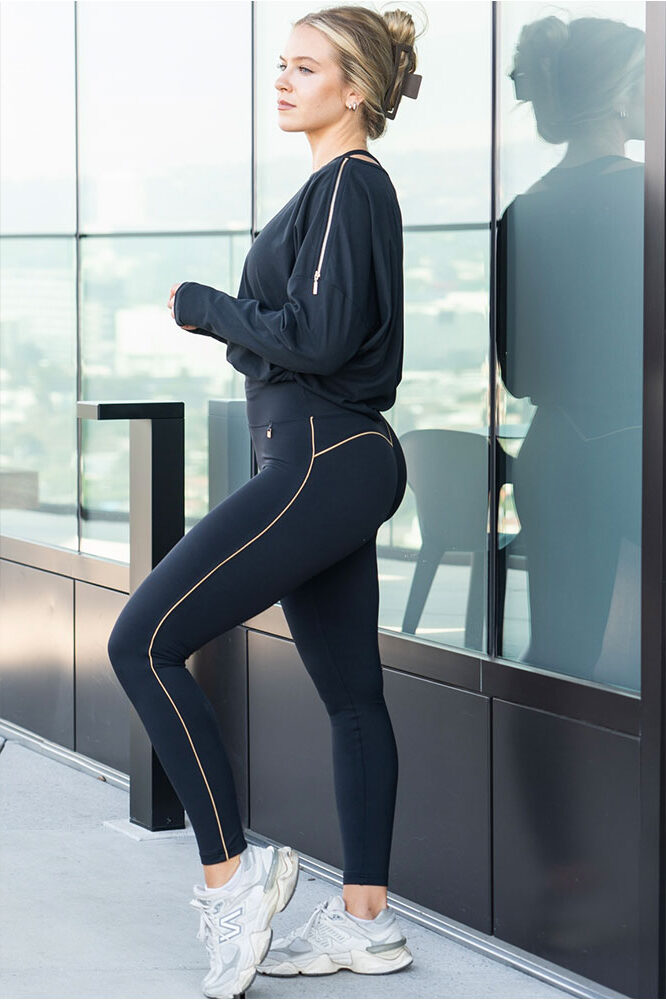
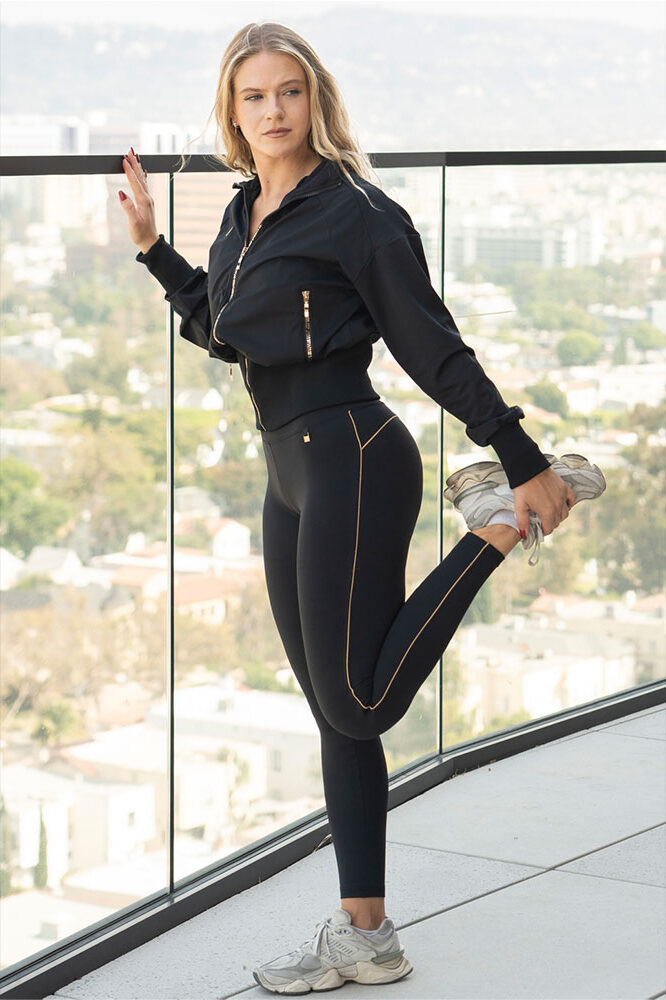
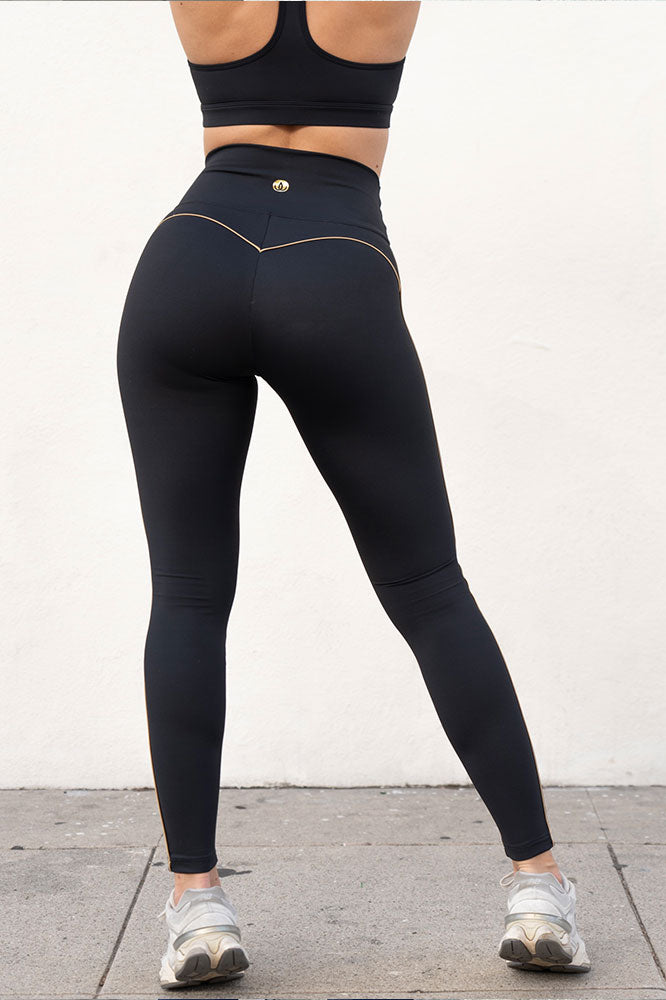
Shape comes as much from the pattern construction as from the fabric. Seams placed to lift, panels that follow the line of the leg and a heart-shaped cut at the back give the garment direction. On Slimline Sculpting the seams are built to actively lift and shape the seat and thighs, and the cut at the back is heart-shaped.
The effect belongs in the construction, not in applied detail. A well-placed seam also has a practical job: it keeps the fabric smooth over the leg and reduces the folds behind the knee. To compare the models side by side, they are gathered in sculpting training tights.
4. Are the tights opaque in a deep squat?
A fabric can look completely opaque standing up and behave differently once it is stretched across thigh and seat. Squat proof is a requirement, then, not a bonus. Edge Stripe Träningstights and Slimline FlexFlow Träningstights Svart/Vit are both squat proof and made from 78 percent recycled ECO Circle polyester and 22 percent elastane.
Size matters more than most people think. Going down a size for more compression usually does the opposite: the fabric is overstretched and thins out exactly where you want coverage. Our guide to the fit of training tights goes through the measurements. Choose the size that lets the material do its work.
5. Does the construction last?
Tights take harder use than almost anything else in the wardrobe. They are washed often, packed away, carried on trips and worn for everything from heavy lifting to a long day at home. Quality therefore shows in what you do not see straight away: the strength of the seams, the return of the waistband and the surface of the fabric after many cycles in the machine.
Recycled material belongs to that picture, but it does not replace the construction. A garment that loses its fit after one season is hard to call considered, however the material was made. The three models above are made from recycled ECO Circle polyester. Always check the garment's own material text, since the percentage differs between collections.
Which shape-retaining tights suit your days?
Start with how you actually move. Heavy strength training makes the highest demands on coverage and recovery, and a denser sculpting model is right there. Yoga and walking take a lighter fabric. Padel and tennis gain from a waistband that holds when you turn and reach quickly.
Then comes the expression. A matte surface and clean lines carry further than a shiny fabric, in the gym and outside it. With a longer shirt, a knitted jumper or a training jacket the same tights become part of an everyday wardrobe that still reads as athletic.
How do you care for them so the shape lasts?
Turn the tights inside out, wash cool and skip the fabric softener. Softener leaves residue that settles around the elastane fibres and weakens the return. High heat affects the elasticity in the same way. Let the garment air dry rather than go in the tumble dryer. We have gathered the routine in how to wash training tights.
Simple, consistent care does more for shape retention than any single technical detail. A garment treated well keeps its fit for years, and that span is what decides whether the purchase was a wise one.
Material, waistband, seams, coverage and construction. When those five work together you get tights that hold their shape and their place in the wardrobe.

Leave a comment
This site is protected by hCaptcha and the hCaptcha Privacy Policy and Terms of Service apply.