




Article: How to avoid chafing seams in activewear
How to avoid chafing seams in activewear
A garment can sit beautifully in the mirror and still become impossible after twenty minutes. How to avoid chafing seams: you start with the size, read where the seams run and choose a fabric that dries before the skin gets sore. The rest is care.
Chafing rarely has a single cause. It is friction, moisture and a seam that has landed where the body moves the most. Three things that reinforce each other.
Why do seams chafe in the first place?
A seam chafes when it stands up from the fabric and at the same time sits on a point that moves. Inner thigh. The waist. Under the arm. Along the bra line. When the skin is damp, the edge feels harder than it actually is.
Most of it can be read before you buy. Feel whether the seam is flat or rounded. Follow it with your finger and see where it goes when the leg bends.
Is it the size or the seam?
Usually the size. And just as often one size too large, not too small. When tights slide down at the waist or gather behind the knee, folds form. The folds move against the skin, and that is where the friction starts.
The right size feels steady without pulling. The waistband should stay when you drop into a squat, reach for a weight or take the stairs. You should not have to pull it up between sets.
Try the garment at home and move in it. Squat, lift the knee, reach your arms overhead. Feel whether the gusset seam stays still, whether the waistband rolls, whether the panels follow the leg. That check says more than the mirror.
If you are between two sizes, the fabric decides. A fabric with good recovery wraps more at first and then shapes to the body. A thinner fabric needs room from the start. Do not size down to get a more sculpted line. Tension across the hip and inner thigh loads the seams, and that is when they start to chafe. More on that in why training tights slide down.
What does the fabric do?
Chafing shows up first when you get warm. Moisture makes the skin more sensitive, and a fabric that holds the moisture gets heavier and moves differently. The choice of fabric matters as much as the seam.
A fabric with four-way stretch and a short drying time holds its shape through the session and shortens the time the skin spends in damp friction. It shows most on long walks, warm travel days and sessions where the same area works again and again.
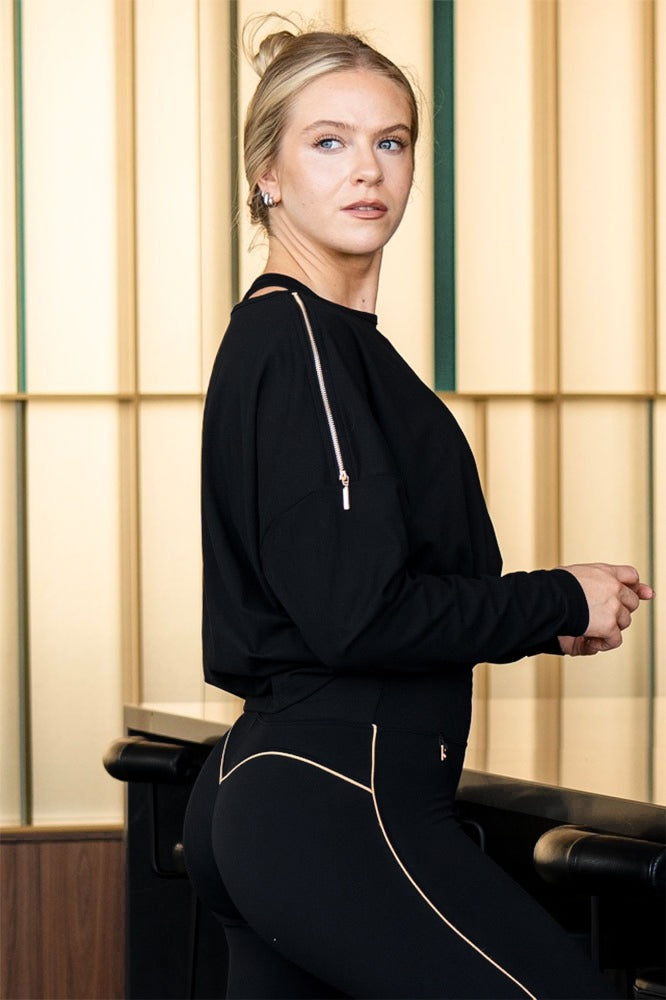
Soft fabric is not always right. A completely soft fabric can lack the stability that keeps tights in place. A more structured, sculpting fabric often gives better control, provided the fit is right and the seams are flat. Slimline Sculpting Leggings are one example: recycled ECO Circle polyester, just the right compression that supports without pressing, a high contoured waist that does not slide down, squat proof.
Underwear counts too. Coarse edges, or a seam that lands right under the construction of the tights, create double friction. Smooth models with clean edges work better when the movement is large. A small detail that decides how a garment feels after an hour.
Where should the seams sit?
Not every seam needs to go. They create shape, stability and a fit that follows the body. The question is where they lie.
In tights the gusset is decisive. A well considered panel keeps several seams from meeting at the same point where the movement is greatest. Seams along the inner thigh should be soft, flat and drawn out of the way of the most recurring friction.
In tops and jackets it is the underarm, the armhole and the inside of the zip. A zip can feel neutral in the shop and bother you the moment you bend forward. A piece of fabric behind the zip makes a difference, especially when the jacket is worn against the skin.
How sculpting panels and seams work as you move is covered in our guide to sculpting panel construction.
How do you wash the problem away?
A strong construction needs the right care. Detergent residue leaves the fibres stiffer. Too much heat takes its toll on the recovery of the stretch. Once the elasticity is gone, the garment starts to slide and crease, and the chafing comes back.
Wash inside out according to the care label, ideally right after a sweaty session. Skip fabric softener in garments meant to move moisture, it settles like a film on the fibres. Let them air dry.
Look over seams and waistbands now and then. A loose thread is rarely urgent. A seam that has started to twist, or an edge that has lost its tension, changes the comfort faster than you would expect.
The same tights for everything?
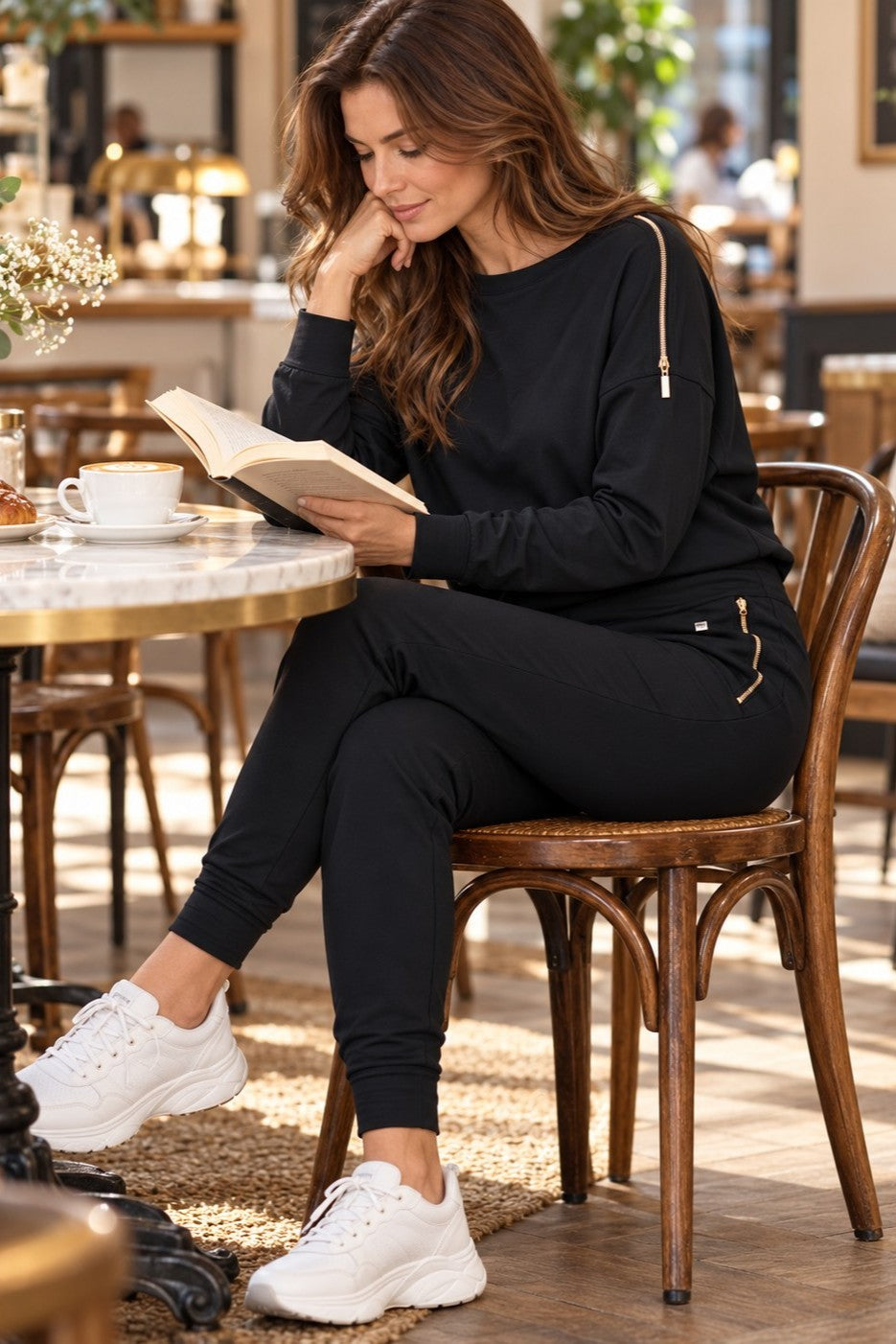
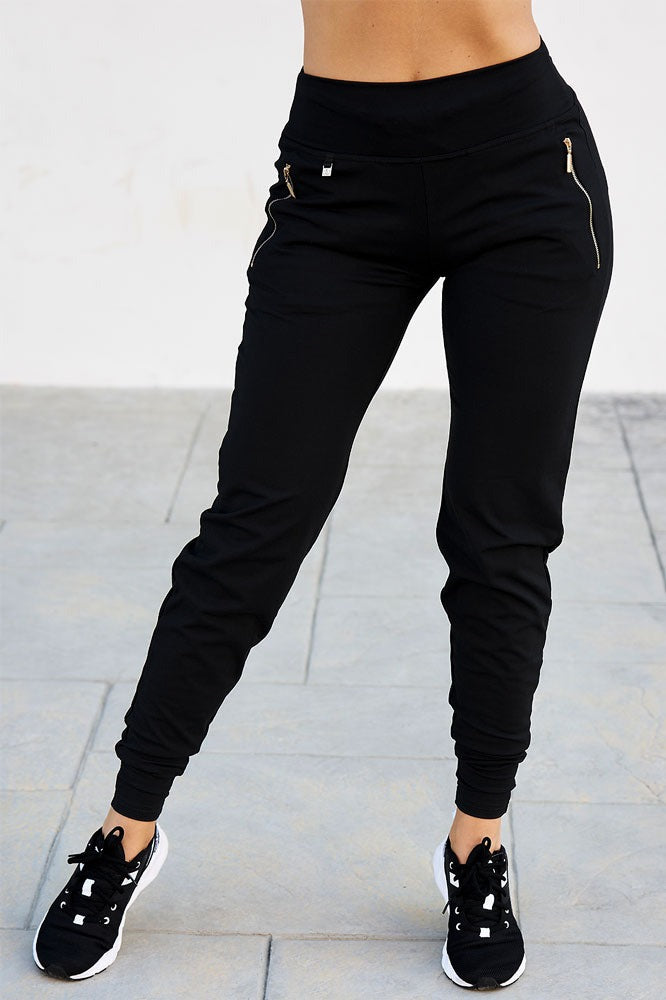
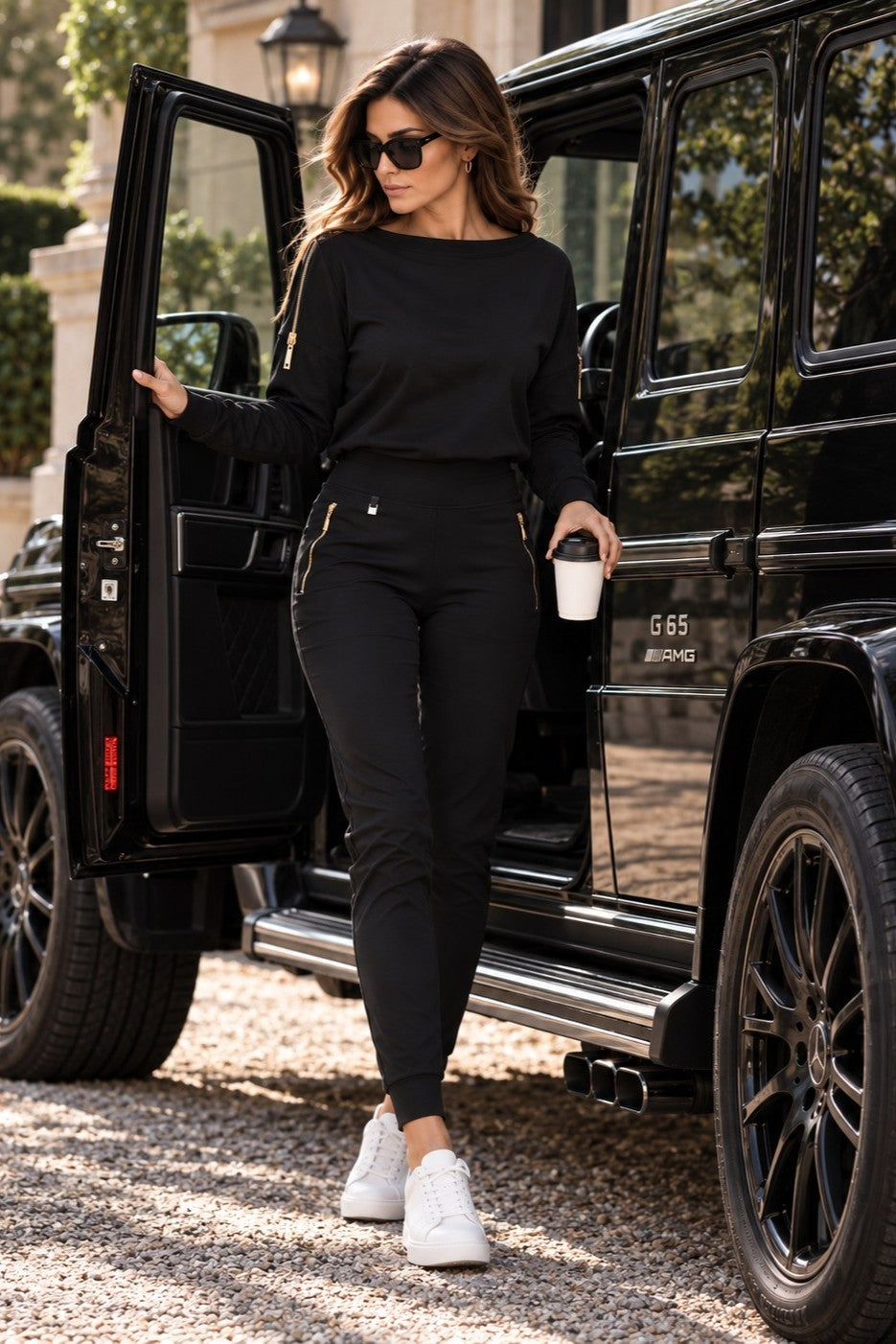
No. For a hard session you want stability and a high waist that stays still. For the flight, a day in town or a quiet Sunday, a softer set with a supple construction is enough. Comfort looks different depending on how you move.
We work with a close fit, contoured panels and seams that have a job to do. When the fit stays still, follows the movement and feels the same after an hour as after five minutes, you stop thinking about the garment. That is the whole point.
Anything but ordinary.


Leave a comment
This site is protected by hCaptcha and the hCaptcha Privacy Policy and Terms of Service apply.